Non-Toxic Kitchen Swaps:
Ballin’ on a Budget
Non-toxic kitchen swaps that won’t wreck your wallet. I’ve rounded up seven budget-friendly swaps, from wooden cutting boards to glass storage, so you can ditch the sketchy stuff without selling plasma.
♥︎ Affiliate Disclosure: This post contains affiliate links. If you shop through them, I may earn a small commission at no extra cost to you. Your support keeps Clean AF Life thriving, endlessly appreciated.
Ballin’ on a Budget: Healthier Without Breaking the Bank
AKA: The “I Want a Cleaner Kitchen But I Also Like Paying My Rent” Guide
You’re chasing that Clean AF life, but Google “non-toxic kitchen” and it’s all $500 pan sets and $80 glass jars. Screw that—it’s enough to make you stick with the scratched-up Teflon pan from college forever.
Truth: You don’t need a trust fund (or to sell plasma) to ditch the sketchy stuff leaching into your food/home/air/whatever. Welcome to the Ballin’ on a Budget series—real, no-hype swaps across the house that cut toxins without torching your wallet.
First edition: Kitchen. Because that’s where most of the sneaky crap hides in your daily routine.
TL;DR: I Have 30 Seconds and 25 Bucks!
Stop googling how to get tomato stains out of plastic—you can’t. They’re part of the container now. If you’re over the sketchy chemicals and the “cupboard of shame,” just grab one of these swaps and call it a day.
1. The Plastic Board You’ve Had Since 2014 → Solid Wood
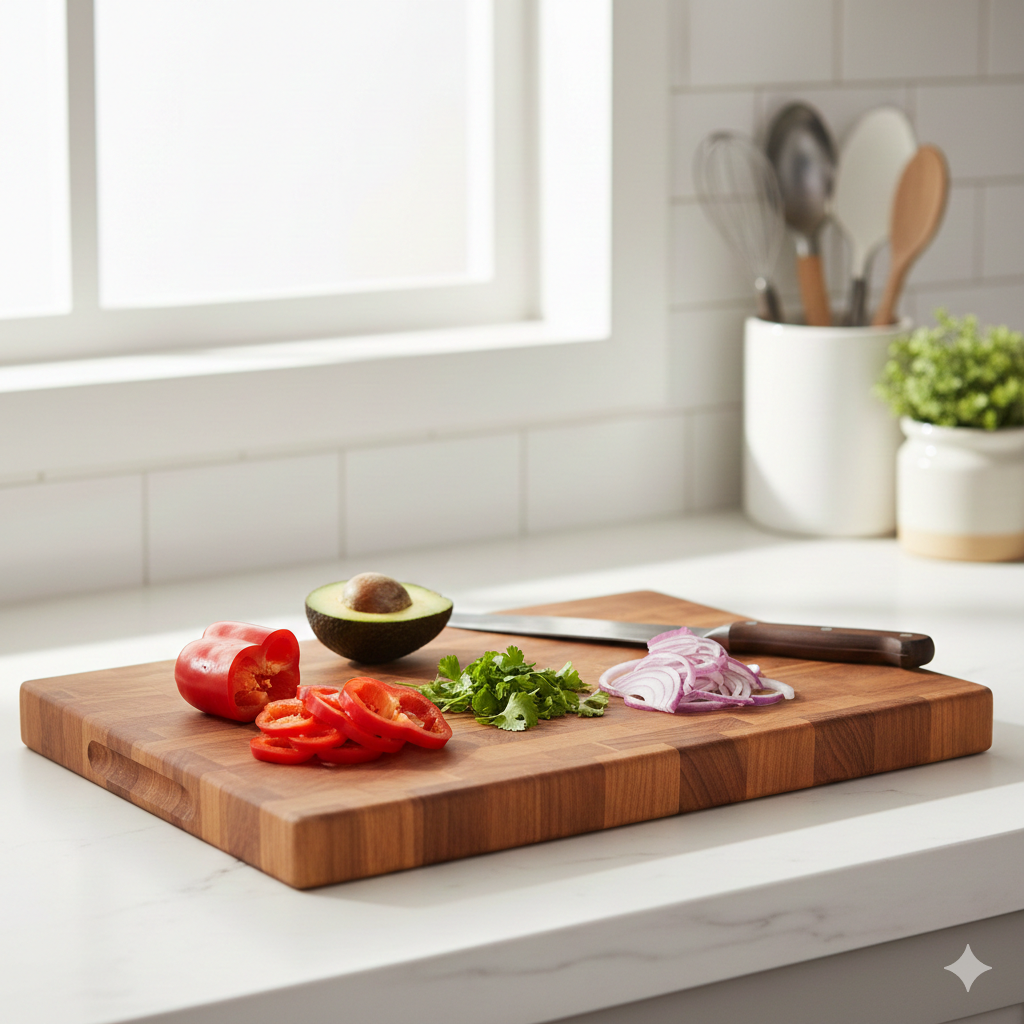
The Ick Factor: Plastic boards are essentially petri dishes with knife scars. Every time you chop, you’re creating “microplastic dandruff” that seasons your onions. If your board is stained, warped, or scarred, it’s also a luxury resort for bacteria that a quick rinse won’t fix.
The Swap: Solid Wood. This is one of those swaps that feels boring until you use it—and then you never go back. A solid wood board is sturdy, plastic-free, and kinder to your knives. Skip bamboo boards (they’re usually glued together anyway). Walnut and Maple are classics, but Teak, Beech, and Acacia are excellent, budget-friendly options that hold up to real cooking and actually get better with age.
This solid Teak board is a standout choice. Most budget boards are a bunch of wood scraps glued together, but this one is a single, solid plank. Naturally water-resistant thanks to Teak’s high oil content, it looks like an heirloom piece—without the heirloom price tag.
2. Your Peeling Nonstick Pan → One Pan That Won’t Betray You
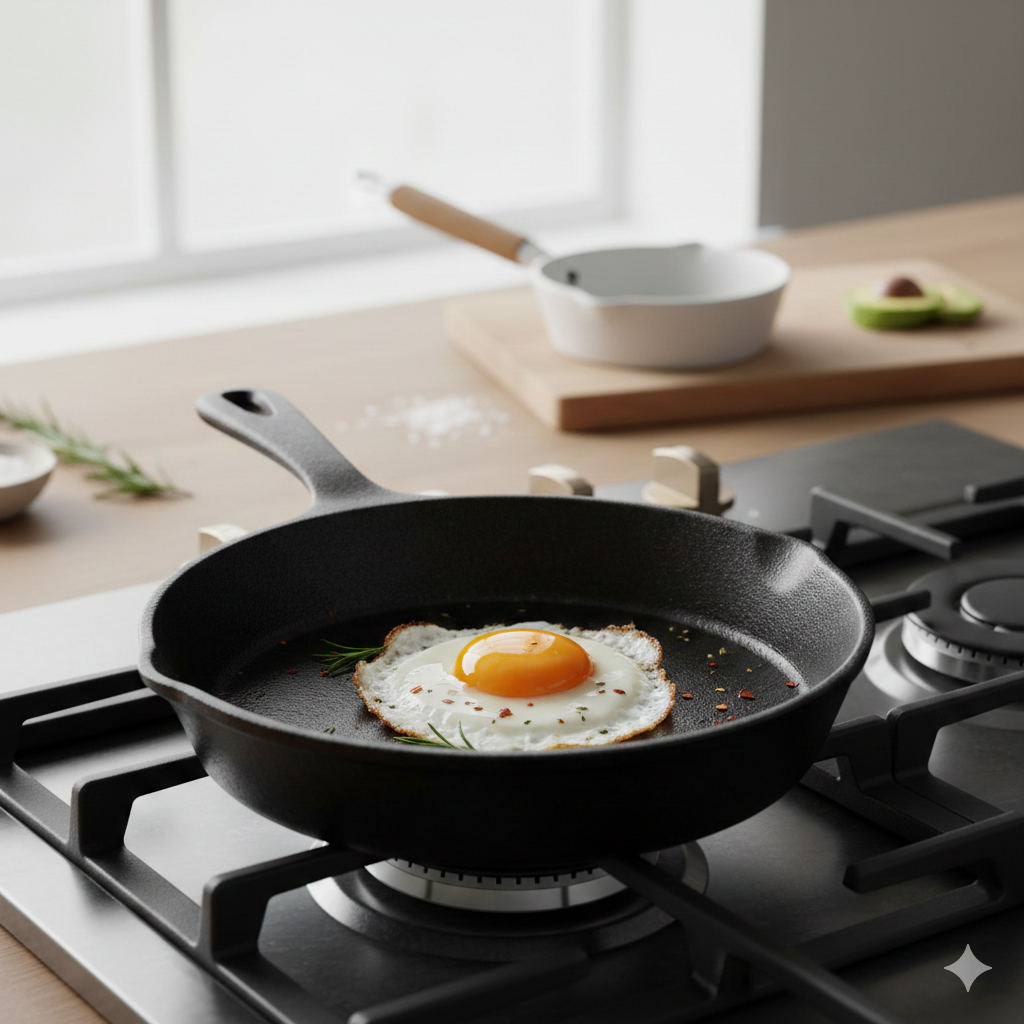
The Ick Factor: If your pan is flaking more than your ex, it’s time to let go. Those mystery coatings shouldn’t be part of your diet. When “non-stick” surfaces scratch, they start off-gassing and shedding PFAS (forever chemicals) directly into your food.
The Swap: Cast Iron or Ceramic. These are the non-toxic MVPs. Cast iron is the original “forever” pan—it’s cheap, indestructible, and gets more non-stick the more you use it. Not ready for the heft? Ceramic has your back. While stainless steel has its perks, it comes with a steep learning curve and isn’t exactly beginner-friendly. Ceramic gives you that easy, slide-off-the-pan experience without the scary fumes—and yes, it won’t last as long as its heavy-duty cousins, but it still gets the job done!
This 10‑inch ceramic skillet is the ultimate “training wheels” pan. It uses GreenPan’s PFAS‑ and PTFE‑free ceramic nonstick coating instead of traditional forever‑chemical nonstick, but it still isn’t a forever pan — treat it gently and it’ll do its job. It’s lightweight, looks high‑end, and is the perfect swap for anyone not ready for the weight of cast iron. Check out my Non‑Toxic Cookware Shop Page for more Clean AF options and beginner‑friendly swaps.
3. Utensils Having an Existential Crisis → Stainless Steel, Silicone or Wood
The Ick Factor: If your spatula is melting into your scrambled eggs, that’s not extra protein—it’s toxins. Most black plastic utensils are made from recycled plastics that can leach flame retardants and microplastics directly into your food the moment they hit a hot pan. If the edges are frayed or “crusty,” it’s time to retire them.
The Swap: Wood, Silicone or Stainless Steel. It’s time for an upgrade that doesn’t involve eating your tools. Grab a set of natural wood or high-heat silicone utensils that won’t warp or bend. Wood is naturally antibacterial, and quality silicone can handle up to 550°F without breaking a sweat. Want to go pro? Stainless steel is the ultimate “buy it for life” choice—it’s non-reactive, durable, and built to last.
This Teak Spurtle Set is the ultimate non-toxic hidden gem. Hand-crafted with a focus on purity, these are made from premium teak which is naturally heat-resistant and durable. Because they are 100% natural wood, they are safe for all your non-stick and ceramic pans.
4. Stained Tupperware → Glass Containers
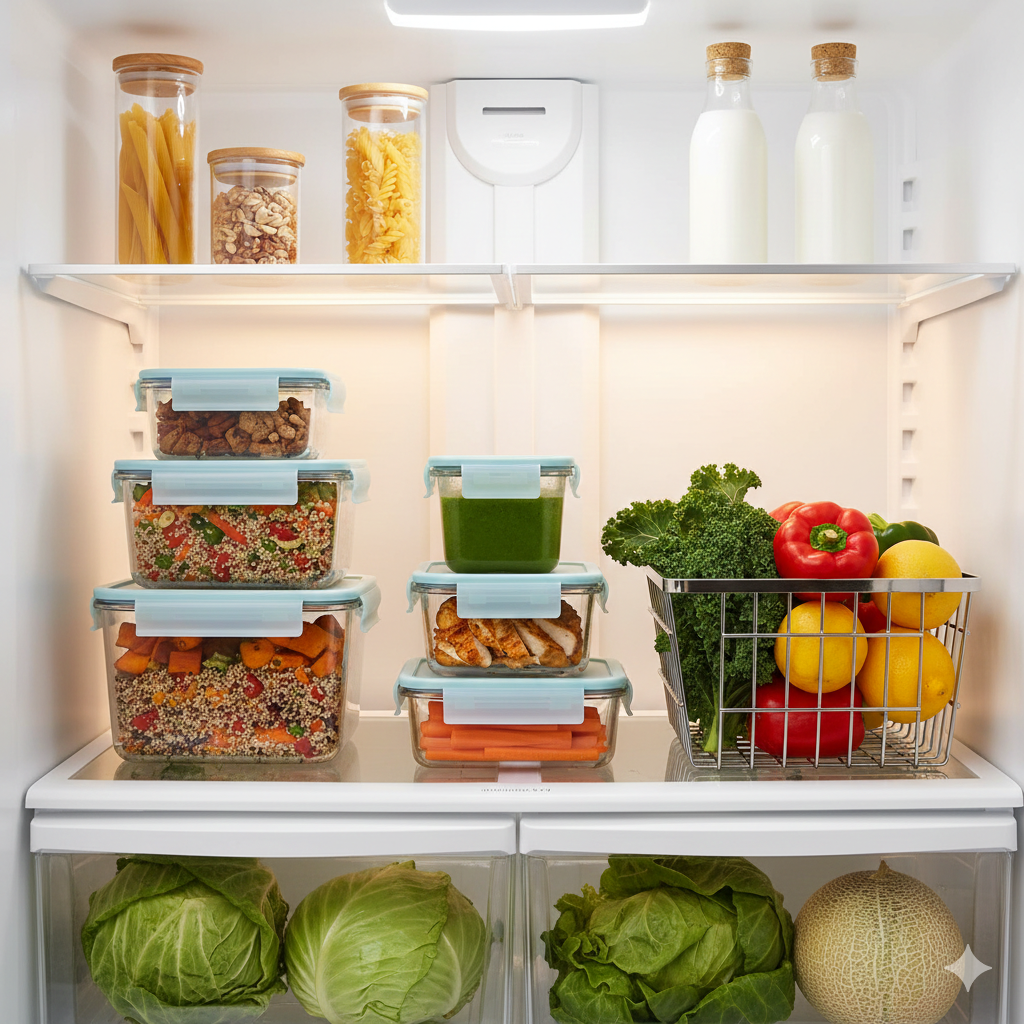
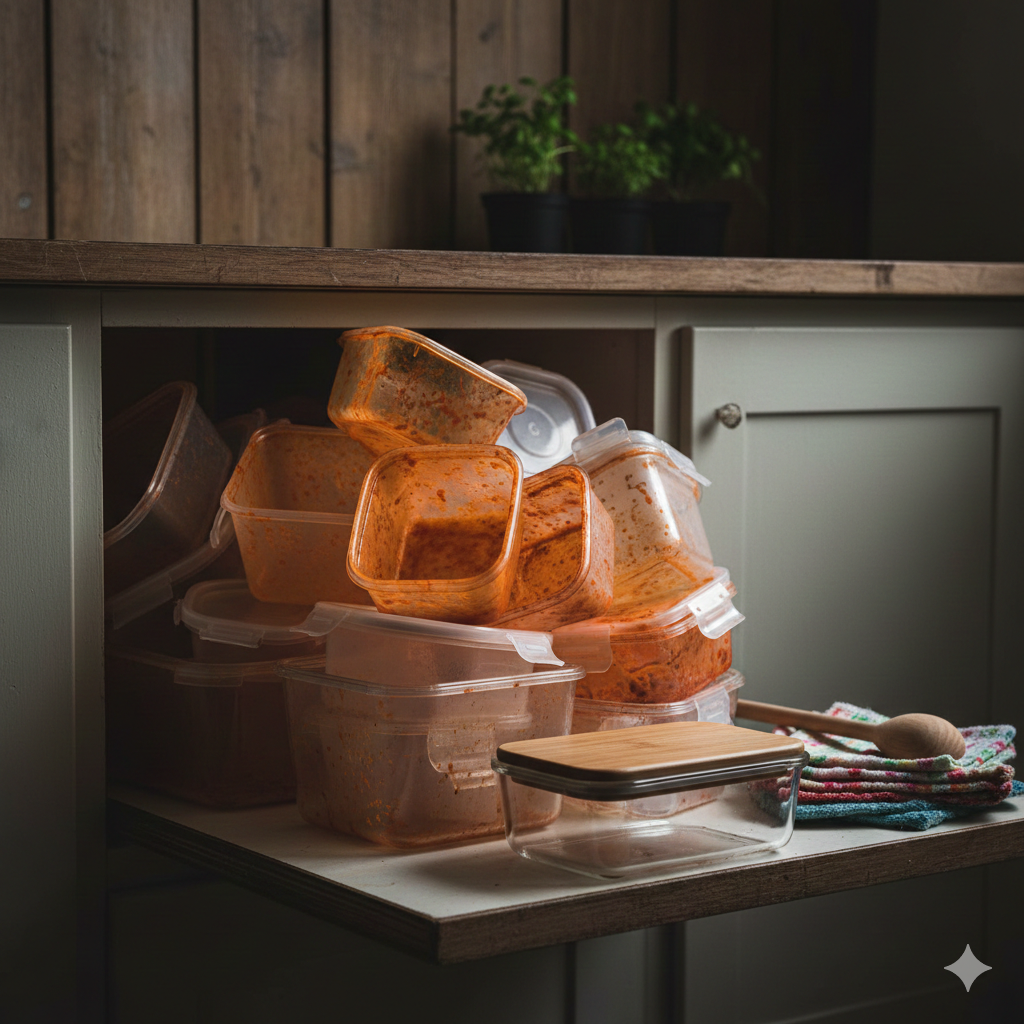
The Ick Factor: Tomato sauce shouldn’t stain your Tupperware or your soul. If your containers are orange, warped, or smell like last month’s curry, they’re leaching microplastics into your leftovers.
The Swap: Glass. It’s time to upgrade to high-quality glass containers. Beyond just looking like you actually have your life together, glass is a non-porous powerhouse. Unlike plastic, it won’t absorb weird food smells, it won’t warp in the dishwasher, and—most importantly—it won’t leach crap into your food when you hit the microwave. Plus, clear glass gives you a full view of your inventory, meaning fewer “science experiments” forgotten in the back of the fridge and way less food waste. It’s a win for your health, your aesthetic, and your grocery budget.
This Glass Food Storage Set is the ultimate “adulting” upgrade. Made of borosilicate glass, these can handle the freezer, microwave, and oven without breaking a sweat. The lids are BPA-free and use a four-hinge snap lock to stay 100% leakproof—perfect for tossing in a work bag without a “soup disaster” waiting to happen.
5. Aluminum Foil Addiction → Silicone Everything
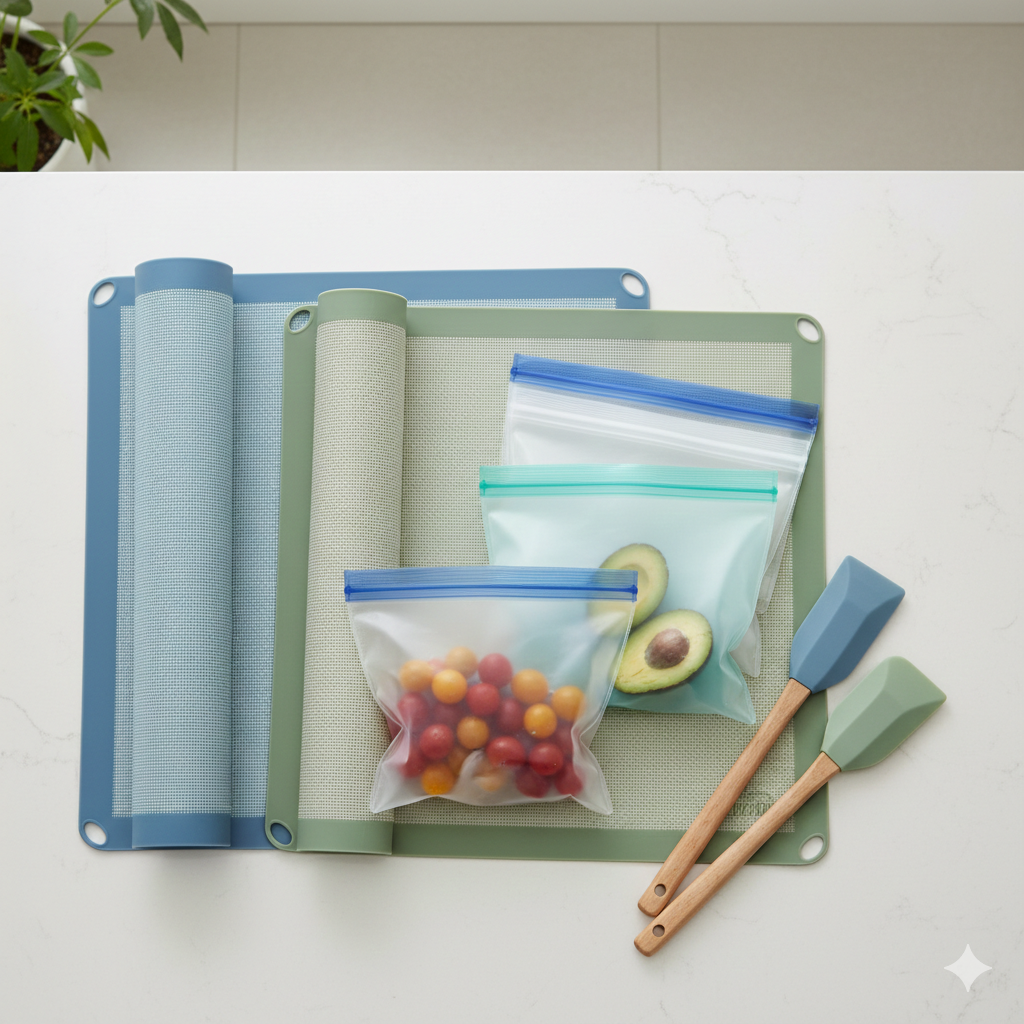
The Ick Factor: Single-use foil and plastic baggies are a total money pit. Beyond the waste, cooking on aluminum at high heat can lead to metal leaching into your food, and cheap plastic baggies are notorious for shedding microplastics—especially when holding warm snacks.
The Swap: Silicone. It’s time to move to food-grade silicone. Silicone baking mats replace greasy parchment paper and aluminum foil for good, providing a naturally non-stick surface that’s effortless to clean. Combine those with reusable silicone bags, and you’ve got a setup that is infinitely washable, freezer-safe, and durable enough to last for years. They aren’t just better for your health; they make your kitchen drawers look incredibly organized.
These Silicone Baking Mats are the ultimate upgrade. Unlike standard mats, these use premium German Wacker silicone and meet strict LFGB food-safety standards. They are thicker than the competition, non-toxic, BPA-free, and oven-safe up to a blistering 500°F.
6. The “Chemical Lemon” Dish Soap → Clean AF Soap
The Ick Factor: Your dishes touch your food, and your soap touches your dishes. The math is mathing, babe. Most “lemon-scented” soaps are just a cocktail of synthetic fragrances and harsh sulfates that linger long after the rinse. You don’t need a “nuclear citrus crime scene” on your plates; you just need things clean without the chemical aftertaste.
The Swap: Fragrance-free or plant-based. Look for soaps that use coconut-derived surfactants to cut grease instead of petroleum-based ones. They’re gentler on your hands, better for the water supply, and won’t make your morning coffee taste like “Mountain Spring” fumes.
This Dishwashing Liquid is the ultimate flex for a clean kitchen. EWG Verified, it uses high-performance plant-based ingredients to cut grease without the “toxic lemon” side effects.
7. The Sponge That Knows Your Secrets → Swedish Dishcloths
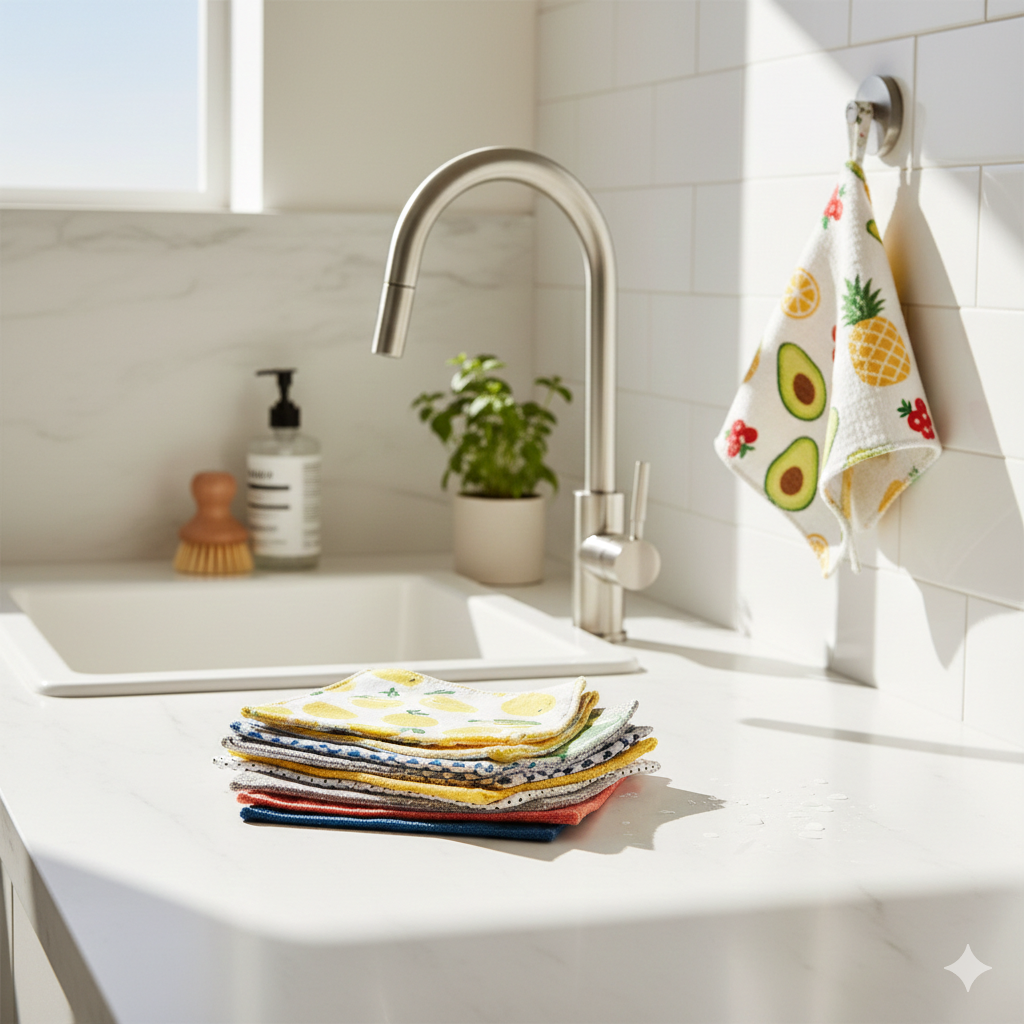
The Ick Factor: If your sponge has a “signature scent,” congratulations: you’ve been exfoliating bacteria onto every plate you own. Sponges are basically luxury condos for germs, and once they start smelling funky, you’re just moving the mess around.
The Swap: Swedish dishcloths. These are the upgrade you didn’t know you needed — but your wallet does. They’re super absorbent, dry out almost instantly (so they don’t get gross), and one cloth can replace about 17 rolls of paper towels. (Which by the way, wtf is up with the price of paper towels?!) When they need a refresh, just toss them in the laundry or the top rack of the dishwasher.
These Swedish Dishcloths are the perfect entry point. They are 100% biodegradable, vegan, and free from harsh chemicals. Plus, they come with a handy wall clip so you can hang them to dry properly instead of draping them over the faucet like a wet rag.
The Bottom Line: The “Buy Once, Cry Once” Method
If you just looked around your kitchen and realized half your gear is currently melting or shedding, don’t feel like you have to bin the whole room in one go. You don’t need a total kitchen exorcism to make a difference.
The Strategy: Use the Replacement Cycle. When your current plastic spatula finally looks like it survived a house fire, or your sponge starts developing its own personality, swap it for the better version. Investing in a solid wood board or glass storage isn’t just about dodging the ick factor. It’s about finally owning things that don’t need to be replaced every six months.
It’s a lot easier to enjoy cooking when you aren’t worried about which part of the utensil is becoming a permanent part of the sauce.
Swap smart, save money, and keep it Clean AF.
You got this.
— Me 💚✌️
Ready to tackle the rest of the house? If you’ve got the kitchen under control and want to keep the non-toxic momentum going without draining your bank account, check out my Ballin’ on a Budget: Bedroom Edition. I break down affordable non-toxic bedroom swaps to ditch the “sleep-stealers” for a cleaner, better night’s rest.
Common Questions
1. Is a “budget” teak board actually safe?Usually, budget boards are “edge-grain” (scraps glued together), which means more chemicals. The teak board we picked is a solid plank. No glue, no formaldehyde, just one piece of wood. It’s the “budget” pick only because teak grows fast, not because they cut corners on safety.
2. Will stainless steel make my eggs a nightmare to clean?Only if you rush it. The trick is the “Leidenfrost Effect”, basically, wait until the pan is hot enough that a drop of water beads up and dances before adding oil. Do that, and your eggs will slide around like they’re on ice.
3. Won’t wooden utensils just burn?Unlike plastic, wood doesn’t melt into your food the second it touches the pan. Unless you’re using it as a literal marshmallow roasting stick over an open flame, it’ll handle your daily stir-fry just fine.
4. Can I put these glass containers in the freezer?Yes, but don’t pull a “rookie move.” Leave some head-room for liquids to expand so you don’t crack the glass, and let them thaw for a few minutes before shoving them in a hot oven.
5. Are silicone mats better than parchment paper?In the long run, yes. Parchment is great, but silicone is a “one-and-done” purchase. Just make sure you’re buying 100% food-grade silicone without “fillers” (if you twist it and see white, it’s got fillers).
6. Does “natural” dish soap actually cut grease?We’ve come a long way since the soaps that felt like washing dishes with lukewarm tea. Modern plant-based surfactants (like coconut-derived ones) break down grease just as well as the blue stuff, just without the “chemical crime scene” vibes.
7. How do I actually clean the Swedish dishcloth?When it starts looking tired, just toss it in the top rack of the dishwasher or the laundry. Air dry it (don’t tumble dry, or it’ll shrink into a potato chip), and it’s brand new.