The Complete Non-Toxic Bedroom Overhaul: From Mattress to Sheets
You spend a third of your life in here — which makes a non-toxic bedroom the single highest-leverage health upgrade in your whole house. Here’s the full overhaul, ranked by what actually matters, so you fix the big stuff first and don’t go broke on the rest.
♥︎ Affiliate Disclosure: This post contains affiliate links. If you shop through them, I may earn a small commission at no extra cost to you. Your support keeps Clean AF Life thriving — endlessly appreciated.
So you’ve accepted that your mattress is basically a chemistry set you sleep on. (If you haven’t yet, start here — then come back.) Now what? You don’t build a non-toxic bedroom by panic-buying everything labeled “organic” in one weekend and maxing out a credit card. You build it in order — biggest exposure first, nice-to-haves last.
Here’s the part nobody tells you: not every swap matters equally. The mattress you breathe on for eight hours straight is in a completely different league than your throw pillows. So this is the overhaul ranked by impact — what to replace first, what to replace eventually, and what you can honestly skip. Let’s go layer by layer.
Why the Bedroom Is the Room to Detox First
Out of every room in your house, this is the one to fix before any other — and the math is simple. You spend roughly a third of your life in your bed: about eight hours a night, skin against the sheets, face planted in the pillow, lungs working the whole time. There’s no other room where you sit still and breathe the same air, pressed against the same materials, for that long.
And it gets worse while you’re actually in it. Your body heat speeds up the off-gassing of synthetic foams and finishes, so a warm sleeping body is basically a slow diffuser for whatever’s in the bed. That’s why the bedroom gives you more health return per dollar than a fancy water filter or a cabinet of clean cleaning sprays. Fix the place you spend a third of your life first.
The Order of Operations (Fix This, Then This)
If you only take one thing from this post, take the order. Work top to bottom and stop whenever your budget taps out — every step up is still a win:
- The mattress — biggest material, longest contact, hardest to “air out.” Start here.
- The mattress protector — the sneaky PFAS layer most people add on purpose.
- The sheets — against your skin all night, and the cheapest swap to start with if money’s tight.
- The pillows — you literally breathe into these.
- The duvet & comforter — eight hours of contact, usually pure polyester.
- The bed frame — the one nobody thinks about, quietly off-gassing formaldehyde.
Broke this month? Skip to the sheets, open a window, and circle back. Doing it properly? Start at the top.
1. The Mattress (Where 80% of the Problem Lives)
This is the big one, so I’ll keep the recap quick (the full breakdown lives here). A conventional mattress is petroleum-based polyurethane foam that off-gasses VOCs, wrapped in a flame barrier that’s often fiberglass — the stuff that escapes when people unzip the cover and contaminates the whole house. That’s not a scare story — it’s the basis of class-action lawsuits against budget bed-in-a-box foam brands.
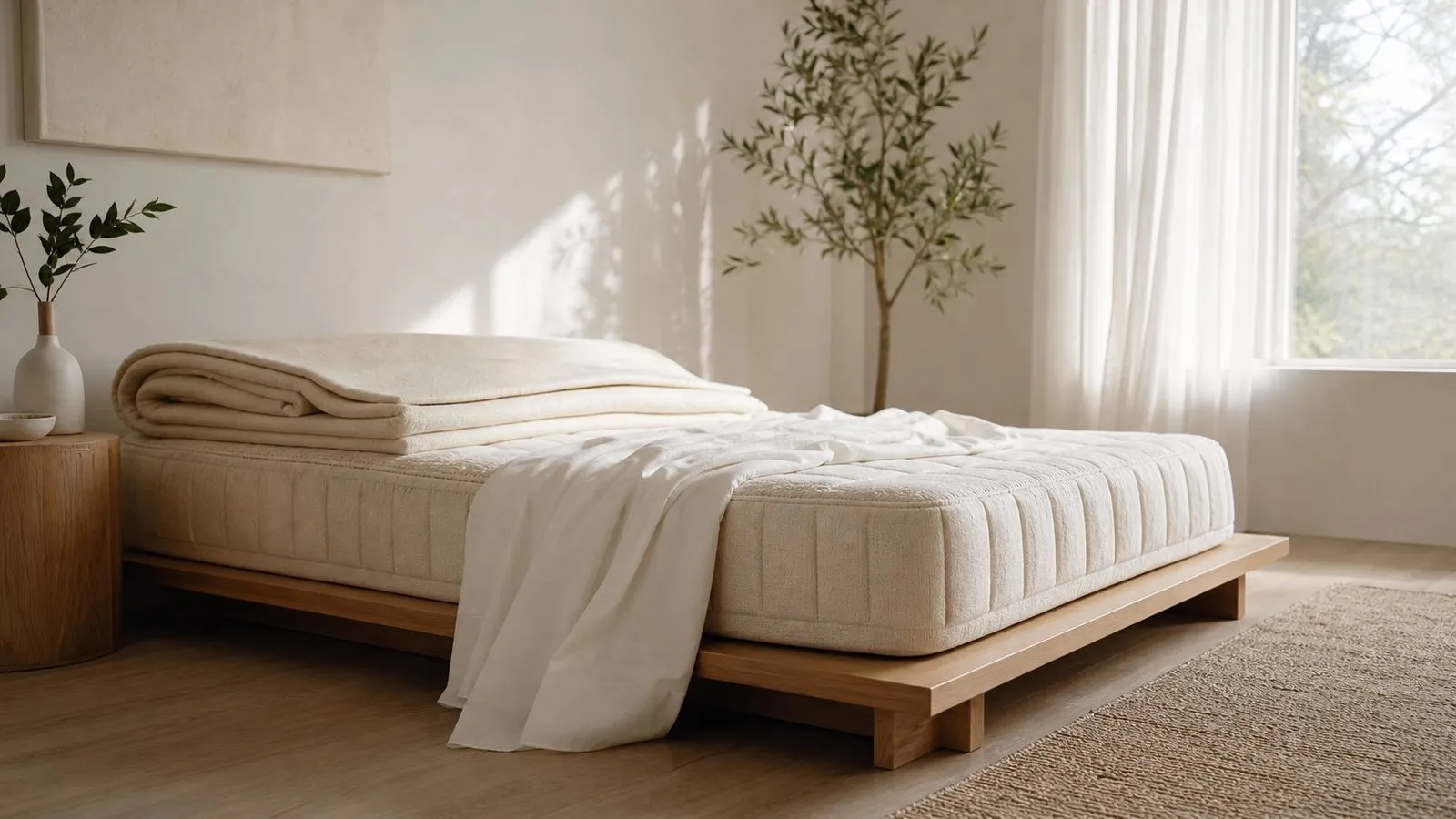
What to look for: skip the marketing words (“natural,” “eco,” “clean” mean nothing) and read the certifications. The gold-standard stack is GOTS (organic cotton/wool) + GOLS (organic latex) + GREENGUARD Gold (low emissions) + a whole-product screen like MADE SAFE or EWG Verified. One badge isn’t enough; you want the stack.
The certification king — GOTS, GOLS, GREENGUARD Gold, MADE SAFE and EWG Verified, with organic wool as a natural flame barrier (no fiberglass, no chemical retardants, no polyfoam). The Serenade is the accessible entry; the EOS lets couples customize each side.
Shop Naturepedic →One of the rare beds carrying the full stack — GOLS organic latex, GOTS organic cotton & wool, OEKO-TEX, GREENGUARD Gold and eco-INSTITUT. Sleeps cool, lasts forever, and the height/firmness are adjustable. The pick if you want pure latex over coils.
Shop PlushBeds →Genuinely certified organic latex (GOLS latex, GOTS cotton & wool flame barrier) at a fraction of the usual organic price — because you assemble the layers yourself. It’s bouncy and on the firmer side, so it’s the budget-conscious, hands-on option rather than the plush one.
Shop Spindle →Still weighing organic against keeping what you’ve got? Here’s Naturepedic vs. a conventional mattress, head-to-head — what’s actually inside each.
2. The Mattress Protector (The PFAS Trap)
Here’s the cruel irony: you buy a “waterproof” protector to keep your nice new mattress clean, and the thing that makes most of them waterproof is PFAS — the “forever chemicals.” You just added the exact problem you were trying to avoid, one layer closer to your skin. If your protector is the crinkly plastic-backed kind, assume it’s PFAS-coated unless it says otherwise.
What to look for: a protector that waterproofs without the forever chemicals — wool (naturally water-resistant) or a verified non-PFAS membrane over organic cotton.
Waterproof with no PFAS and no vinyl — two layers of organic cotton around an ultra-thin GOTS-certified polyurethane membrane (a thin film, not foam). Formaldehyde-free and MADE SAFE certified — the protector that doesn’t undo the whole point of the mattress underneath it.
Shop Protector →A wool-filled, washable protector that blocks spills with a recyclable-microfiber membrane — a physical barrier instead of a sprayed-on PFAS stain coating. Cotton percale top, breathable and dust-mite resistant, from a wool-bedding specialist that’s been at it since 1992.
Shop Sleep & Beyond →3. The Sheets (The Layer Against Your Skin)
Sheets touch you all night, so the cheap-out really shows. Two traps to avoid: anything labeled “wrinkle-free,” “easy care,” or “no-iron” (that’s usually a formaldehyde-based resin finish), and microfiber/polyester, which is plastic that sheds microplastics into your bed. “Bamboo” sounds clean but is almost always bamboo rayon — heavily chemically processed; don’t be fooled by the leaf on the package.
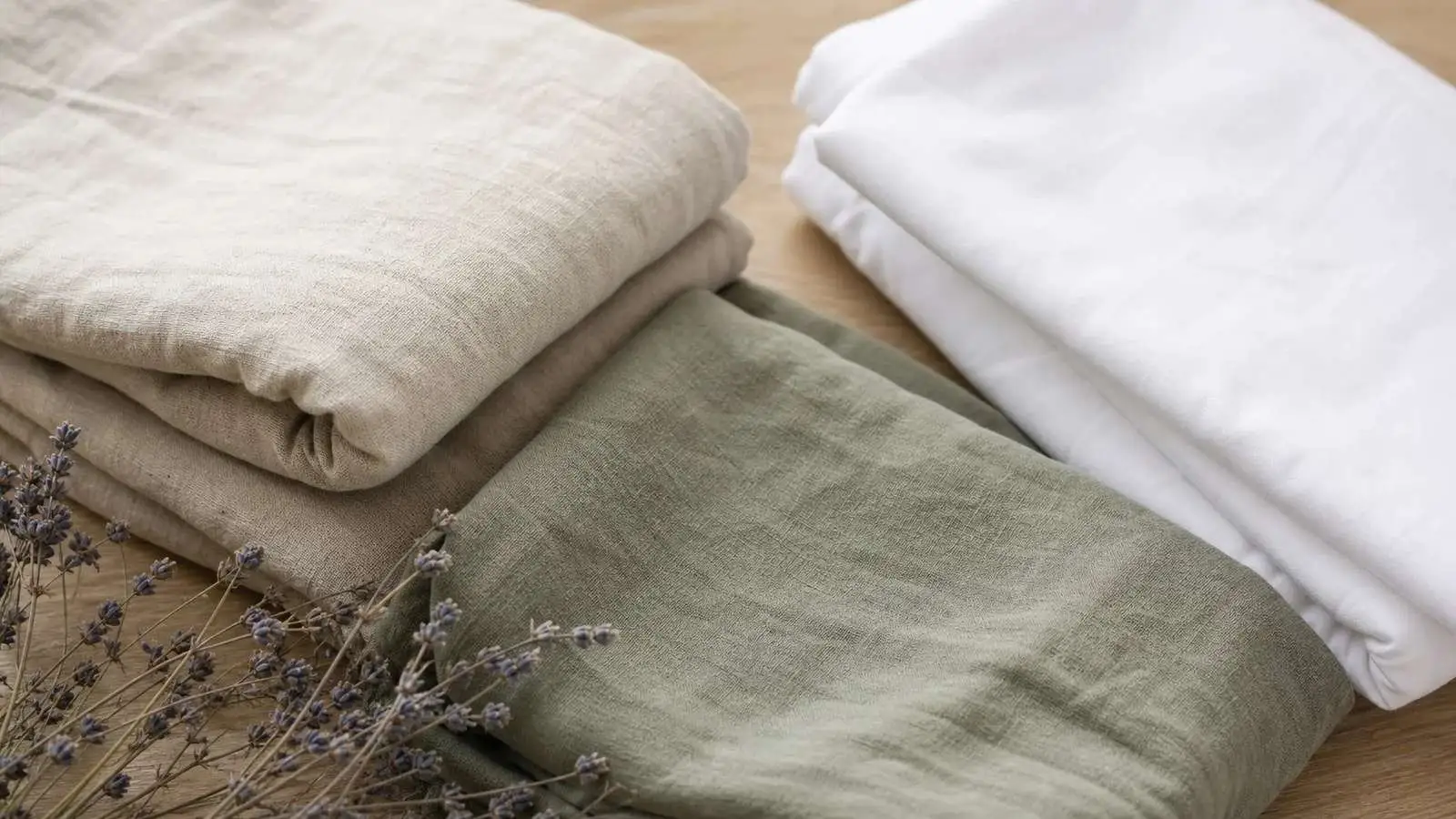
What to look for: GOTS-certified organic cotton or OEKO-TEX-certified linen. Linen is the move if you run hot — it’s breathable, gets softer with every wash, and lasts for years.
Stonewashed European flax, OEKO-TEX Standard 100 certified, at roughly half the price of the boutique linen brands. Breathable, temperature-regulating, and softer every wash. The easiest “feels luxe, costs less” swap in the room.
Shop Linen Sheets →GOTS and OEKO-TEX certified organic cotton (jersey or crisp percale) at a genuinely affordable price. Heads up: stick to their organic cotton line — Bare Home also sells microfiber, which is the synthetic stuff you’re trying to avoid.
Shop Organic Cotton →Want the plush, high-end organic cotton instead? PlushBeds’ GOTS organic cotton sheets are the splurge version, and they match the mattress if you’re buying the set.
4. The Pillows (You Literally Breathe Into These)
Of everything in the bed, this is the one your face is pressed into for eight hours — so a memory-foam pillow off-gassing VOCs an inch from your nose is the worst place to cut corners. Conventional pillows are polyurethane or shredded polyfoam in a polyester shell. Hard pass.
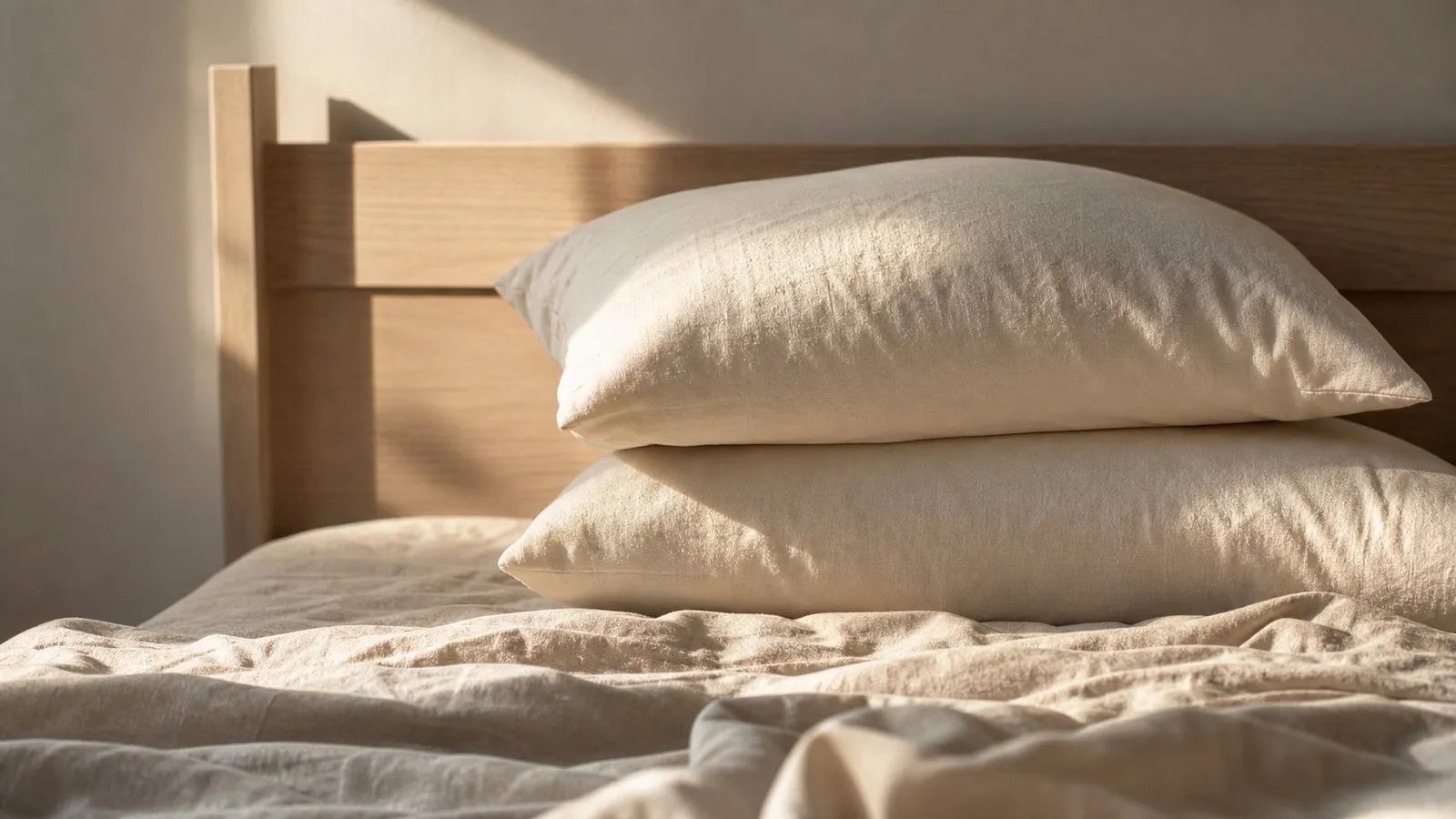
What to look for: organic latex, wool, or organic cotton/kapok, in a GOTS-certified cover. Bonus points for adjustable fill so you can dial in the loft.
Slow-pour Dunlop latex tapped from rubber trees in Sri Lanka, shredded so you set the height yourself through the side zipper. OEKO-TEX Standard 100 Class 1 on the latex, FSC-certified rubber, organic cotton cover. The open-cell structure lets air move through instead of pooling heat under your head, and it pushes back instead of sinking. 60 nights to decide.
Shop Circadian →GOTS Certified Organic as a finished pillow, so the certificate covers the wool inside as well as the cover over it. Wool holds up to 30% of its weight in moisture and still feels dry, which is what keeps night sweats off your skin. Peel a sheet of wool out through the side zipper to drop the loft, lay it back in when it settles.
Shop Circadian →💡 Don’t Forget the Pillowcase
A clean pillow in a polyester case is half a fix. Pair it with organic cotton, linen, or — if you want the skin-and-hair upgrade — a real mulberry silk case. I broke down the best ones in this guide to non-toxic silk pillowcases.
5. The Duvet & Comforter
“Down alternative” is a polite way of saying polyester — plastic fluff you sweat into all night.
What to look for: wool (regulates temperature, resists dust mites) or a linen-cased duvet.
100% organic wool fill in an organic cotton shell — warm without overheating, breathable, and naturally allergen-resistant. The set-it-and-forget-it comforter that works in summer and winter.
Shop Wool Comforter →Prefer the linen look? Simple & Opulence’s linen duvet cover over a wool insert is a gorgeous, breathable combo.
6. The Bed Frame (Nobody Thinks About It)
Here’s the one almost everyone misses. Most “wood” bed frames are particleboard or MDF — wood dust glued together with formaldehyde-based resins that off-gas for years. You can buy the cleanest mattress on earth and set it on a frame that’s quietly gassing out your bedroom.
What to look for: solid hardwood (or metal) with a low-VOC or natural oil finish. It costs more up front and lasts decades, so it’s the definition of buy-it-once. Naturepedic’s solid-wood platform bed is an easy match for the mattress; any solid-wood frame with a water-based or oil finish does the job.
Real solid wood with a non-toxic finish — no particleboard, no formaldehyde glue, no off-gassing. The clean foundation for a clean mattress.
Shop Solid Wood Frame →Start Living Low Tox
Sign up for occasional low tox inspo, honest reviews, non-toxic swaps, and helpful picks for a healthier home and lifestyle.
What You Can Actually Skip (Don’t Go Broke)
A non-toxic bedroom is a marathon, not a same-day cart checkout. A few things to take the pressure off:
- You don’t have to replace everything at once. Work the order of operations and spread it over months. Each swap stands on its own.
- A GOTS protector buys you time. Not ready for a new mattress? A clean organic mattress pad puts a real barrier between you and the old foam while you save.
- The cheapest fix is free: open a window. Airflow flushes out trapped VOCs better than any gadget.
- Skip the bedroom-air gimmicks unless you have a specific need (allergies, pets, wildfire smoke). A good air purifier has its place, but it’s a top-up — not a substitute for fixing the materials.
- Don’t obsess over throw pillows and decorative shams. Minimal contact, minimal priority. Spend that money on the mattress.
The Bottom Line
A truly non-toxic bedroom isn’t about buying the most expensive organic everything in one heroic weekend. It’s about fixing the highest-impact layers first — mattress, protector, sheets — and working down the list as your budget allows. Do that, and you turn the room where you spend a third of your life from a slow chemical drip into the one place you can actually breathe easy.
Want the whole clean-bedroom lineup — mattresses, bedding, and pillows — in one place? Find it all in the Non-Toxic Bedroom Essentials guide.
Sleep clean. — Me ♥︎
Frequently Asked Questions
What’s the most important non-toxic bedroom swap?
The mattress, every time. It’s the largest material in the room, you’re in direct contact with it for ~8 hours a night, and unlike sheets you can’t just wash the chemicals out. If you only change one thing, change the mattress — then add a clean protector and organic sheets as budget allows.
Do I really need an organic mattress, or is a topper enough?
A topper helps but doesn’t replace the mattress underneath — the foam and flame barrier are still there off-gassing. An organic latex or wool topper is a great stopgap that puts a natural layer between you and an old mattress, but for a true non-toxic bedroom the mattress itself is the fix.
Are “bamboo” sheets non-toxic?
Usually not as clean as they sound. Most “bamboo” bedding is actually bamboo rayon (viscose), which is made by dissolving the plant in harsh chemicals. The fiber ends up soft, but it’s heavily processed. For a genuinely clean sheet, choose GOTS-certified organic cotton or OEKO-TEX-certified linen instead.
What makes a bed frame toxic?
Particleboard and MDF — engineered wood held together with formaldehyde-based glues that off-gas for years. Many budget “wood” frames are this under a veneer. Solid hardwood or metal with a low-VOC/natural finish avoids the problem entirely.
How do I detox my bedroom on a budget?
Work the order of operations and start cheap: open the windows daily, swap to organic cotton or linen sheets (the most affordable upgrade), then add a GOTS mattress protector as a buffer. Save toward the mattress and frame over time. You don’t need to do it all at once.
Is memory foam bad in pillows too, not just mattresses?
Yes — and arguably worse, because your face is pressed right into it. Memory-foam and polyfoam pillows are polyurethane, which off-gasses VOCs. Switch to organic latex, wool, or kapok in a GOTS-certified cover.