Why Your Mattress Might Be the Most Toxic Thing in Your Bedroom
You spend a third of your life lying face-down on it — so it’s a little unsettling how many toxic mattress chemicals are baked into the average bed. Here’s what’s actually in there, which “non-toxic” certifications mean something, and which ones are marketing.
♥︎ Affiliate Disclosure: This post contains affiliate links. If you shop through them, I may earn a small commission at no extra cost to you. Your support keeps Clean AF Life thriving — endlessly appreciated.
In This Post
- 01That “New Mattress Smell” Isn’t Cute
- 02What’s Actually Inside a Conventional Mattress
- 03Flame Retardants & the Fiberglass Plot Twist
- 04PFAS: The Forever Chemicals in Your Waterproofing
- 05Okay, But Is This Actually Making Me Sick?
- 06Non-Toxic Mattress Certifications, Decoded
- 07So What Do You Actually Sleep On?
- 08The Bottom Line
Let’s talk about toxic mattress chemicals — because you spend roughly a third of your life pressed up against the one piece of furniture nobody ever thinks to question. You’ll read every ingredient on a granola bar, side-eye your cookware, filter your water… and then go sleep for eight hours on a slab of petroleum foam wrapped in a chemical fire barrier. Face down. Breathing.
I’m not here to make you paranoid or tell you to start sleeping on a pile of organic hay. Some of the mattress fear-mongering online is genuinely overblown, and I’ll tell you exactly where. But some of it is real, the regulations are weirder than you’d think, and the “non-toxic” labels brands slap on the box are a minefield. So let’s do the actual research — what’s in there, what matters, and what to do about it.
That “New Mattress Smell” Isn’t Cute
You unbox a new mattress, it puffs up like a marshmallow, and your bedroom fills with that distinct chemical-but-kind-of-clean smell. That smell has a name: off-gassing. What you’re inhaling are VOCs — volatile organic compounds — evaporating out of the synthetic materials at room temperature.
A peer-reviewed study on memory foam mattresses measured exactly what comes off them: formaldehyde, acetaldehyde, benzene, toluene, and 2-ethyl-1-hexanol (a polyurethane breakdown product), among others. Emissions are highest in the first 72 hours, drop by 50–80% within a week, and then keep trickling out at lower levels for a month or more. Here’s the part the “just air it out for two days” advice skips: low-level emissions from polyurethane foam continue for the life of the mattress, not just during the smelly honeymoon phase.
And it gets a little worse when you actually use the thing. Researchers found that body heat and body weight — you know, sleeping — increased the rate of chemical emissions. Your warm body is basically a diffuser.
What Toxic Mattress Chemicals Are Actually Inside?
“Mattress” is doing a lot of heavy lifting as a word. A conventional one is a layered stack of synthetic materials, and each layer brings something to the party:
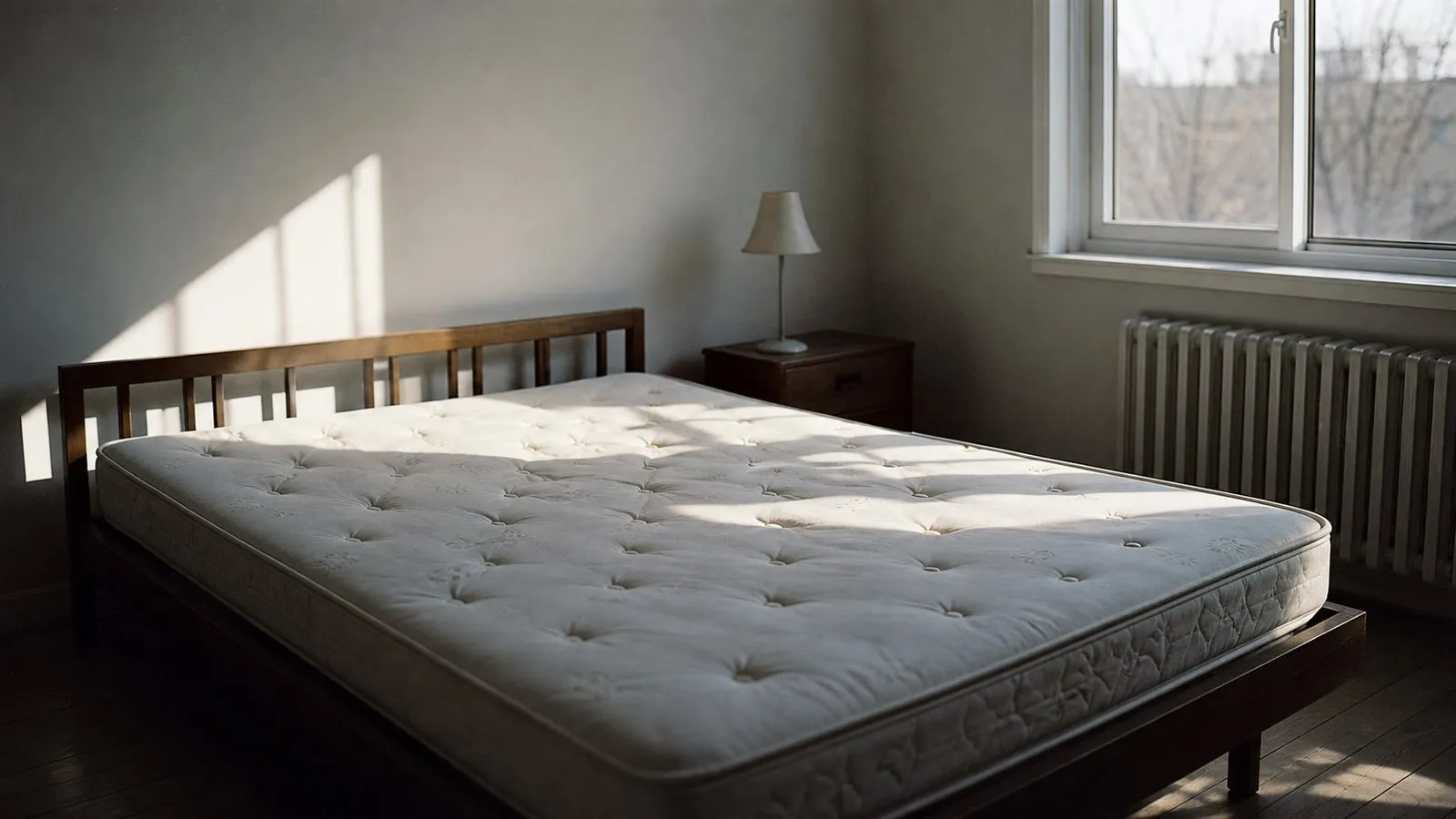
Polyurethane foam (a.k.a. solidified crude oil)
The squishy comfort layers in most conventional and memory-foam mattresses are polyurethane foam — a petroleum-derived plastic. It’s the primary source of those VOCs we just talked about. “Memory foam” and “polyfoam” are the usual suspects, and cheaper foam with stronger adhesives tends to off-gas more.
Phthalates (the plasticizers)
Phthalates are added to soften plastics — think the vinyl-y cover or certain foam components. They’re endocrine disruptors, meaning they can interfere with your hormones, and they don’t stay put: they migrate out of the product over time. A pair of 2025 University of Toronto studies, flagged by the Environmental Working Group, tested 16 children’s mattresses and found measurable phthalates in them — one even exceeded Canada’s regulatory limit for a specific phthalate.
Adhesives, dyes, and “fragrance”
The glues holding the layers together, the dyes in the fabric, and any added scent all contribute to the chemical cocktail. As with most products, “fragrance” on a label is a legal black box that can hide dozens of undisclosed compounds.
Flame Retardants & the Fiberglass Plot Twist
This is the section where most “toxic mattress” articles get it wrong, so stick with me.
For years the scary buzzword was PBDEs (polybrominated diphenyl ethers) — flame retardants linked to hormone disruption and developmental harm. Here’s the thing: U.S. manufacturers voluntarily phased PBDEs out around 2004–2005. So if you’re reading a blog post in 2026 that says your new mattress is “full of PBDEs,” that’s mostly outdated. (Caveat: some imported foam can still contain them.)
What’s actually going on is more interesting. By federal law, every mattress sold in the U.S. has to survive an open-flame test — a blowtorch held to it for 70 seconds — under CPSC standard 16 CFR Part 1633. (Side note for the internet: California’s TB117 is the furniture rule — it doesn’t govern mattresses, and the federal standard pre-empts it anyway.) Manufacturers almost always pass this test using a fire barrier — a sock-like layer wrapped around the foam — rather than dousing the foam in chemicals. So far, reasonable.
The problem is what the barrier is made of, and you usually have no idea:
- Fiberglass. It’s cheap, it’s effective, and it’s incredibly common in budget and bed-in-a-box mattresses. Fiberglass is fine while it’s sealed inside. The trouble starts when people unzip the outer cover to wash it — which is exactly why those covers say “DO NOT REMOVE.” Once fiberglass particles escape, they get into your skin, your lungs, your laundry, your HVAC system, and according to the Sleep Foundation, they’re nearly impossible to fully clean up. There are horror stories of families tossing the mattress and the contents of the whole room.
- Chemical flame-retardant barriers. Not gone, just quieter. That 2025 children’s-mattress study found TCEP — a flame retardant and probable carcinogen that’s been banned in Canada since 2014 — in one of the beds tested.
- Natural barriers. Wool (which is naturally flame-resistant) or a silica-based layer can pass the same federal test with zero added chemicals. This is what the good organic brands use, and it’s the whole ballgame.
💡 The Quick Check
If your mattress tag says “do not remove cover” and lists glass fiber, fiberglass, or “glass wool” in the materials, that’s your fire barrier. Don’t unzip it — ever. If you want to wash something, put a zippered (non-PFAS) protector over the whole thing instead.
PFAS: The Forever Chemicals in Your Waterproofing
PFAS — per- and polyfluoroalkyl substances — are the “forever chemicals” you’ve heard about in cookware and water. They’re prized because they repel water and stains, and they’re a problem because they essentially never break down, in the environment or in you.
Here’s the honest version, because accuracy matters: PFAS aren’t inherently baked into mattress foam. They show up specifically in stain-resistant and waterproof treatments — the “spill-proof” coating on some mattresses, and especially on a lot of mattress protectors. So that waterproof protector you bought to be responsible? Worth checking. And to be straight with you, that 2025 study did not detect PFAS in the mattresses it tested — its findings were about phthalates and flame retardants. PFAS is a real, documented concern in bedding, but it’s a “check your waterproofing” issue, not a “every mattress is soaked in it” one. The good news: quality organic brands now get specifically validated for non-detectable PFAS, so you can sidestep it entirely.
Okay, But Is This Actually Making Me Sick?
Time for the nuance the scaremongers leave out. For a healthy adult, a quality, emissions-certified foam mattress that’s been aired out is not going to drop you. The acute risk is low, and a single night of “new mattress smell” is not a medical emergency. Anyone telling you your bed is definitely giving you cancer is selling something.
But. Two things make the picture less reassuring:
1. Chronic, low-level exposure to vulnerable people. The concern isn’t one big toxic hit — it’s a small dose, every night, for years, breathed in from inches away. That math hits hardest for people with asthma or chemical sensitivities, and especially for infants and young children, whose developing bodies, lower body weight, and face-down sleeping make the same mattress a much bigger exposure. The 2025 University of Toronto research found that children’s bedroom air had the highest chemical concentrations right next to the mattress, and identified the mattress as the likely main source. The phthalates and flame retardants they measured are hormone disruptors that research links to neurological harm in kids.
2. You can’t air out what doesn’t stop. “Off-gas it in the garage for a few days” helps with the initial VOC spike, but it does nothing for the flame barrier you can’t see, the fiberglass you shouldn’t touch, or the low-level emissions that continue for years.
So: not a five-alarm fire, but absolutely a “why would I keep sleeping on this if I have a choice” situation — particularly for kids and anyone sensitive.
Start Living Low Tox
Sign up for occasional low tox inspo, honest reviews, non-toxic swaps, and helpful picks for a healthier home and lifestyle.
Non-Toxic Mattress Certifications, Decoded
Here’s where it gets infuriating: “non-toxic,” “natural,” “eco,” “green,” and “clean” are marketing words with no legal definition. A mattress can be 95% polyurethane and still get called “natural” because it has a wool-blend cover. The only words that mean anything are the third-party certifications — and even those don’t all measure the same thing. Let me translate.
GOTS — Global Organic Textile Standard
The gold standard for what’s in the soft stuff (cotton, wool). Requires at least 95% certified-organic fibers, bans a long list of nasty inputs even in the other 5%, and adds social/labor criteria. If the cotton and wool are GOTS-certified, that’s the real deal.
GOLS — Global Organic Latex Standard
GOTS, but for latex. Verifies the latex is 95%+ certified organic and traceable from the rubber tree forward. If a mattress brags about “natural latex” with no GOLS behind it, ask why.
OEKO-TEX Standard 100
Tests the finished product against limits for a list of harmful substances (formaldehyde, certain flame retardants, allergenic dyes, heavy metals). Useful — but note it certifies “below harmful limits,” not organic and not chemical-free. Class I is the strictest tier, the one used for baby products.
GREENGUARD Gold
This one trips people up. GREENGUARD Gold tests emissions — how much VOC and formaldehyde off-gasses into the air — against strict limits. That’s genuinely valuable. But read this twice: it tells you what comes out, not what’s in. A polyurethane mattress can be GREENGUARD Gold certified. Low-emitting ≠ organic ≠ made of clean materials.
CertiPUR-US
The one you’ll see plastered on bed-in-a-box sites. Real talk: it’s a foam-only certification, created and funded by the polyurethane foam industry (the Alliance for Flexible Polyurethane Foam). It means the foam avoids certain bad actors — PBDEs, formaldehyde, high VOCs, certain heavy metals — and that’s not nothing. But it only covers the foam, not the cover, the barrier, or the assembled mattress, and it doesn’t make anything organic. Treat it as a baseline floor, not a “this is clean” green light.
MADE SAFE & EWG Verified
The two strictest, whole-product screens. MADE SAFE checks a product against 6,500+ banned or restricted substances (carcinogens, endocrine disruptors, hazardous flame retardants). EWG VERIFIED is even tighter, demanding full ingredient disclosure and rejecting anything on EWG’s health-risk lists. When you see these, someone did the homework for you.
💡 How to Read a Mattress Like a Pro
No single badge covers everything. Stack them: GOTS + GOLS tells you what it’s made of, GREENGUARD Gold tells you what comes out, and MADE SAFE or EWG Verified screens the banned-substance list. One CertiPUR-US logo on its own is not the flex the marketing wants you to think it is.
So What Do You Actually Sleep On?
You don’t fix this by spritzing the mattress with essential oils. The only real fix is a mattress built without the problem materials in the first place — no polyurethane foam to off-gas, no fiberglass barrier to fear, no chemical flame retardants, no PFAS coating. That’s a short list of brands, and the one I keep landing on is Naturepedic — and if you want the full head-to-head, here’s how it compares to a conventional mattress, layer by layer.
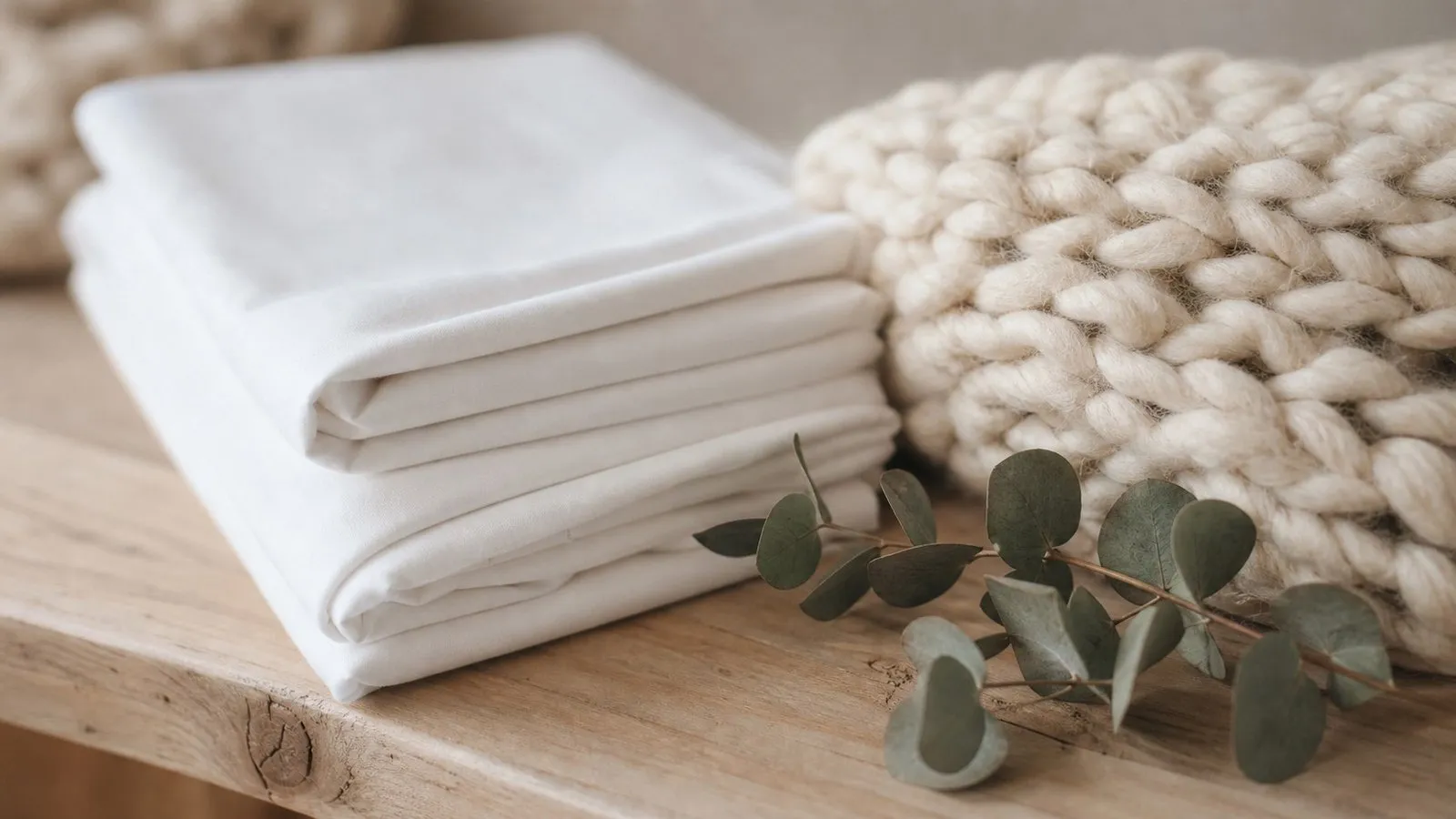
Here’s why it earns the spot, using the exact framework from the section above. Naturepedic builds with organic cotton, organic wool, and GOLS-certified organic latex — and skips polyurethane foam, fiberglass, and chemical flame retardants entirely. Their fire barrier isn’t a mystery sock; it’s organic wool, which is naturally flame-resistant and passes the same federal open-flame test with nothing sprayed on it. No fiberglass to escape, no flame-retardant chemistry to inhale.
And they don’t just say “non-toxic” — they carry the certification stack that actually backs it: GOTS, GOLS, GREENGUARD Gold, MADE SAFE, and EWG VERIFIED (they were the first mattress brand to earn it), plus UL validation for formaldehyde-free and non-detectable PFAS. That’s what’s-in-it, what-comes-out, and banned-substances coverage — the whole stack, not one convenient logo.
Organic cotton, organic wool, and GOLS organic latex — zero polyurethane foam, zero fiberglass, zero chemical flame retardants. GOTS, GOLS, GREENGUARD Gold, MADE SAFE, and EWG Verified certified. The EOS is the one reviewers keep crowning — five firmness levels, and couples can set each side differently — while the Serenade is the gentler-on-the-wallet way in. A fraction of what a “luxury” foam mattress costs — and the one you’ll actually stop thinking about at 2 a.m.
Shop Naturepedic →And let’s kill the “organic is too expensive” myth right here. People will cheerfully drop five figures on a “luxury” mattress — and plenty of those $5,000-and-up beds are still built on the same polyurethane foam and mystery fire barriers we just spent this whole article avoiding. Next to that, a certified-organic mattress in the $2,000 range isn’t the splurge. It’s the sane option. You sleep on it about 3,000 hours a year for a decade — it’s the last place to cheap out, and one of the only upgrades where paying less actually gets you the cleaner product.
💡 If a New Mattress Isn’t in the Budget Right Now
Three free-to-cheap moves that still help: (1) never unzip the cover if there’s any chance of fiberglass; (2) add a GOTS-certified organic cotton or wool protector — not a PFAS-treated “waterproof” one — to put a clean layer between you and the foam; and (3) when you do buy new, air it out in a ventilated room for a few days before you sleep on it. None of this is as good as starting clean, but it’s a real improvement for $0–$60.
The Bottom Line
Your mattress probably isn’t going to kill you tonight — but it’s also the last place you’d want a slow drip of toxic mattress chemicals, hidden fiberglass, and undisclosed flame retardants, given how many hours you spend on it. The fix isn’t fear; it’s information. Now you can read a spec sheet, ignore the “natural” marketing fluff, recognize a real certification stack, and pick a bed that lets you actually breathe easy in it.
Want the rest of the clean-sleep playbook — sheets, pillows, protectors, the works? It’s all in the Non-Toxic Bedding Shop.
Sleep well — for real this time. — Me ♥︎
Frequently Asked Questions
Are mattresses actually toxic?
Conventional mattresses commonly contain polyurethane foam, phthalates, adhesives, and a flame barrier that may be fiberglass or chemically treated — all of which can release VOCs or migrate out over time. For a healthy adult, an aired-out, emissions-certified mattress is low risk. The bigger concern is chronic, low-level exposure for infants, young children, and people with asthma or chemical sensitivities.
How long does a new mattress off-gas?
VOC emissions are highest in the first 72 hours and drop 50–80% within a week. The strong smell usually fades in a few days to a couple of weeks. But low-level emissions from polyurethane foam continue at a reduced rate for the life of the mattress — airing it out handles the spike, not the slow trickle.
Is memory foam toxic?
Memory foam is polyurethane foam, which off-gasses VOCs like formaldehyde, benzene, toluene, and acetaldehyde — most heavily when new. A CertiPUR-US or GREENGUARD Gold certification means lower emissions, which helps, but it’s still a petroleum-based foam. If off-gassing is a dealbreaker for you, organic latex or an innerspring with natural fibers avoids polyfoam entirely.
Does my mattress have fiberglass in it?
Possibly — it’s a very common, cheap fire barrier in budget and bed-in-a-box mattresses. Check the law tag: if it lists “glass fiber,” “fiberglass,” or “glass wool,” and the cover says “do not remove,” that’s your barrier. Leave the cover zipped; fiberglass is only a problem if it escapes, and once it’s loose in your home it’s extremely hard to clean up.
Is CertiPUR-US enough to call a mattress non-toxic?
Not on its own. CertiPUR-US is a foam-only certification funded by the polyurethane foam industry. It confirms the foam avoids PBDEs, formaldehyde, certain heavy metals, and high VOCs — a useful baseline — but it doesn’t cover the cover, the flame barrier, or the assembled mattress, and it doesn’t make anything organic. For real coverage, look for GOTS/GOLS plus GREENGUARD Gold and a whole-product screen like MADE SAFE or EWG Verified.
What is the least toxic type of mattress?
A certified organic mattress made of organic cotton, organic wool, and GOLS organic latex, using wool as a natural flame barrier (instead of fiberglass or chemical retardants). Look for a stack of certifications — GOTS, GOLS, GREENGUARD Gold, MADE SAFE, EWG Verified — rather than a single badge. Brands like Naturepedic are built to this spec.