Circadian vs. Conventional Pillows: What’s Actually In Yours?
They look the same in a pillowcase. Inside, one is polyester or foam at a height somebody else picked, and the other is a single natural fill you can open up and adjust. Here’s the layer-by-layer breakdown, what’s actually certified, and whether it’s worth trading up.
♥︎ Affiliate Disclosure: This post contains affiliate links. If you shop through them, I may earn a small commission at no extra cost to you. Your support keeps Clean AF Life thriving — endlessly appreciated.
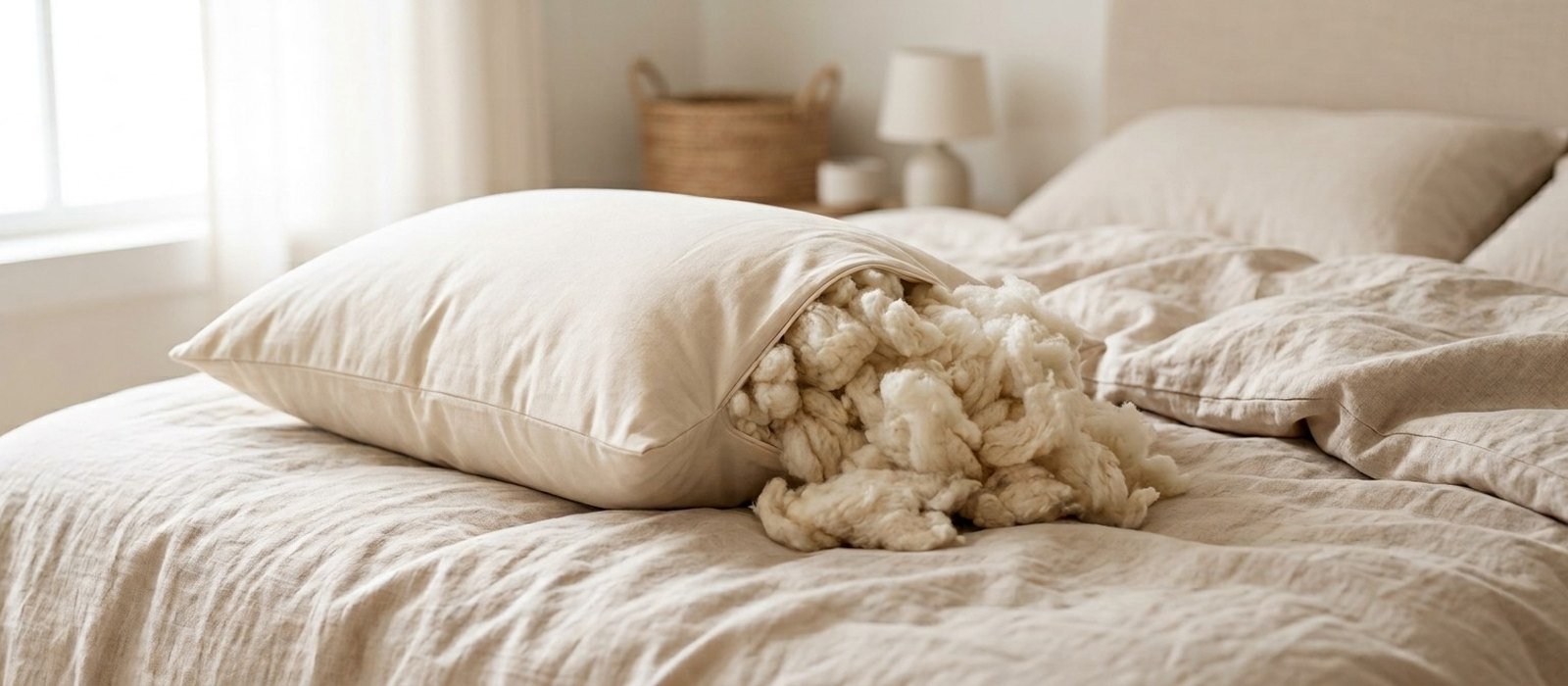
Put a Circadian pillow and a conventional pillow side by side in matching pillowcases and you genuinely can’t tell them apart. Same rectangle, same squish when you press on it. Everything that matters is zipped up inside where you’ll never look, and the two insides have almost nothing in common.
If you’ve read Pillow Fill Types, you already know what most pillows are made of. (If you haven’t, that’s the deep dive — go read it, then come back.) This is the next question, the one you ask right before you actually buy: how different is one natural pillow brand from the pillow you already own, really, and is it worth leaving the home goods aisle for?
⏱️ The 60-Second Verdict
Conventional: polyester fiberfill or polyurethane memory foam, a height you can’t change, and a “hypoallergenic” label with no standard behind it. Usually flat within a year or two. Circadian: one natural fill per pillow, a zipper on every one, a refill sold for every fill, and the cotton and wool pillows certified organic top to bottom. Worth it? If your pillow is giving you a stiff neck, sleeping hot, or going flat, yes — and the 60-night trial means you find out on your own bed, not in a store.
Circadian vs. Conventional, on One Chart
Before we go layer by layer, here’s the whole comparison in one place — a conventional pillow versus a Circadian pillow, attribute by attribute:
| Layer | Conventional Pillow | Circadian |
|---|---|---|
| Fill | Polyester fiberfill (“down alternative”) or polyurethane memory foam | One natural fill per pillow: organic cotton, organic wool, kapok, buckwheat hulls, shredded natural latex, or a buckwheat + wool hybrid |
| Cover | Often polyester or a poly-cotton blend | Organic cotton on all six |
| Certifications | “Hypoallergenic” (no standard behind it); foam pillows may carry CertiPUR-US, which covers the foam only | Cotton and wool pillows: GOTS Certified Organic as a finished pillow, fill and cover. Latex: OEKO-TEX Standard 100 Class 1, from FSC-certified rubber trees. The rest: organic cotton cover |
| Height | Fixed. What you bought is what you get | Adjustable on all six through a side zipper, shipped with extra fill to take out |
| Heat | Foam holds it — memory foam is designed to soften with body heat | Depends on the fill: air moves through buckwheat, kapok and latex; wool pulls moisture off your skin |
| When it goes flat | Replace it, often within a year or two | Top it up — a refill is sold for every fill |
| Trial | Rare for a store-bought pillow | 60 nights, with a return label if it’s not the one |
Now the parts worth slowing down on.
What’s Actually in a Conventional Pillow
I did the full teardown in Pillow Fill Types, so here’s the speed round. A conventional pillow is usually one of two materials, plus a label doing a lot of heavy lifting:
- Polyester fiberfill. Sold as “down alternative,” which is the single best piece of naming in the bedding industry. It’s plastic fiber, puffed up, and it compresses permanently, which is why it turns into a warm, flat envelope you fold in half within a year or two.
- Polyurethane memory foam. Petroleum foam engineered to soften with body heat, then marketed to you as “cooling.” Warmth is also what nudges off-gassing up, and this is the foam parked under your nose for eight hours a night.
- A label with nothing behind it. “Hypoallergenic” isn’t a standardized guarantee for pillows. And the CertiPUR-US logo on a foam pillow covers the foam, not the whole pillow.
One thing I won’t tell you: that your pillow is soaked in flame retardants. The federal flammability rules everyone cites, 16 CFR 1632 and 1633, cover mattresses, and bed pillows are excluded. The foam and the heat are the real story, and they’re plenty.
The kicker: from the outside, you can’t see any of it. Which brings us to the other corner.
What’s in a Circadian Pillow
Same teardown, other corner. Circadian is a natural-pillow brand, and its pillows are filled and sewn by hand in a New Jersey workshop. It’s basically a conventional pillow with every part swapped out:
- One natural fill per pillow, six to pick from. Organic cotton, organic wool, wild-harvested kapok, USA-grown buckwheat hulls, shredded natural latex, or a buckwheat-and-wool hybrid that keeps its two fills in separate chambers. No blends, so each fill behaves like itself when you take some out.
- A zipper on every single one. Each pillow ships with about 30% more fill than most people keep, so you take it down to your height instead of living with somebody else’s guess.
- A refill for every fill. When it settles, you add a bag of the same fill instead of buying a new pillow. That’s the part that changes the math.
- Organic cotton covers across the board, and no polyester or foam in the fill.
Here’s what’s certified:
🏅 What’s Certified
Organic Cotton and Organic Wool: GOTS Certified Organic as finished pillows — the fill and the cover. Tree-Tapped Latex: OEKO-TEX Standard 100 Class 1, on FSC-certified rubber. Kapok, Buckwheat and Buckwool Hybrid: organic cotton covers over wild-harvested kapok, USA-grown hulls, and organic wool.

Why It’s Worth It
Worth every penny, and I don’t hand that out often. A polyester pillow goes flat in a year or two — not because it wears out, but because the fiber compresses and stays that way. You replace it, then you replace it again. That’s the real price of the cheap pillow.
A Circadian pillow doesn’t do that. When the fill settles you add more of the same fill and it’s back to day one, which puts the best pillow you’ll ever sleep on at about a dime a night for the thing your face is pressed into for a third of your life.
You get 60 nights on your own bed, and they cover the return if it’s not the one. It will be. And if it feels off out of the bag, that’s the height, not the pillow — take some fill out and break it in properly.
Start Living Low Tox
Sign up for occasional low tox inspo, honest reviews, non-toxic swaps, and helpful picks for a healthier home and lifestyle.
Which Circadian Pillow Is Right for You
Six fills, and they are not interchangeable. Pick by how you sleep, not by which one sounds nicest:
- Organic Cotton — the familiar one. Medium, dense, and feels like what you already think a pillow should feel like. Certified organic top to bottom, and the easiest first natural pillow.
- Organic Wool — the night-sweats one. Wool pulls moisture off your skin, which is what actually makes you feel hot. Also certified organic top to bottom.
- Wild-Harvested Kapok — the soft one. The closest thing to down without a feather in it. Best for stomach sleepers and anyone who wants a low, squishy pillow.
- Buckwheat — the firm one. The hulls lock around your neck and hold that shape all night. Best for side sleepers and neck pain.
- Buckwool Hybrid — two pillows in one. Buckwheat on one side, wool on the other, each side adjustable. For combination sleepers, and anyone who wants firm and soft in one pillow.
- Tree-Tapped Latex — the memory foam replacement. Shredded natural latex, OEKO-TEX Class 1 certified, that pushes back instead of sinking. (Latex allergy? Go with their kapok, cotton or wool instead.)
Soft, light and down-like, from a seed pod instead of a bird. I sleep on it side and stomach, pulled some fill out after the first night, and haven’t touched the zipper since. One fill, an organic cotton cover, and exactly the squish I wanted. Want something firmer? Start with their buckwheat or organic cotton instead.
Shop Circadian →The Bottom Line
A conventional pillow and a Circadian pillow look identical in a pillowcase and could not be more different inside. One is polyester or foam at a height somebody else picked. The other is one natural fill you can open up, adjust, and top up for years. The natural one costs more up front, and pays you back by not needing to be replaced every year or two.
Worth it? For the thing your face is pressed into for eight hours a night — if your current pillow is bothering you, yeah. Pick the Circadian fill that matches how you sleep, take some fill out, and give it a week.
Still deciding between fills? Pillow Fill Types breaks down all six. Already ordered? Here’s how to break it in.
— Me ✌︎
Frequently Asked Questions
Is a Circadian pillow worth the money?
If your current pillow is giving you a stiff neck, sleeping hot, or going flat, yes. Every Circadian pillow adjusts through a zipper and has a refill sold for its fill, so you top it up instead of replacing it every year or two, and there’s a 60-night trial if it isn’t the one.
What’s the difference between a conventional pillow and a Circadian?
The fill. A conventional pillow is usually polyester fiberfill or polyurethane memory foam at a fixed height. A Circadian uses one natural fill (organic cotton, organic wool, kapok, buckwheat, natural latex, or a buckwheat-and-wool hybrid) inside an organic cotton cover, and every one adjusts through a side zipper.
Are Circadian pillows certified organic?
The Organic Cotton and Organic Wool pillows are GOTS Certified Organic as finished pillows, fill and cover. The latex pillow’s latex is OEKO-TEX Standard 100 Class 1 certified, from FSC-certified rubber trees. Every Circadian pillow comes in an organic cotton cover.
Which Circadian pillow should I get?
Side sleeper or neck pain: buckwheat. Stomach sleeper, or you want it low and soft: kapok. Night sweats: wool. Leaving memory foam: latex. Torn between firm and soft: the buckwool hybrid. Want the easiest switch from a regular pillow: organic cotton.
Where are Circadian pillows made?
By hand, in a GOTS-certified workshop in New Jersey.