Best Non-Toxic Shower Filters: What’s Actually Coming Out of Your Showerhead
Half the pretty shower filters on your feed are just vibes. Here’s what a non-toxic shower filter can (and can’t) actually do — and the four that genuinely work.

♥︎ Affiliate Disclosure: This post contains affiliate links. If you shop through them, I may earn a small commission at no extra cost to you. Your support keeps Clean AF Life thriving — endlessly appreciated.
You filter your drinking water. Maybe you spent a whole weekend spiraling over your cookware. But here’s the thing nobody warned you about: you’re standing in unfiltered tap water for ten minutes every morning, in a steamy little box, breathing it in.
A non-toxic shower filter is one of the cheapest, highest-impact swaps in this whole non-toxic-home rabbit hole — and also one of the most oversold. Half the pretty filters on your For You page barely do anything, and the ones that actually work don’t all do the same thing. So let’s fix that. I’ll show you what’s really in your shower water, what a filter can (and honestly can’t) do, and the four that are genuinely worth buying.
Why Your Shower Water Needs Filtering
Your city adds a disinfectant to tap water to keep it safe on the way to your house. That’s a good thing — it’s the reason we don’t get cholera. The catch is that the two disinfectants they use, chlorine and chloramine, don’t just vanish when the water reaches you.
In a hot shower, two things happen. The heat turns some of that chlorine into a vapor you breathe in through the steam, and the rest sits on your skin and hair the whole time you’re in there. Here’s the part that surprised me: researchers estimate that about half of the chlorine exposure you get in a shower comes from inhaling it — not from the water touching your skin. That tight, dry, “my scalp feels weird” feeling after a shower in a heavily chlorinated town? That’s it — the same thing that turns your hair to straw after a day in the pool, just dialed way down.
There’s also a second character: disinfection byproducts (scientists call them DBPs). They form when chlorine reacts with the everyday organic gunk in water, and a hot, steamy shower is the one place you actually breathe them in. That’s the real case for a filter — not fear, just: why breathe and soak in it if you don’t have to?
Chlorine vs. Chloramine (The Part Nobody Mentions)
Here’s what the pretty-packaging brands skate right over: chlorine and chloramine are two different problems, and almost every filter only handles one of them.
The guts of most shower filters is a copper-zinc media (you’ll see it called KDF) plus a carbon or mineral blend. It’s genuinely great at chlorine. But chloramine — chlorine bonded with ammonia — is a tougher, more stable molecule, and independent testing puts those same filters at under about 50% on it. Not a scam; just the wrong tool for that job.
So before you buy anything, do one thing: look up your city’s water quality report (it’s public — search “[your city] water quality report,” or call your utility) and find out: chlorine or chloramine? If it’s chlorine, any filter below will treat it. If it’s chloramine, temper your expectations — and I’ll tell you honestly what your options are further down.
What a Shower Filter Can’t Do
Quick reality check, because the marketing gets wild:
- It does not meaningfully remove fluoride. The standard KDF and carbon filters — which is nearly all of them — don’t touch it. (Fluoride is a reverse-osmosis job, not a showerhead.)
- It’s not a lead or heavy-metal remover. That’s a whole-house or drinking-water filter’s job.
- It won’t make hard water soft. It can genuinely help your skin and hair, but “softening” is a completely different system.
And most filters don’t remove DBPs or PFAS either — only a couple do, which is exactly what separates the great ones from the merely fine ones. Which brings us to the useful part.
They All Kill Chlorine — Here’s What’s Different
Every filter I’m recommending is certified or independently lab-proven to knock down free chlorine. That’s the baseline win — softer skin, hair that isn’t stripped, no chlorine smell. On that one job, a budget filter and a fancy one are doing the same thing.
The difference is what they do beyond chlorine: the DBPs you inhale in the steam (only two of these remove them), and PFAS forever chemicals (only one is independently proven to reduce them).
💡 Which One’s for You?
Just want better skin and hair? Any of the four works — pick on budget or style. Want to also cut the byproducts you breathe in? Weddell or AquaTru. Want the works, PFAS included? Weddell.
One gut-check on the word “certified,” courtesy of Sprite — a brand that’s actually certified and clearly fed up with the ones that fake it: “Vague claims of ‘Certified Filtration Media’ can give the perception of legitimacy to multi-stage shower filters where only one filtration ingredient among many was tested.” Translation: “certified media” is not the same as a “certified filter.” Always check that the whole unit is certified — not one ingredient buried inside it.
The 4 Actually Worth Buying
Every one of these earns its spot by genuinely cleaning the water.
The one that does the most, and the one I’d point almost everyone to first. Independently certified for chlorine, lab-tested to remove the disinfection byproducts you breathe in, and the only shower filter with independent proof it cuts PFAS by 99%+. It’s an inline design, so you keep the showerhead you already love.
Shop on Amazon →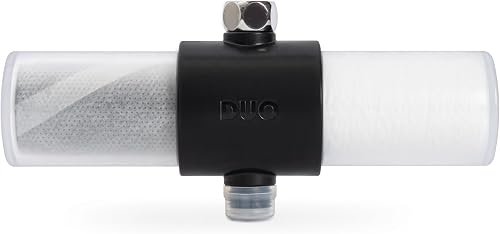
Rather swap in a whole new head than add a filter behind your old one? This is it. One of only two filters here proven to cut disinfection byproducts — not just chlorine — in a sleek showerhead with real water pressure and multiple spray modes.
Shop on Amazon →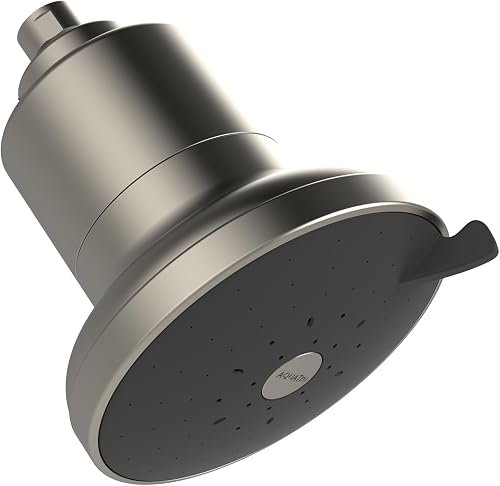
The no-drama, does-exactly-what-it-says pick. Independently tested to NSF’s shower-filter standard to reduce over 90% of chlorine, with a coconut-carbon and copper-zinc blend — and, crucially, no drop in water pressure (where a lot of filters quietly ruin your shower). Certified-level performance without the premium price.
Shop on Amazon →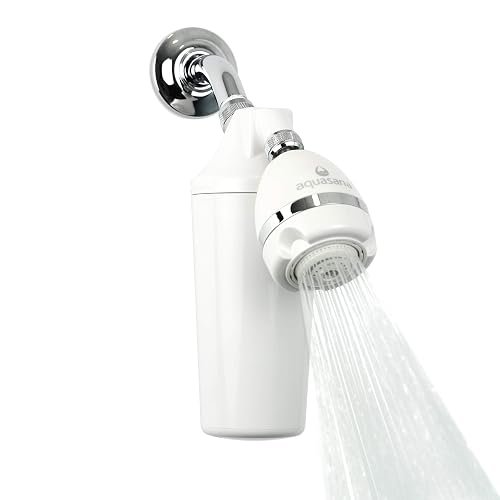
Proof you don’t have to spend big to get the real thing. Sprite’s Chlorgon media is genuinely NSF-certified for chlorine reduction, it’s the most affordable option here, and it comes as either an inline filter or a full showerhead — your call.
Shop on Amazon →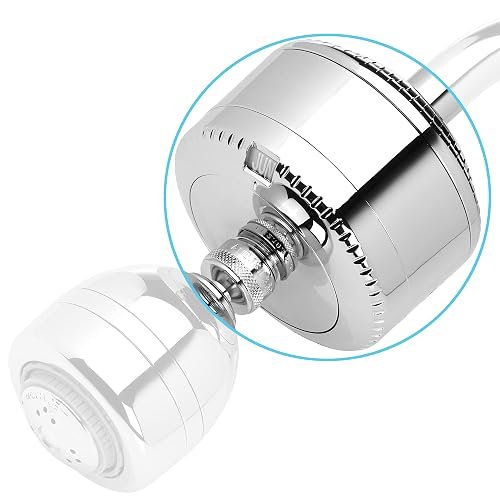
Start Living Low Tox
Sign up for occasional low tox inspo, honest reviews, non-toxic swaps, and helpful picks for a healthier home and lifestyle.
But What If My City Uses Chloramine?
If your report came back chloramine, none of these fully handles it. No shower-sized filter is certified to remove chloramine — the water moves too fast through too little media. The best available chemistry is a Vitamin-C filter (it neutralizes chloramine on contact, though real-world results are debated), and the only sure fix is treating it whole-house, where the water enters your home. If you want to go that route, RKIN is a reputable name — their carbon system is genuinely built to handle chloramine. Anyone selling you a “99% chloramine, certified!” showerhead is stretching it — check the fine print and you’ll almost always find the certification is for chlorine only.
How to Install It (5 Minutes, No Plumber)
It’s a sandwich. If you’re keeping your showerhead, get an inline filter (like the Weddell, or Sprite’s inline) — it screws onto the pipe, and your head screws back onto it. If you’d rather replace the head entirely, get a filtered showerhead (AquaTru, Aquasana, or Sprite’s showerhead). Then swap the cartridge on schedule — usually every few months. A spent filter quietly stops working, which is the number one reason people wrongly decide “filters don’t do anything.”
Want my picks in one place? They live in the Water Filtration shop.
Happy showering. — Me ♥︎
Frequently Asked Questions
Do shower filters really work?
For chlorine, yes — that’s the skin-and-hair win, and it’s certifiable. Some filters (like the Weddell Duo and AquaTru) also remove the disinfection byproducts you inhale in the steam. What no shower filter meaningfully does is remove fluoride or lead — those need a different kind of system.
How do I know if my city uses chlorine or chloramine?
Your city’s annual water quality report (also called a Consumer Confidence Report) says which disinfectant it uses. Search “[your city] water quality report,” or call your water utility and ask. It’s one phone call, and it decides which filter is worth your money.
Do non-toxic shower filters remove fluoride?
No. The standard KDF and carbon media in shower filters don’t meaningfully reduce fluoride, and even the ones marketed for it struggle at shower flow rates. Removing fluoride is a reverse-osmosis or specialty job, not something a showerhead can do.
How often should I change the filter?
Follow the brand’s schedule — usually every few months, or a set number of gallons. A dead cartridge quietly stops working, which is the number one reason a filter seems useless. Set a reminder when you install it.
Will a shower filter actually help my hair and skin?
For a lot of people in chlorinated cities, noticeably — less of that tight, stripped feeling and less straw-like hair. Chlorine roughens the hair cuticle and strips natural oils, so reducing it is what your skin and hair are reacting to.
Which shower filter should I buy?
Want the most protection, including PFAS? The Weddell Duo. Want a premium all-in-one showerhead? AquaTru. Best value that’s still certified? Aquasana’s AQ-4100. Cheapest option that’s genuinely certified? Sprite.