Non-Toxic Cat Litter:What’s Really in That Dust
Every time you pour clay litter, a little cloud goes up. The company that makes it lists what’s in that cloud on its own safety sheet. Here’s what it says, what it actually means for your cat, and the non-toxic cat litter worth switching to.
♥︎ Affiliate Disclosure: This post contains affiliate links. If you shop through them, I may earn a small commission at no extra cost to you. Your support keeps Clean AF Life thriving — endlessly appreciated.
Your cat uses the litter box a few times a day, nose about two inches from whatever’s in there. You scoop it, pour it, and dump it — usually with your face right over the bag. So it’s worth knowing what that stuff is made of, and whether non-toxic cat litter is actually a thing or just a marketing phrase.
Short answer: it’s a real thing, and the reason why is printed in the litter company’s own paperwork.
What’s Actually in Clay Litter
Most cat litter on the shelf is clay. Clumping litter is usually sodium bentonite, a clay that swells up when it gets wet — that’s what makes the clumps. Non-clumping litter is usually a different absorbent clay.
Clay comes out of the ground, and the ground has quartz in it. So clay litter carries some crystalline silica along for the ride. That’s not a guess: the safety data sheet for Fresh Step’s clay litter lists quartz at 1–7%, and classifies the product as “may cause cancer” and a respiratory tract irritant.
Here’s the part that matters: crystalline silica is only a problem when it’s breathed in as fine dust. It’s the same stuff that’s dangerous for people who cut stone and concrete all day. Sitting quietly in a box, it isn’t doing anything. Kicked up into the air, it’s a different story.
So Is the Dust Dangerous?
Honestly? Not the way the scary headlines make it sound. California lists crystalline silica as a chemical known to cause cancer, but its regulators decided normal litter use — pouring it in and dumping it out — doesn’t expose you to enough of it to need a warning label. The industry says the same.
That doesn’t make the dust nothing. It means the dose is low, and you get to decide how much of it you want in your house. And the dust doesn’t only come from you pouring it:
- Your cat digs in it every single visit, face-first.
- Your cat grooms it off their paws afterwards.
- It settles on the floor around the box and gets tracked everywhere else.
Cats with asthma (somewhere between 1 and 5 in every 100 cats) and people with sensitive lungs feel litter dust the most, and low-dust, unscented litter is the standard advice for both. For everyone else, less dust is simply the better deal, and a non-toxic cat litter is the easiest way to get it.
💡 The Pour Trick
Whatever litter you use, pour it low and slow — hold the bag right at the rim of the box instead of up at chest height. Most of the dust cloud comes from the drop.
Scented Litter Is the Pointless Part
“Fresh scent,” “lavender,” “mountain breeze” — litter fragrance is the same synthetic fragrance that’s in plug-in air fresheners, just aimed at the most sensitive nose in your house. A cat’s sense of smell is many times stronger than yours, and they’re the one standing in it.
To be fair, plenty of cats use scented litter without complaining — one study found cats didn’t reliably pick unscented over scented. But fragrance doesn’t clean anything. It covers smell up, and it’s one more thing in the air for a cat with asthma. If your litter box smells, the fix is scooping more often and a litter that actually traps odor — not perfume on top. Every non-toxic cat litter below is unscented for exactly that reason.
Kittens Are the Exception
Adult cats rarely eat their litter. Kittens are a different story: they’re curious, they taste everything, and they groom litter off their paws while they’re still figuring out what the box is for.
Clumping clay is designed to swell up when it gets wet, and that’s exactly what you don’t want happening inside a tiny stomach. That’s why the common advice is non-clumping litter for kittens under about four months. A non-toxic cat litter made from paper or plants is a gentler choice here too — just remember that any litter can cause problems if a kitten eats a lot of it. If yours keeps snacking from the box, call your vet.
Recycled paper pellets that don’t clump — so there’s nothing in the box designed to swell up if a curious kitten takes a taste. Unscented and made in the USA.
Shop on Amazon →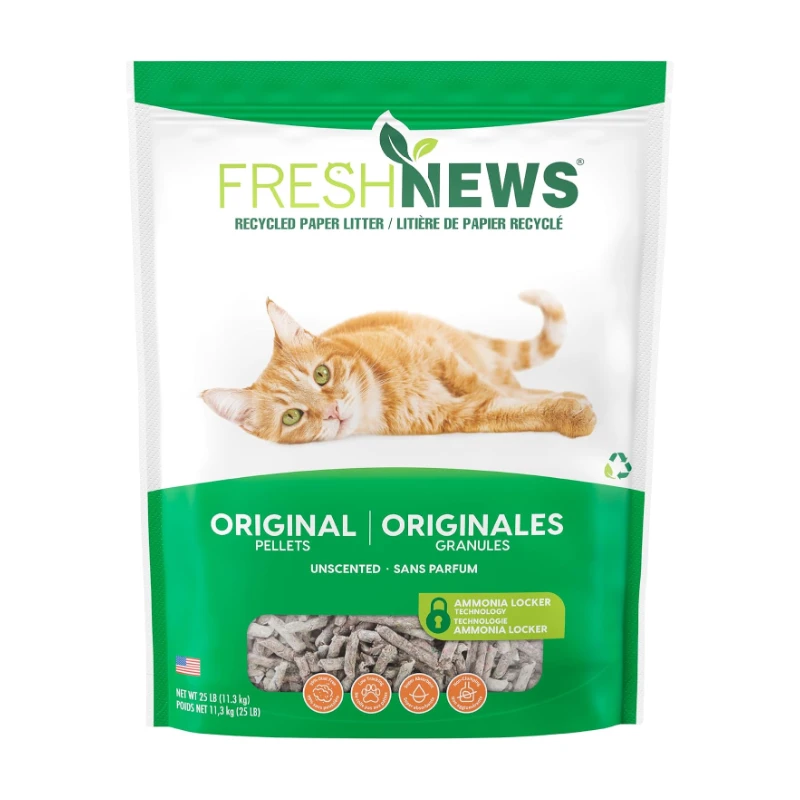
The Best Non-Toxic Cat Litter
Here’s what I look for in a non-toxic cat litter: a short ingredient list you can actually read, no added fragrance, and low dust. Plant-based litters tick all three boxes. These are my four picks, and you’ll find all of them on my Cat Litter shop page.
One ingredient: grass, grown in the US. No clay, no added fragrance, and it clumps into solid scoopable lumps — the easiest switch for cats who are used to clay.
Shop on Amazon →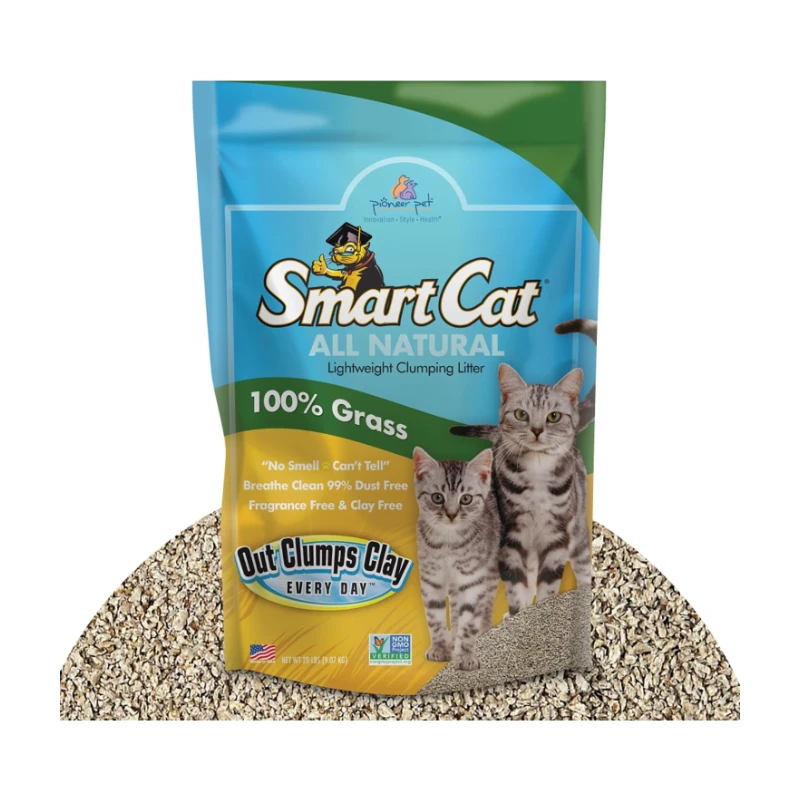
One ingredient: ground walnut shells. Naturally good at trapping smell, so you don’t need fragrance to cover anything up. Get the unscented bag — they make a scented one too.
Shop on Amazon →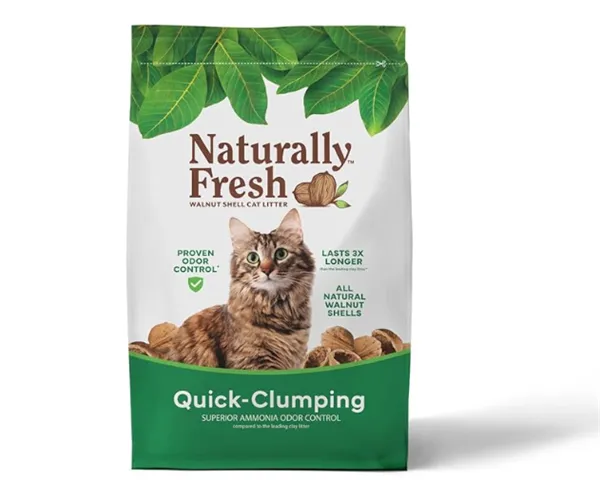
Five ingredients, all listed: soybean fiber, corn starch, corn flour, guar gum and charcoal. The pellets don’t stick to paws, so less of it ends up on your floors.
Shop on Amazon →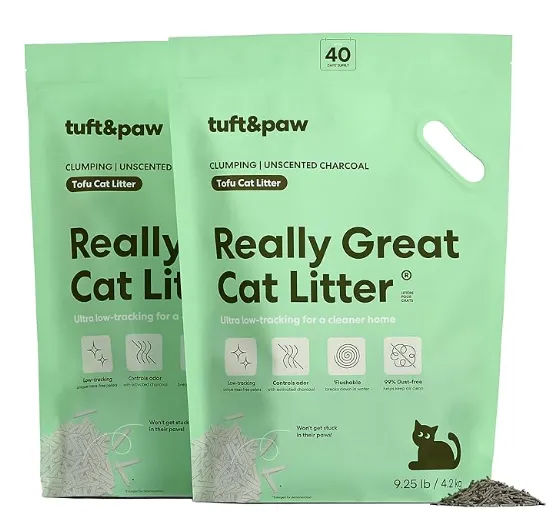
Pea husk, starch, corn powder and guar gum. Tiny 1.5mm pellets — smaller than most plant litters, which helps cats who are fussy about what’s under their paws.
Shop on Amazon →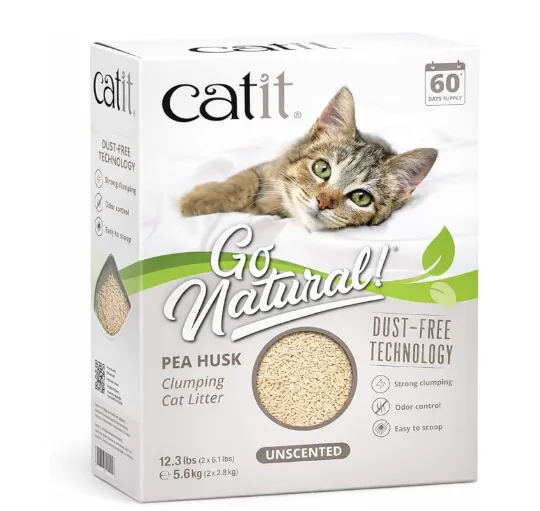
💡 Don’t Forget the Box
Plastic litter boxes get scratched up over time, and those scratches hold onto urine smell no matter how hard you scrub. A stainless steel litter box doesn’t scratch the same way, and it wipes clean.
Start Living Low Tox
Sign up for occasional low tox inspo, honest reviews, non-toxic swaps, and helpful picks for a healthier home and lifestyle.
How to Switch Without a Protest
Cats are creatures of habit, and switching to a new non-toxic cat litter overnight can get you the silent treatment — or worse, a little present next to the box. Go slow:
- Week one: mix about a quarter new litter into the old.
- Week two: go half and half.
- Week three: mostly new, then all new.
If your cat starts going outside the box, back up a step and slow down. And if you’ve got the space, the easiest trick of all is a second box with the new litter right next to the old one — let your cat pick.
The Bottom Line
Clay litter isn’t poison, and you don’t need to panic about the bag in your laundry room. But it does contain crystalline silica, the dust is the part you breathe, and fragrance adds nothing your cat asked for. A plant-based, unscented, low-dust non-toxic cat litter fixes all three — and your cat’s nose is two inches from the difference every single day.
Start with one bag, switch slowly, and see which one your cat likes best. Everything I recommend for the litter box — litters, stainless boxes and self-cleaning boxes — lives on my Non-Toxic Cat Litter & Litter Boxes page.
Happy scooping. — Me ♥︎