Non-Toxic Bakeware: The Truth About Nonstick Coatings (And What to Actually Bake With)
Your baking sheets and muffin tins spend 45 minutes in a 400°F oven. Here’s what’s actually coating them, why PFOA-free is a meaningless label, and what to bake with instead.
♥︎ Affiliate Disclosure: This post contains affiliate links. If you shop through them, I may earn a small commission at no extra cost to you. Your support keeps Clean AF Life thriving — endlessly appreciated.
You switched to a ceramic pan. You threw out the Teflon. You felt very smug about it. And then you slid a nonstick muffin tin into a 400°F oven and undid all of it.
Nobody talks about bakeware. Everyone’s obsessed with the frying pan situation — and fair, that’s a real situation — but your baking sheets, muffin tins, and casserole dishes are sitting in a significantly hotter oven for significantly longer and nobody’s asking questions. We’re asking questions.
The Bakeware Problem Is Actually Worse Than the Cookware Problem
Here’s the thing about nonstick coatings: they don’t love heat. Most PTFE-based coatings start breaking down around 500°F, and while your stovetop rarely hits that, your oven absolutely does — especially if you’re roasting vegetables, baking pizza, or just running the self-clean cycle with a pan inside.
Bakeware sits in that heat for 20, 30, 45 minutes at a time. Not a quick sauté. A long, slow, high-heat situation where whatever’s coating your pan has plenty of time to do things you didn’t consent to.
And unlike a scratched frying pan where you can see the damage, bakeware coating degradation is basically invisible. You won’t notice until it starts flaking into your banana bread, and by then you’ve been eating it for two years. Delicious.
The “PFOA-Free” Label Is Not the Win You Think It Is
Walk into any kitchen store and you’ll see “PFOA-free” on approximately every single piece of bakeware. It sounds reassuring. It is not reassuring.
PFOA was one specific chemical in the PFAS family — the one that got the most attention, caused the most lawsuits, and was largely phased out of US manufacturing by the mid‑2010s under an EPA phase‑out program. So when a brand says “PFOA-free” in 2026, they’re technically telling the truth while leaving out the part where they replaced it with other PFAS compounds that haven’t been banned yet.
PFAS is a family of thousands of chemicals, not one chemical. Removing one member of the family and marketing it as “non-toxic” is like removing one ingredient from a bad recipe and calling it health food. The dish still isn’t great.
This is why “PFOA-free” on bakeware means absolutely nothing. It’s the minimum legal requirement dressed up as a selling point.
The Nonstick Bakeware Brands: An Honest Breakdown
Caraway Bakeware
Ceramic coated aluminum. No PFAS, no PTFE — that part is true and genuinely better than conventional nonstick. But you’re paying a significant premium for what is ultimately a ceramic coating that will degrade with regular use and high heat, same as any other ceramic coated pan. The aesthetic is doing a lot of heavy lifting at that price point.
⚖️ THE CLEAN AF VERDICT
Fine. Overpriced. Replace it when it wears.
Nordic Ware
Here’s the thing nobody mentions when they recommend “uncoated” bakeware as the safe option: uncoated doesn’t automatically mean inert.
Nordic Ware’s standard bakeware line uses a natural aluminum base without nonstick coating — which sounds cleaner until you remember that aluminum is reactive with acidic foods and there’s a non-trivial body of research linking elevated aluminum exposure to neurological concerns. The science isn’t settled, but when your entire philosophy is “let’s stop putting questionable stuff in our food,” bare aluminum bakeware doesn’t clear the bar.
Their nonstick line uses a PTFE coating. That’s a different problem with the same conclusion.
⚖️ THE CLEAN AF VERDICT
Pass on both lines. There are better options.
USA Pan
USA Pan uses a silicone-based nonstick coating called “Americoat” — PTFE-free and PFOA-free, which is genuinely better than conventional nonstick. The base is aluminized steel, and the coating reduces direct food contact, which is the main concern with aluminum bakeware. However once that coating wears — and it will wear — you’re cooking on aluminized steel. More transparent than most brands, better construction than most coated bakeware, but not a forever solution.
⚖️ THE CLEAN AF VERDICT
One of the more honest options in the coated category. Know what you’re working with and replace it when the coating shows wear.
Stateside Bakeware
People are searching this specifically because the coating claims are circulating. Stateside uses a ceramic-based coating — PTFE-free and PFAS-free per their disclosure. Made in the USA, which matters for manufacturing oversight and third-party accountability. One of the more transparent domestic brands in the coated bakeware space.
⚖️ THE CLEAN AF VERDICT
Worth considering if you want coated bakeware and want to stay domestic. Still a coating that will eventually wear — treat it accordingly.
Whatever’s On Sale at TJ Maxx
It’s a nonstick coating on thin aluminum. You already know. Put it back.
The Actually Safe Bakeware Materials
If you want to get off the coating replacement cycle entirely, here’s what actually works:
Stainless Steel
Nothing to flake, nothing to coat, nothing hiding. Stainless steel is non-reactive, doesn’t leach into food, and will outlast every coated pan in your kitchen by about 20 years. The downside is sticking — stainless bakeware requires proper greasing and parchment paper for anything that might adhere. Line it with unbleached parchment (more on why unbleached in a minute) and the sticking problem is solved.
For everyday baking sheets, stainless steel is the move. Heritage Steel makes excellent stainless baking sheets — one of the few brands I’ll actually vouch for on materials and transparency.
Shop Heritage Steel →Best for: Roasting vegetables, sheet pan dinners, cookies, anything savory.
Shop Stainless Steel Bakeware →Glass — But Read This First
⚠️ The Pyrex Problem
Not all glass bakeware is created equal and this distinction actually matters.
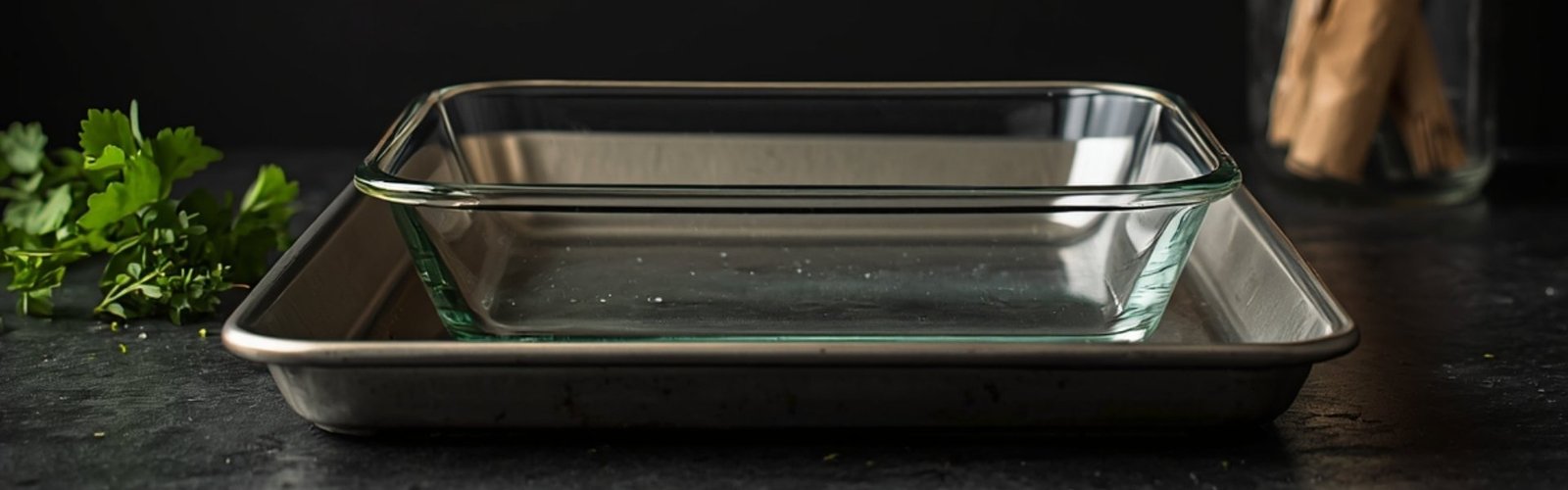
Borosilicate glass is what Pyrex was originally made from — thermal shock resistant, durable, completely inert. It’s what lab equipment is made from. It’s what you want.
Soda-lime glass is what most US Pyrex is now made from following a manufacturing change in the 1990s. It’s less thermal shock resistant, more prone to shattering when moved from a hot oven to a cold surface, and has been involved in enough shatter incidents that it’s worth knowing about before you buy.
If you’re buying glass bakeware, look specifically for borosilicate. Brands like Pyrex Europe, Simax, and Caraway’s glass line use borosilicate. Check before you buy — “glass bakeware” alone isn’t enough.
Borosilicate glass is completely inert — nothing leaches, nothing off-gasses, no coating to degrade. It goes from oven to fridge to table in one dish and lasts indefinitely if you don’t drop it.
Best for: Casseroles, lasagna, brownies, anything you’re storing and reheating in the same dish.
Shop Glass Bakeware →Pure Ceramic
Not ceramic coated — actual solid ceramic, fired clay all the way through. No coating, no degradation, no leaching concerns.
The brand most people cite is Xtrema. Importantly, Xtrema does third-party testing for lead and cadmium — two legitimate concerns with ceramic products — and publishes those results. That transparency matters. Don’t just buy any “pure ceramic” bakeware; make sure the brand can show you third-party safety testing, because not all of them do.
Pure ceramic is heavy, oven safe to very high temps, and genuinely inert. The downside is fragility — drop it and it’s done. Also not cheap.
Best for: Casseroles, baked pasta, anything low and slow.
If Xtrema is out of the budget, stoneware is a solid alternative — same fired clay approach, no synthetic coating, and significantly more accessible in price. Not as extensively third-party tested as Xtrema, but a reasonable step in the right direction.
Shop Stoneware →Enameled Cast Iron
Le Creuset territory — or the more affordable Lodge Enameled line if Le Creuset’s price tag makes you need to sit down for a minute.
The enamel coating is inert and food-safe, no seasoning required, goes from stovetop to oven without complaint. One important maintenance note: inspect your enameled cast iron regularly. Chipped enamel means the protective barrier is gone — at that point you’re cooking on bare cast iron at best and potentially ingesting enamel fragments at worst. A chipped piece needs to be replaced.
Heavy as a moral obligation, but a properly maintained enameled Dutch oven is a forever purchase if you treat it right.
Best for: Dutch ovens, braises, bread baking, anything that needs serious heat retention.
Shop Enameled Cast Iron →Start Living Low Tox
Sign up for occasional low tox inspo, honest reviews, non-toxic swaps, and helpful picks for a healthier home and lifestyle.
A Note on Unbleached Parchment Paper
Throughout this post I’ve mentioned lining pans with unbleached parchment paper. Here’s why unbleached specifically matters: conventional bleached parchment is processed with chlorine, which can produce dioxins — a class of persistent environmental pollutants you don’t want near your food. Unbleached parchment skips the chlorine bleaching process entirely.
It’s a $4-6 swap that eliminates most direct food-to-pan contact on any pan you’re not ready to replace yet. Not a permanent fix, but a genuinely useful bridge.
Shop on Amazon →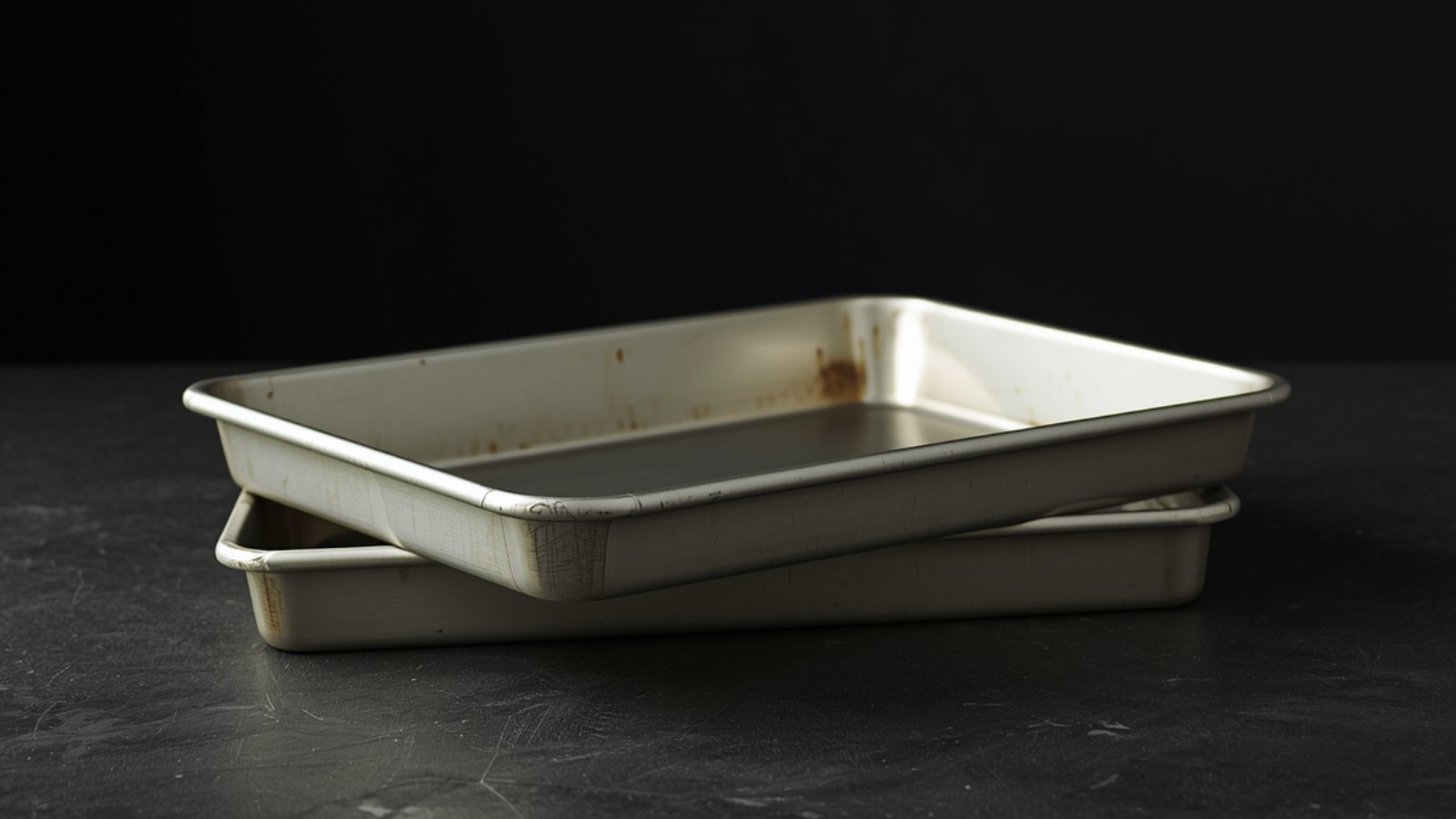
The Comparison Table
| Material | PFAS-Free | Non-Reactive | Lasts Indefinitely | Needs Replacing |
|---|---|---|---|---|
| Stainless Steel | ✅ | ✅ | ✅ | Only if damaged |
| Borosilicate Glass | ✅ | ✅ | ✅ | Only if broken |
| Pure Ceramic (solid) | ✅ | ✅ | ✅ | Only if chipped |
| Enameled Cast Iron | ✅ | ✅ | ✅ | If enamel chips |
| Ceramic Coated | ✅ | ⚠️ | ❌ | Yes, when coating wears |
| USA Pan (Americoat) | ✅ | ⚠️ | ❌ | Yes, when coating wears |
| Bare Aluminum | ✅ | ❌ | ✅ | No, but still a pass |
| Traditional Nonstick | ❌ | ❌ | ❌ | Yesterday |
The Practical Bakeware Setup (What I’d Actually Buy)
You don’t need to replace everything at once. You need a plan.
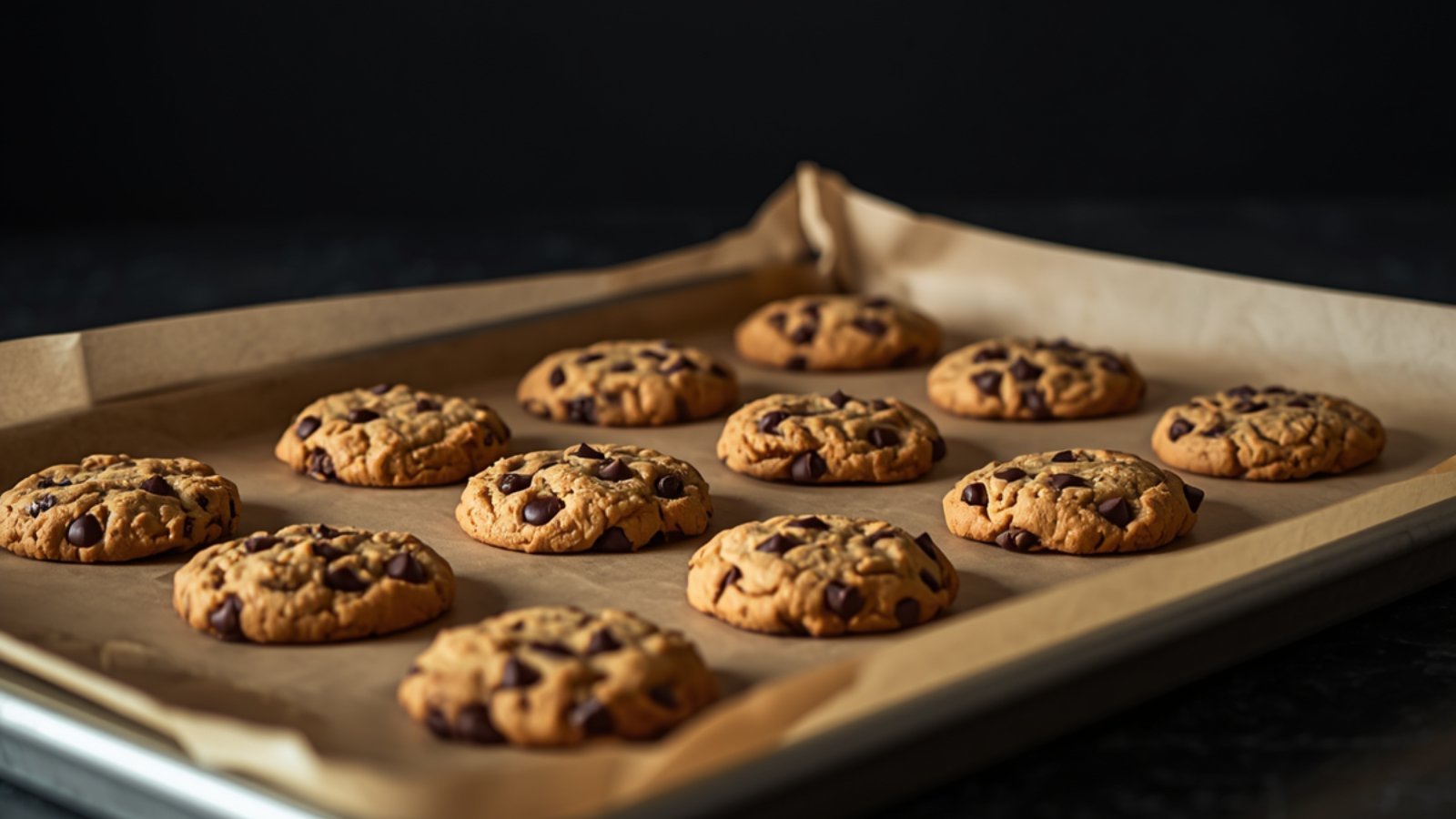
Start here: Two stainless steel half-sheet pans and a roll of unbleached parchment paper. This covers 80% of what most people bake — roasted vegetables, cookies, sheet pan dinners. Total cost: under $60. Sticking problem: solved with parchment.
Add next: A borosilicate glass baking dish in a 9×13 and an 8×8. Casseroles, brownies, lasagna, leftovers. Glass goes from oven to fridge to microwave in one dish, which is the kind of efficiency that makes you feel like you have your life together.
Eventually: A good enameled cast iron Dutch oven if you bake bread or do a lot of braising. This is a forever purchase — spend what you can afford once rather than buying cheap twice and replacing it.
Skip: The matching ceramic coated bakeware set. It photographs beautifully and degrades faster than the price tag implies.
Ready to swap your bakeware? Everything I recommend lives in the Non-Toxic Bakeware Shop →
— Me 💚✌️
Frequently Asked Questions
Is nonstick bakeware safe?
Depends on the coating. PTFE-based nonstick bakeware releases fumes when overheated and degrades with regular use — not ideal for something sitting in a 400°F oven for 45 minutes. Ceramic coated bakeware is a better choice but still degrades over time. The genuinely safe forever options are stainless steel, borosilicate glass, pure ceramic with third-party safety testing, and enameled cast iron with intact enamel.
Is ceramic bakeware PFAS-free?
Ceramic coated bakeware is generally PFAS-free and PTFE-free — a real improvement over traditional nonstick. But the ceramic coating degrades with high heat and regular use, so it’s not a forever solution. Pure solid ceramic — like Xtrema, which publishes third-party lead and cadmium testing — is genuinely inert and doesn’t have the degradation problem.
What does “PFOA-free” mean on bakeware?
Very little. PFOA was one specific chemical in the PFAS family that was phased out of US manufacturing by 2013. Saying “PFOA-free” in 2026 is the regulatory minimum, not a meaningful safety claim. Look for PFAS-free broadly, not just PFOA-free — and ask what the coating actually is, not just what it doesn’t contain.
Is aluminum bakeware safe?
This is contested but worth taking seriously. Aluminum is reactive with acidic foods and does leach into food, particularly at high temperatures. There’s an ongoing body of research examining the relationship between aluminum exposure and neurological health — the science isn’t conclusive, but it’s not nothing either. Given that there are genuinely inert alternatives available, bare aluminum bakeware isn’t a recommendation we can make with a straight face.
Is Caraway bakeware non-toxic?
Better than conventional nonstick, yes — it’s ceramic coated and free of PFAS and PTFE. But it’s still a coating that will degrade with regular high-heat use. Replace it when it shows wear. Whether it’s worth the price compared to alternatives is a separate and very valid question.
What is Stateside bakeware coating?
Stateside uses a ceramic-based coating that’s PTFE-free and PFAS-free per their disclosure. Made in the USA with better manufacturing accountability than most imported alternatives. One of the more transparent brands in coated bakeware — still a coating that will eventually wear, but a reasonable choice in the category.
Is USA Pan bakeware non-toxic?
USA Pan uses “Americoat” — a silicone-based coating that’s PTFE-free and PFOA-free. The aluminized steel base is less of a concern while the coating is intact. More honest than most coated bakeware brands. Replace it when the coating shows wear.
Is glass bakeware safer than nonstick?
Significantly, yes — but only if it’s borosilicate glass. Borosilicate is completely inert, doesn’t leach, and doesn’t degrade. Make sure you’re buying borosilicate specifically, not soda-lime glass, which is what a lot of US bakeware sold as “glass” actually is.
Can I just use parchment paper on my existing bakeware?
Yes, and it helps a lot. Unbleached parchment specifically — bleached parchment is processed with chlorine which can produce dioxins. Lining your pan with unbleached parchment creates a barrier between your food and whatever’s coating the pan. It’s not a permanent fix if your coating is actively flaking, but for pans in decent condition it’s a solid interim solution while you replace things gradually.
Is enameled cast iron safe?
Yes, as long as the enamel is intact. The enamel coating is inert and food-safe. The important caveat: inspect it regularly. Chipped enamel means the barrier is gone — stop using it and replace it. A well-maintained enameled piece is genuinely a forever purchase.