
10 Non-Toxic Kitchen Swaps for 2026:
The Ones I’d Actually Buy
Non-toxic kitchen swaps for cookware, food storage, and everyday essentials — vetted, budget-tiered, and picked by someone who actually reads the labels.
♥︎ Affiliate Disclosure: This post contains affiliate links. If you shop through them, I may earn a small commission at no extra cost to you. Your support keeps Clean AF Life thriving — endlessly appreciated.
TL;DR
Quick Picks
Want to start swapping without blowing your budget in one go? Here are 3 essentials you probably reach for every day.
We all have that one pan. You know the one — scratched, questionable, and definitely not “non-stick” anymore. We keep using it because replacing it feels like a chore. But here’s the reality: those scratches aren’t just ugly — they’re shedding PFAS, microplastics, and toxins into your dinner, your kids’ dinner, and, if you’re like me, your dog’s dinner too.
Cheap kitchen gear is officially a nightmare. Between updated federal regulations and undeniable data on microplastic shedding, I’m over the disposable kitchen cycle. These non-toxic kitchen swaps are a simple way to upgrade what you use every day without overhauling your entire setup.
If you’re just getting into this, check out my non-toxic living for beginners guide — this post is your kitchen-specific deep dive.
I’ve broken everything down by Budget, Mid, and Premium so you can grab what you need and move on with your non-toxic life. If your countertop is still rocking a plastic-bodied toaster from 2012, I’ve got non-toxic countertop appliance swaps too.
What Makes Something Non-Toxic in the Kitchen?
Not all “non-toxic” kitchen products are created equal. Materials matter. Stainless steel, glass, cast iron, and food-grade silicone are considered safer because they don’t leach chemicals into food under normal use.
On the flip side, conventional nonstick coatings, low-quality plastics, and mystery ceramic blends can break down over time — especially with heat, scratches, or repeated use. The goal isn’t perfection — it’s reducing the biggest sources of exposure in the tools you use every day.
1. Non-Toxic Cookware: Cast Iron & Carbon Steel
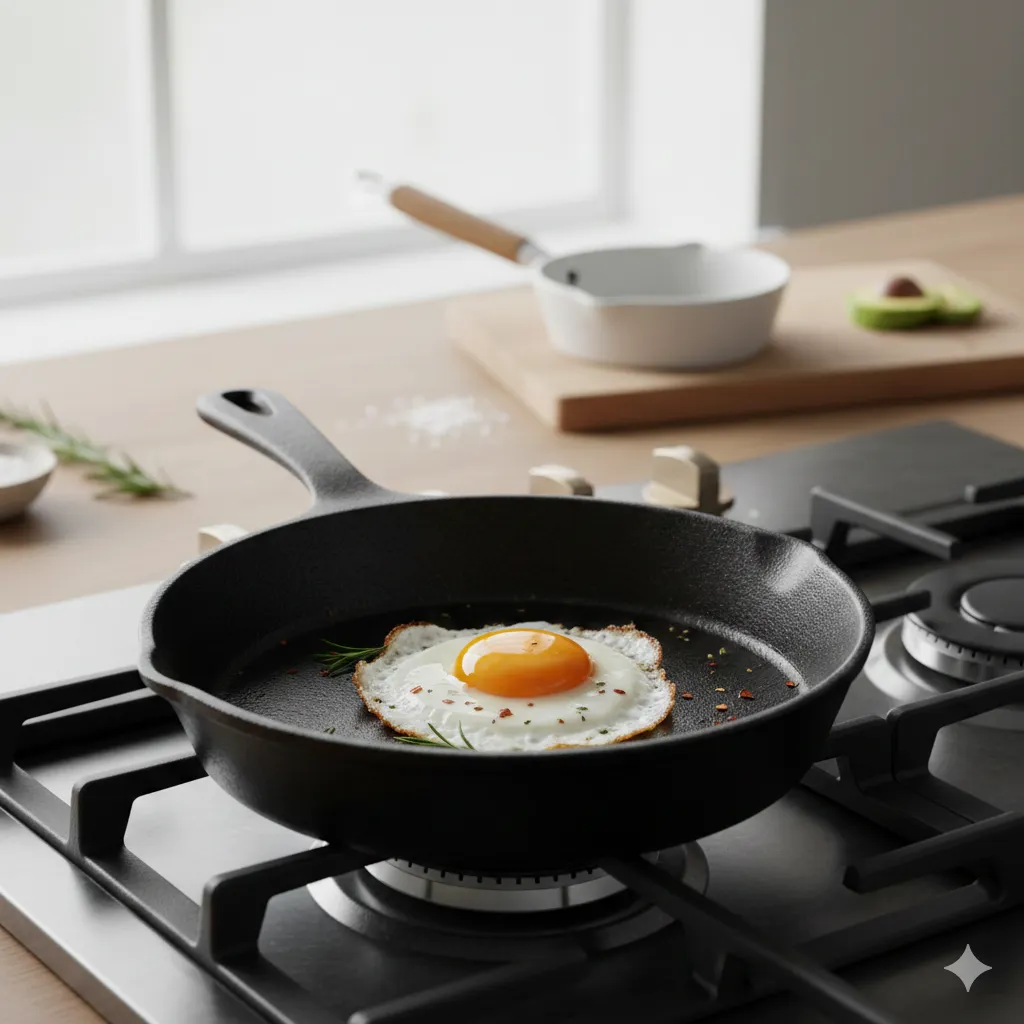
The Problem: Scratched Teflon is a hard no. Once that coating is compromised, you’re essentially seasoning your eggs with “forever chemicals” (PFAS).
The Solution: Traditional metals. Whether you choose cast iron or carbon steel, you’re getting a “forever pan.” Both are indestructible and develop a natural non-stick seasoning over time. The difference? Cast iron holds heat like a beast (perfect for steaks), while carbon steel is lighter and more responsive (perfect for eggs and sautéing).
The eternal favorite. Around $25 and will literally outlive us all. Pre-seasoned, ready to use, and just as capable as pans that cost 10x more.
Shop on Amazon →The Clean AF favorite. No rivets anywhere (nowhere for gunk to hide), significantly lighter than cast iron, and it develops a non-stick surface that gets better with every use.
Shop on Amazon →The “buy once, cry once” choice. Black matte enamel requires zero seasoning, looks stunning on any stovetop, and there’s nothing to wear out — ever. This is the forever pan in the truest sense.
Shop on Amazon →💚 Clean AF Tip
I swapped my last Teflon pan for a seasoned skillet and never looked back. Learn the “pre-heat” trick: give it 5 minutes on low before adding oil and your eggs will slide off better than they ever did on plastic. No drama, no toxins. Browse all vetted picks in the non-toxic cookware shop.
2. Ceramic-Coated Cookware: The Easy Swap (With a Catch)
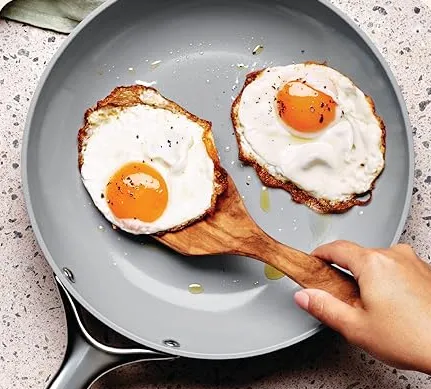
The Problem: Most of us grew up with 12-piece “bargain” sets that start peeling within six months. If your pans are stacking up scratches, your “healthy” dinner is being seasoned with chemicals you can’t pronounce.
The Solution: Ceramic-coated sets (sol-gel). These give you that easy-release non-stick feel using sand-based minerals instead of PFAS. Easiest way to detox your kitchen overnight without changing how you cook.
Induction‑ready, PFAS‑ and PTFE‑free ceramic starter set at a price that makes the swap easy. GreenPan is still a budget‑friendly brand in the ceramic world — the coating does its job, but it’s not a forever pan. Treat it gently (medium heat, softer utensils, hand wash when you can) and it’ll treat you well.
Shop on Amazon →Diamond-infused Thermolon ceramic for serious durability. This is the set for people who actually cook every single night and need something that can take it.
Shop on Amazon →The one you’ve seen everywhere, and yes, it actually holds up. Comes with a storage system that makes your cabinets look suspiciously organized. PTFE/PFOA/PFAS-free and genuinely beautiful.
Shop on Amazon →⚠️ The Truth About Ceramic
Ceramic is great, but it has a shelf life. Most sol-gel coatings lose their slide after 2–5 years of heavy use. If your pan chips or starts sticking like crazy, retire it. To extend its life: medium heat only, silicone utensils, no aerosol cooking sprays (they leave a sticky film that ruins the coating permanently). Want a “forever” solution? Skip the coating entirely and go enameled cast iron — nothing to wear out. Browse more vetted picks in the non-toxic cookware shop.
3. Stainless Steel Cookware: The Chef-Grade Upgrade
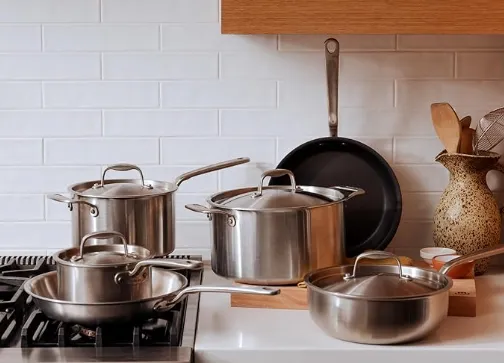
The Problem: Cheap “stainless” pans warp after two uses and scorch everything. Worse, low-grade stainless can leach nickel and chromium into your food — especially when you’re cooking acidic ingredients like tomato sauce.
The Solution: High-quality, multi-ply stainless steel. This is the choice of professional chefs for a reason: durable, conducts heat beautifully, and won’t leach toxins into your meals.
Often called the “All-Clad killer.” Professional-grade performance without the premium price tag. NSF certified, induction ready, and built to last decades.
Shop on Amazon →Consistently top-rated for even heating and sturdy construction. An excellent everyday upgrade that handles everything from a gentle simmer to a ripping hot sear.
Shop on Amazon →5-ply fully clad, 18/10 stainless, made in the USA in Clarksville, TN. Zero chemical coatings of any kind — no PFAS, PTFE, ceramic sol-gel, lead, or cadmium. Oven and broiler safe to 800°F, lifetime warranty, family-owned since the ’80s. Beats All-Clad on ply count at a lower price. The one you buy and never think about again.
💚 Clean AF Tip
Master the “water drop” test. Heat your dry pan on medium until water beads up and dances across the surface like mercury — that’s the perfect temperature for non-stick cooking without chemicals. New to stainless? Learn why it’s one of the safest materials and how to use it without everything sticking in the non-toxic cookware shop.
| Material | Why We Love It | The “Drama” (Cons) | Best For | Clean AF Tip |
|---|---|---|---|---|
| Cast Iron | Lifetime durability; gets better with age. | It’s heavy (arm workout included). | Searing, baking, stovetop-to-oven. | Dry immediately or it WILL rust. |
| Carbon Steel | The “Chef’s Secret.” Lighter than iron, seasons beautifully. | Needs seasoning; can be reactive to acids. | Daily sautéing, omelets, and stir-fry. | Use it often! The more you cook, the better the patina. |
| Stainless Steel | The Pro choice. Won’t leach, won’t quit. | Food sticks if you’re impatient. | Sauces, acidic foods, and browning. | The “Water Drop” test is your BFF. |
| Ceramic | PFAS-free and slicker than your average pan. | The honeymoon ends—coating wears out. | Eggs, fish, and quick meals. | Low/Med heat only. No metal forks! |
4. Non-Toxic Food Storage: Ditch the Plastic Tupperware
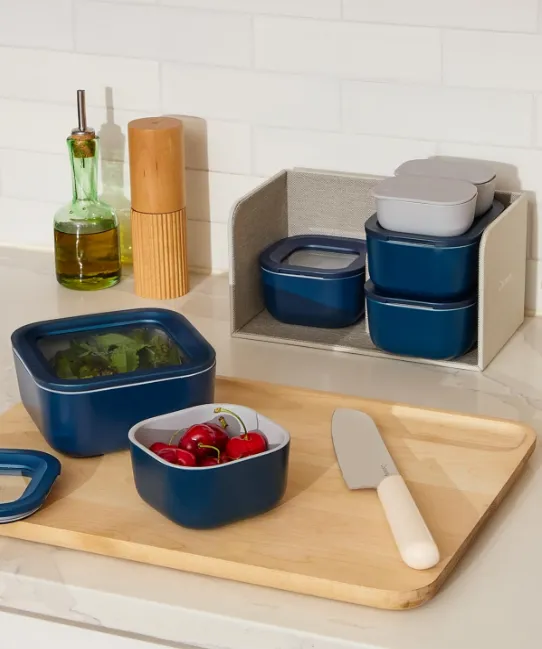
The Problem: Storing leftovers in plastic is a recipe for chemical leaching, especially if you’re microwaving them. Heat causes BPA, BPS, and phthalates to migrate from the container directly into your food. Plus, plastic absorbs odors and stains — hello, permanent spaghetti sauce rings.
The Solution: Glass or stainless steel. Non-porous, won’t leach, won’t stain, and makes your fridge look like a competent adult lives there.
The classic. Tempered glass, incredibly durable, and the perfect starter kit for someone clearing out their plastic cabinet for the first time. The glass is oven and microwave safe; the BPA-free lids are for storage, not heating.
Shop on Amazon →The leak-proof option. Airtight lids, great for taking lunch anywhere. The lids are BPA-free plastic — the win is the glass body keeping food clean. Don’t microwave with the lid on, and unlatch before microwaving.
Shop on Amazon →For the organization-obsessed. Ceramic-coated glass with a custom storage rack, PTFE/PFOA/PFAS/BPA-free, and stunning enough to serve directly out of. The fridge glow-up you didn’t know you needed.
Shop on Amazon →💚 Clean AF Tip
Not ready to ditch all the plastic at once? At minimum, stop microwaving it — transfer food to a glass plate first. Your hormones will thank you. Ready to go all in? I’ve got a full lineup of vetted glass, stainless, and silicone options in the non-toxic food storage shop.
5. Non-Toxic Cutting Boards: Swap Plastic for Solid Wood
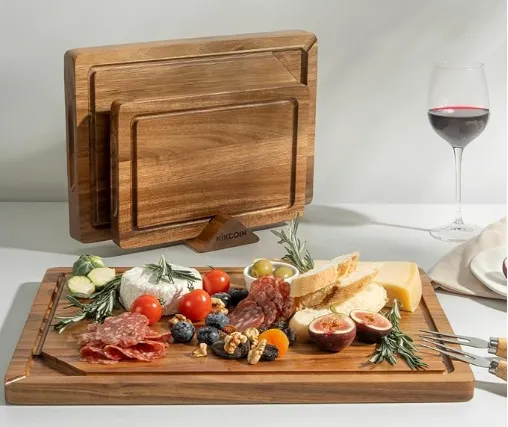
The Problem: Every time you slice an onion on a plastic board, the knife creates tiny grooves — and millions of microplastic particles go directly into your food. Research shows using a plastic board can result in swallowing the equivalent of a credit card’s worth of plastic every few years.
The Solution: Solid wood — specifically maple, walnut, or cherry. Natural antimicrobial properties, easier on your expensive knives, and zero plastic in your dinner.
FSC-certified teak, finished with nothing but mineral oil and beeswax. Teak is naturally water-resistant and antibacterial, so it shrugs off moisture instead of warping or harboring bacteria. Lightweight, reversible, and grooved on one side to catch juices — a genuinely smart place to start.
Shop on Amazon →The industry standard. Used in pro kitchens globally because it’s thick, reversible, and virtually indestructible. Hard maple resists deep scarring and handles serious daily use without complaint.
Shop on Amazon →The showpiece. Walnut is slightly softer than maple, which makes it gentler on your knife edges while still being dense enough to last decades. Looks stunning enough to leave on your counter as decor — the board your guests will ask about every single time.
Shop on Amazon →💚 Clean AF Tip
Never soak wood in the sink. Wipe it down with mild soap, dry immediately, and hit it with food-grade mineral oil once a month. It’ll look brand new for decades.
6. Non-Toxic Kitchen Utensils: Ditch the Black Plastic
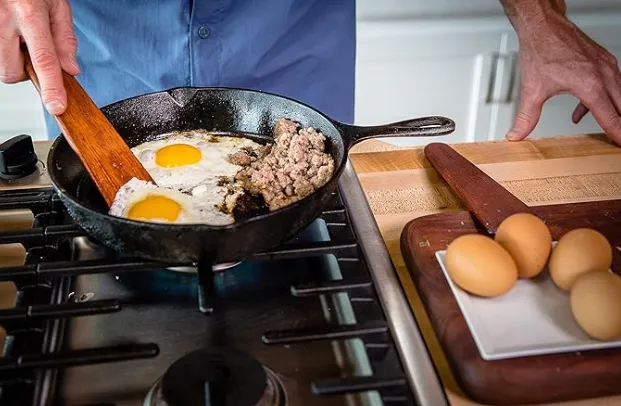
The Problem: Some black plastic spatulas have been found to contain flame retardants from recycled electronic waste. Even “BPA-free” plastic can melt or warp at high temperatures, shedding microplastics directly into your stir-fry. The safest move is just to stop guessing.
The Solution: Natural wood, food-grade silicone, or stainless steel. Heat-stable, won’t melt into your dinner, and don’t react with your food.
A stronger pick for ceramic and nonstick pans when stainless steel or wood would be too aggressive. DI ORO uses platinum-cured, LFGB-certified silicone, and the seamless design means fewer places for food and residue to hide. This is the silicone option I feel much better about.
Shop on Amazon →A complete kitchen overhaul in one box. Sturdy, dishwasher-safe, and built to handle a decade of daily cooking without losing its edge or its shape.
Shop on Amazon →The forever tools. Hand-crafted in the USA from dense hardwoods — thin enough to flip a delicate egg, strong enough to scrape a cast iron skillet, and they will never shed a single plastic fiber into your food. Ever.
💚 Clean AF Tip
Match your tool to your pan. Use stainless steel on cast iron and stainless pans for a proper sear. Use silicone or wood on ceramic to keep that coating scratch-free. For the full rundown on safe spatulas, tongs, and kitchen tools, check out the non-toxic kitchen tools shop.
7. Non-Toxic Water Bottles: Ditch the Lead & Microplastics
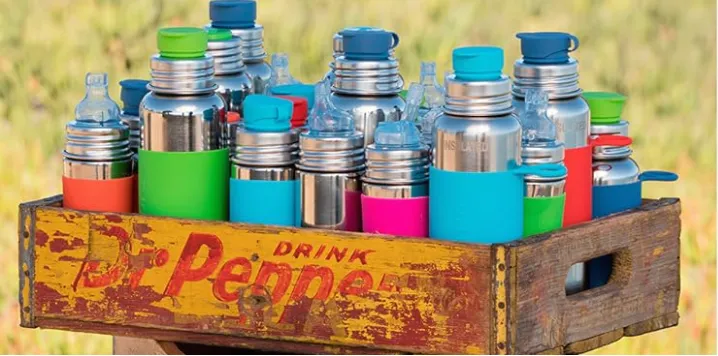
The Problem: Bottled water isn’t just an environmental nightmare — a single liter in a single-use plastic bottle can contain 240,000 detectable plastic fragments. Even “BPA-free” reusable plastic bottles leach endocrine-disrupting chemicals when they get scratched or warm. And those viral steel cups? Many use lead solder to seal the vacuum insulation. Hard pass.
The Solution: Lead-free, plastic-free, or inert glass. If you’re going steel, it needs to be 18/8 food-grade and certified lead-free.
Naturally inert, won’t leach a thing. BPA/BPS/phthalate-free, FDA tested, and comes with a protective silicone sleeve so it actually survives human use. Clean taste, no drama, under $30.
Shop on Amazon →The only 100% plastic-free bottle on the market. MADE SAFE certified, screened for 80,000+ toxins, medical-grade silicone top instead of plastic. Does exactly what it says without making a speech about it.
Shop on Amazon →The tank. B-Corp company using 90% recycled food-grade steel, has never used lead in its seals, and keeps ice for 66 hours. Over-engineered, dishwasher-safe, and the last bottle you’ll ever need to buy.
Shop on Amazon →💚 Clean AF Tip
Not all straws are equal. Avoid hard plastic straw lids — they’re microplastic soup. Stick to medical-grade silicone if you need a straw. Browse the full lineup including Hydro Flask in the non-toxic food storage shop.
8. Non-Toxic Bakeware: The PFAS-Free Upgrade Your Oven Deserves
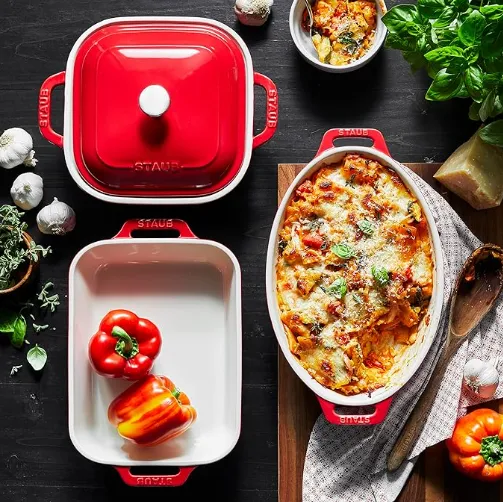
The Problem: Flaking Teflon isn’t a seasoning. Traditional non-stick bakeware is often coated with PTFE or other PFAS “forever chemicals” that off-gas at high temperatures or flake directly into your cookies and roasts as the surface degrades. Scratched or peeling pans are not okay to keep using.
The Solution: Naturally inert materials that don’t need chemical coatings. Enameled cast iron retains heat like nothing else and develops a naturally easy-release surface over time. Stainless steel is indestructible and professional-grade. Tempered glass is affordable and lets you monitor what’s happening in the oven. Pure ceramic and high-fire stoneware offer superior heat retention and last a lifetime.
Pure stainless steel — no coating whatsoever. Won’t rust, won’t scratch, won’t flake. A massive upgrade from grocery store pans and wallet-friendly enough to replace your entire sheet pan situation in one shot.
Shop on Amazon →Porcelain stoneware with a non-toxic glaze that resists moisture and heats evenly. Total kitchen workhorse — goes from oven to table without missing a beat, and it actually looks good doing it.
Shop on Amazon →High-fired stoneware with a non-porous enamel finish that never absorbs odors or stains. Virtually indestructible, chip-resistant, and the kind of bakeware you’re still using in 20 years while everyone else is on their fourth set of garbage pans.
Shop on Amazon →💚 Clean AF Tip
For stainless sheet pans, preheat your oven fully and lightly coat with avocado oil or ghee before adding food. For stoneware, skip the oil — it gets more naturally non-stick with every use.
| Material | Why We Love It | The “Drama” (Cons) | Best For | Clean AF Tip |
|---|---|---|---|---|
| Enameled Cast Iron | Exceptional heat retention, naturally easy-release, lasts forever. | Heavy and pricey upfront — but you’ll never buy another pan. | Braising, casseroles, cobblers, and deep-dish baking. | Always use enameled, not bare — bare cast iron reacts with acidic foods in the oven. |
| Stainless Steel | Indestructible, non-reactive, and professional-grade. | Requires proper pre-heating to prevent food sticking. | Cookies, roasting, and sheet pan dinners. | Look for multi-ply or heavy-gauge — thin stamped steel warps at high heat. |
| Glass | 100% inert, non-porous, and completely non-leaching. | Can shatter if exposed to extreme temperature shocks. | Casseroles, brownies, and food storage. | Always verify it is “Borosilicate” or “Tempered” for oven-safe use. |
| Stoneware | Superior heat retention and naturally PFAS-free. | Heavy and can chip if handled roughly or dropped. | Artisan breads, lasagna, and slow-roasting. | Ensure the glaze is certified Lead-free and Cadmium-free. |
| 100% Ceramic | Pure mineral clay with no metal core or synthetic coatings. | Generally more expensive and can be harder to source. | High-heat roasting, pies, and deep-dish baking. | Verify it is “100% Ceramic,” not just a ceramic-coated metal. |
9. Paper Towel Alternatives: Why Swedish Dishcloths Win
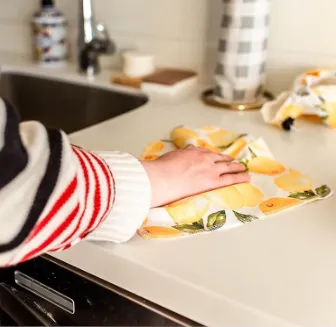
The Problem: Conventional paper towels are chlorine-bleached, wrapped in plastic, and generate massive household waste. That “bright white” look comes from chemical processing that lingers in the fibers you’re using to wipe your counters.
The Solution: Swedish dishcloths and cotton flannel. Ultra-absorbent, compostable, and a single cloth can replace up to 17 rolls of paper towels. They dry fast, which prevents the sour sponge smell from taking over your sink.
The OG Swedish dishcloth — made in Sweden since 1949 from natural cellulose and cotton, with zero synthetic fibers. Superabsorbent enough that one cloth replaces up to 15 rolls of paper towels, and fully compostable when it’s done. The easiest, most affordable way to ditch the roll.
Shop on Amazon →Hardworking, machine-washable, and one pack will likely last your kitchen an entire year — biodegradable when they finally wear out, so toss them in the compost.
Shop on Amazon →100% cotton flannel sheets that naturally cling together so you can wrap them around your existing paper towel holder. Get more absorbent with every wash. Zero synthetic fibers, zero waste.
Shop on Amazon →💚 Clean AF Tip
To sanitize Swedish dishcloths: top rack of the dishwasher or microwave them while damp for 30 seconds. When they finally wear out after months of use, chop them up and toss them in your compost bin. Pair these with vetted non-toxic cleaning products for a fully chemical-free kitchen counter routine.
10. Non-Toxic Water Filters: Why Basic Pitchers Aren’t Cutting It
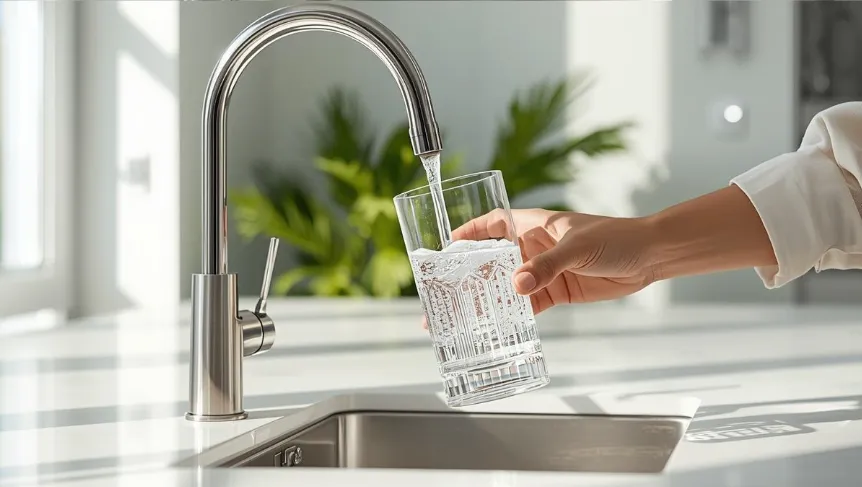
The Problem: Most standard pitchers use simple carbon filters that only improve taste, leaving behind heavy metals, fluoride, and microplastics. Plus, cheap plastic carafes can leach BPA and phthalates back into your “clean” water as it sits.
The Solution: Upgrade to multi-stage filtration or reverse osmosis and match the filter to the contaminants you care about most. The right system can target far more than taste and chlorine, including PFAS, lead, pharmaceuticals, and microplastics, depending on the technology and certifications.
A budget-friendly pitcher that reduces Total Dissolved Solids and includes a free meter so you can verify that specific job. Just remember: TDS is not the same thing as a full contaminant report, so this is the budget move, not the whole-house flex.
Shop on Amazon →The best-looking option for the glass-obsessed. Shatter-resistant borosilicate glass carafe that removes bacteria, parasites, and microplastics that basic filters miss. The one for people who refuse to have ugly things in their kitchen.
Shop on Amazon →Zero installation. 4-stage reverse osmosis in a glass carafe — pulls out forever chemicals, fluoride, lead, and microplastics. Unlike most countertop RO systems, your purified water sits in glass instead of plastic, so you’re not defeating the purpose. The alkaline post-filter adds minerals back in. This is the one.
Shop on Amazon →💚 Clean AF Tip
The glass carafe is what sold me on AquaTru over other countertop RO systems. Most use plastic tanks, which feels like a cruel joke when you’re paying premium money to remove contaminants. Getting here wasn’t a straight line — I made some expensive mistakes first. Read about my . Full vetted lineup in the non-toxic water filtration shop.
Bonus: Swap Seed Oils for High Smoke Point Fats
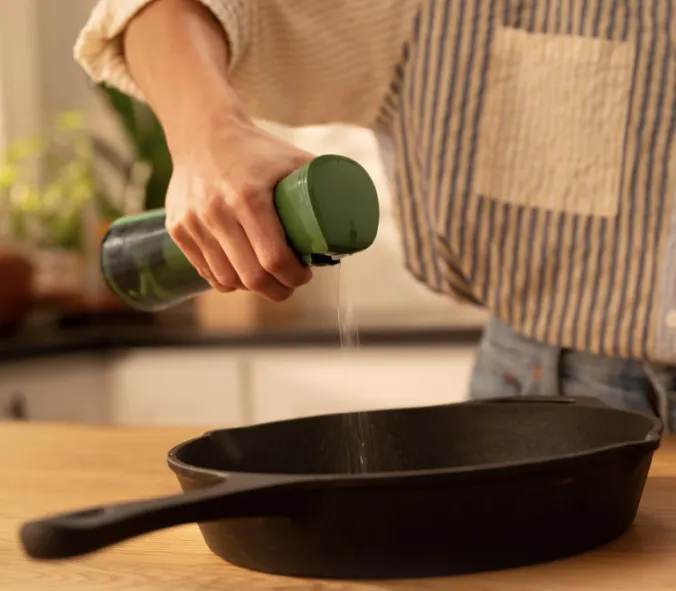
The Problem: You can have the cleanest pan in the world, but if you’re cooking with highly refined seed oils (canola, vegetable, soybean), you’re still introducing inflammation and off-gassing at high temperatures. Plus — and this is covered in the ceramic section — using the wrong oil, especially aerosol sprays, can ruin your non-stick surface permanently.
The Solution: Switch to stable, non-toxic fats that can handle the heat without breaking down into toxic byproducts.
500°F smoke point — safe for searing in cast iron and gentle enough for ceramic. The one I reach for most. Non-GMO, naturally refined, and it doesn’t taste like anything, which is exactly what you want in a cooking oil.
Shop on Amazon →Butter with the milk solids removed. Tastes like heaven, lactose-free, and won’t burn at high heat like regular butter. Pairs especially well with cast iron and stainless steel.
Shop on Amazon →What our grandparents used, and it’s incredible for both cooking and your health. The OG non-toxic fat for cast iron seasoning, high-heat frying, and anyone who wants zero seed oils in their kitchen, period.
Shop on Amazon →💚 Clean AF Tip
Never use aerosol spray cans — even the ones labeled “healthy.” They contain soy lecithin and propellants that act like glue on your pans, creating a sticky residue that’s nearly impossible to remove. Get a refillable glass oil spritzer instead. Cheaper, prettier, and your pans will thank you.
The Bottom Line
Living Clean AF isn’t about perfection — it’s about progress over plastic.
Ditching the hidden toxins in your kitchen doesn’t have to happen all at once. Start with one swap. The pan, the cutting board, the water filter — pick whatever bothers you most and go from there. Small changes, less garbage in your food, better everything over time.
That’s it. That’s the whole pitch.
— Me 💚
Start Living Low Tox
Sign up for occasional low tox inspo, honest reviews, non-toxic swaps, and helpful picks for a healthier home and lifestyle.
Common Questions: The Non-Toxic Truth
What is the best PFAS-free water filter for 2026?
AquaTru leads the pack for total removal of forever chemicals using 4-stage reverse osmosis in a glass carafe. LifeStraw Home is the best glass-based pitcher for microplastics, while ZeroWater remains the top budget pick for stripping total dissolved solids. Full breakdown in the water filtration shop.
Do basic water pitchers remove microplastics?
Most standard carbon filters do not. To effectively block microplastics, look for filters with NSF/ANSI 401 certification or hollow-fiber membranes (like those in the LifeStraw Home) that block particles down to 0.5 microns.
Are Swedish dishcloths actually sanitary?
Yes — much more so than a standard sponge. They’re thinner and made of natural materials, so they dry significantly faster, which prevents the damp environment where bacteria thrive. Just run them through the dishwasher or microwave them while damp for 30 seconds.
Is stainless steel truly non-toxic?
Yes. High-quality stainless steel (304 or 316 grade) is non-reactive and contains no synthetic coatings. It won’t leach chemicals into your food even at high temperatures. Brands like Heritage Steel go fully coating-free — no PFAS, no ceramic sol-gel, no funny business. It’s a forever material in every sense.
Ceramic vs. cast iron — which should I choose?
Choose ceramic (like Caraway) for a lightweight, easy-mode experience with eggs and delicate sautéing. Choose cast iron (like Lodge) if you want a pan that handles high-heat searing, goes stovetop to oven, and will literally last a century.
What do I do if my ceramic pan chips?
Retire it. Once the ceramic layer is compromised, the inner metal core (usually aluminum) is exposed to your food. To avoid this going forward, consider enameled cast iron like Staub — significantly more chip-resistant and nothing to wear out.
Why This Matters: The Reality Check
This isn’t wellness hype. Peer-reviewed research and current EPA assessments confirm your kitchen tools are often the biggest source of daily toxin exposure.
- PFAS: The EPA confirms there is no safe level of exposure. If your pan is scratched, it’s leaching. Full stop.
- BPA/Phthalates: These endocrine disruptors mimic hormones and mess with your thyroid and metabolism. They’re in every piece of plastic you heat.
- Microplastics: Using a plastic cutting board can shed millions of particles into your food every year. That credit-card-worth-of-plastic stat is real and it’s disgusting.
These swaps slash that exposure dramatically. I’ve curated every pick based on brand-site verification, third-party certifications, and independent testing — because Amazon copy is marketing, not vetting.