Non-Toxic Kitchen Tools
Your Spatula Is Not Supposed to Be a Seasoning.
Plastic kitchen tools melt, scratch, and shed microplastics directly into your food — especially when heat is involved, which is literally the whole point of cooking. Wood, stainless steel, and food-grade silicone cost about the same as their sketchy plastic counterparts and don’t come with a side of mystery chemicals. Easy swap. Big difference. No chemistry degree required. My 10 Non-Toxic Kitchen Swaps guide has the full breakdown if you need a starting point.
❤︎ Shop Disclosure: This page has my hand-picked recommendations. If you buy through my links, I may earn a small commission at no extra cost to you. It keeps the lights on and the research going — endlessly appreciated.
Jump to a section
Cutting Boards
Every knife stroke on a plastic board creates micro-grooves — and millions of plastic particles that end up directly in your food. Studies estimate plastic boards can shed the equivalent of a credit card’s worth of microplastics into your diet every few years. Solid wood is naturally antimicrobial, gentler on knife edges, and requires zero synthetic coatings to do its job.
What to avoid: Plastic boards, bamboo composite boards with adhesive-heavy gluing, and any board treated with “antibacterial” chemical coatings. For multi-piece wood boards, look for brands that disclose their adhesive. Single-piece boards skip that question entirely.
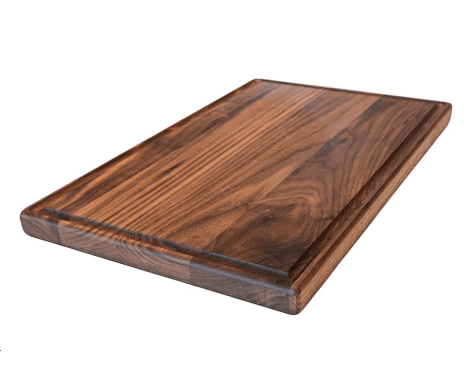
- 100% made in the USA — sourced, manufactured, packed, and shipped entirely domestically, FSC-certified American walnut
- Pre-seasoned with fractionated coconut oil — no lacquer, no mystery finish, nothing synthetic touching your food
- Reversible with juice groove; walnut is soft enough to protect knife edges while dense enough to last decades
- Small business, plants a tree per unit sold — the rare pick that actually has its story straight
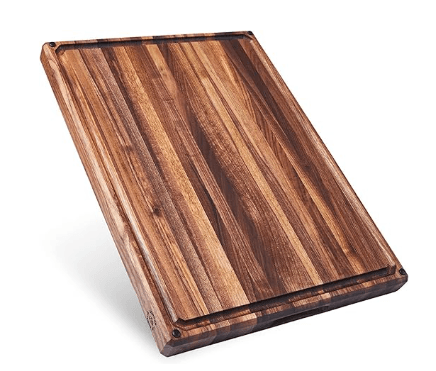
- American Black Walnut — explicitly free of formaldehyde, BPA, PFAS, phthalates, and VOCs
- Made in the USA from sustainably sourced hardwood in small batches
- Deep 4.5 oz juice groove and non-slip rubber feet that actually keep it planted
- Mid-range price point with the materials disclosure to back up the non-toxic claim
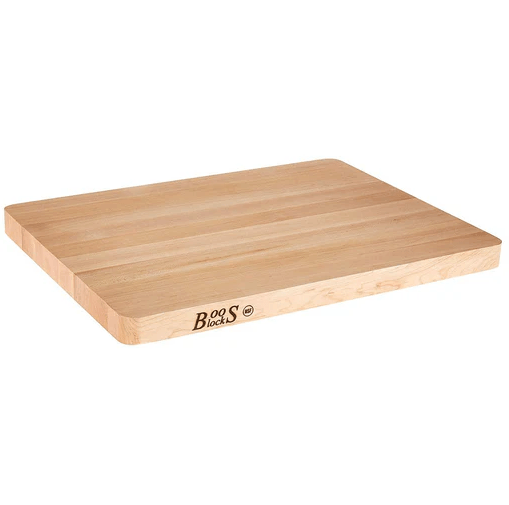
- NSF-certified Northern Hard Rock Maple — zero plastic, no chemical finishes
- Edge-grain construction is easier on your knives so they stay sharp longer
- Reversible design with two flat prep surfaces — built for heavy daily use
- The industry standard in pro kitchens globally; made in the USA
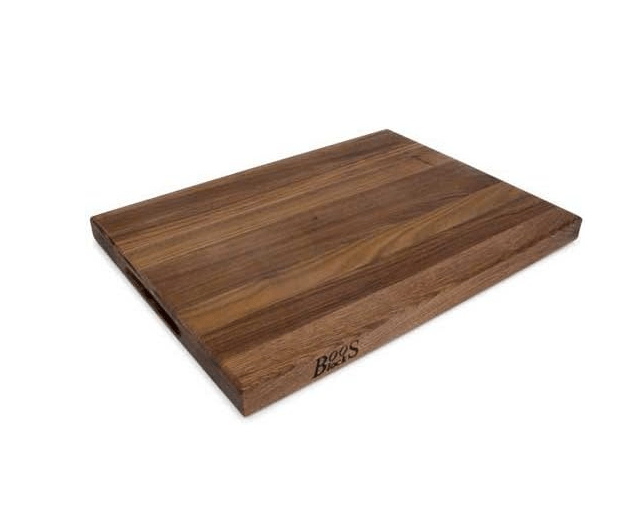
- American Black Walnut — no plastics, no chemical coatings; re-oil at home with food-grade mineral oil
- 1.5″ thick pro-grade build that won’t warp, slide, or quit on you mid-prep
- Slightly softer than maple, so it’s gentler on expensive knife edges
- Reversible with integrated finger grips — prep on one side, serve on the other
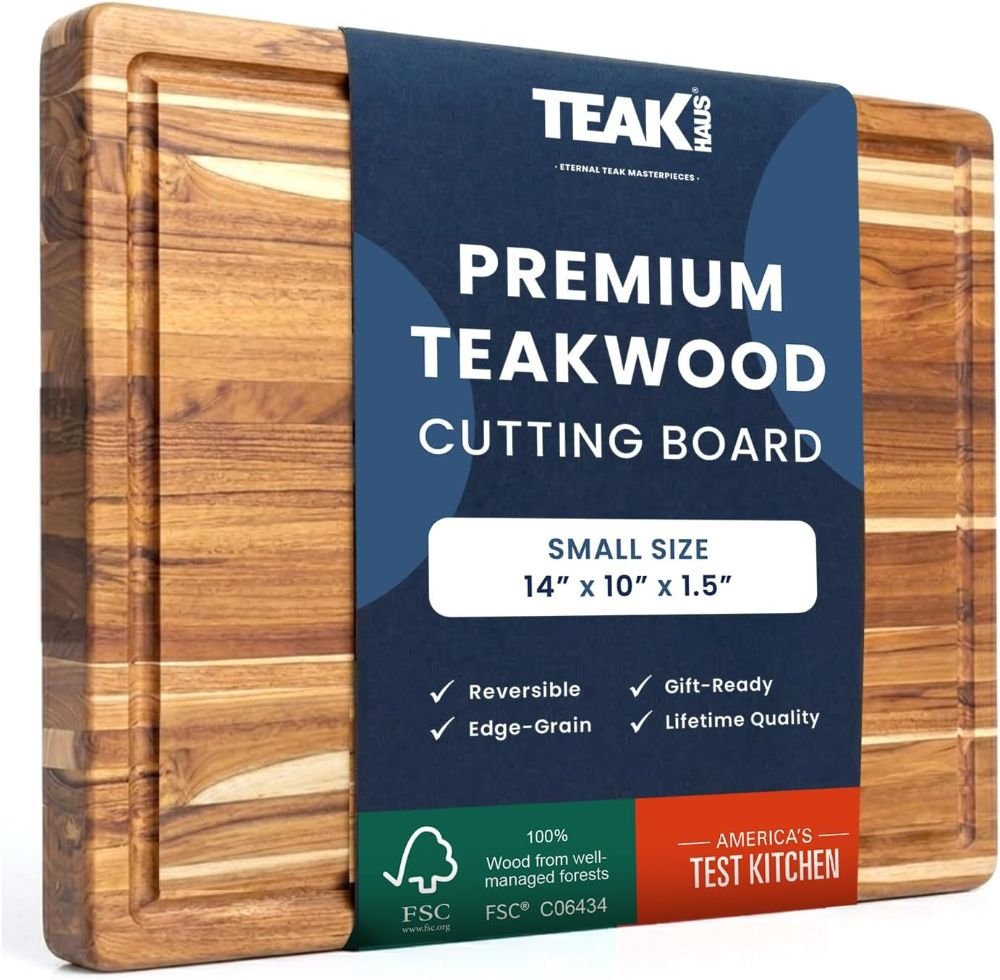
- FSC-certified teak finished with just mineral oil and beeswax — no synthetic glazes or chemical coatings
- Bonded with a water-based adhesive that’s free of formaldehyde and VOCs; third-party tested as non-detect for formaldehyde
- Teak is naturally water-resistant and antibacterial — it shrugs off moisture without warping or harboring bacteria
- Lightweight and reversible, with a juice groove on one side and a flat prep surface on the other
Knives
Your knives touch every single piece of food you eat. High-carbon or high-quality stainless steel with zero chemical coatings is the standard — and thankfully, it’s also what professional chefs have used for centuries. No PTFE. No mystery surface treatments. Just steel.
What to avoid: Coated or “non-stick” blades, hollow handles with unknown adhesives or filler materials, and cheap stainless that doesn’t disclose its grade. Low-grade stainless can leach nickel and chromium into acidic foods.
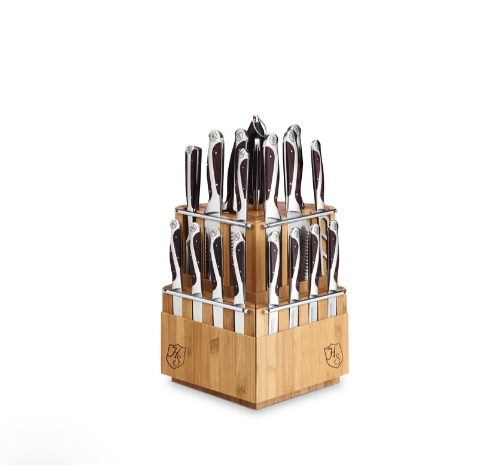
- Forged German steel with zero chemical coatings or mystery metals — what you see is what it is
- Full kitchen swap: every blade you need plus 8 steak knives and a rotating bamboo block
- Pakkawood handles with quad-tang construction — beautiful grip, exceptional balance
- One purchase retires your entire plastic-handled, mystery-metal knife situation
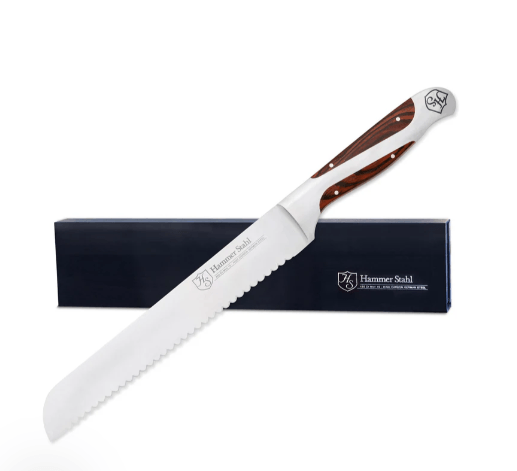
- High-carbon German steel — zero chemical coatings of any kind, only clean steel touches your food
- Hand-sharpened serrations cut through crusty sourdough or ripe tomatoes without crushing either
- Pakkawood handles with quad-tang construction — built to last a lifetime
- No PFAS, no mystery metals, no surface treatments — the whole pitch is the steel itself
Utensils & Spatulas
Black plastic spatulas have been found to contain flame retardants from recycled electronics. Even “BPA-free” plastic melts or warps at high heat, shedding microplastics directly into your stir-fry. Natural wood, food-grade stainless steel, and platinum-cured silicone are the clean alternatives — and they all work better anyway.
What to avoid: Black plastic utensils (recycled electronics risk), melamine, nylon at high heat, and anything marketed as “BPA-free” with no other safety information. BPA-free does not mean plastic-free.
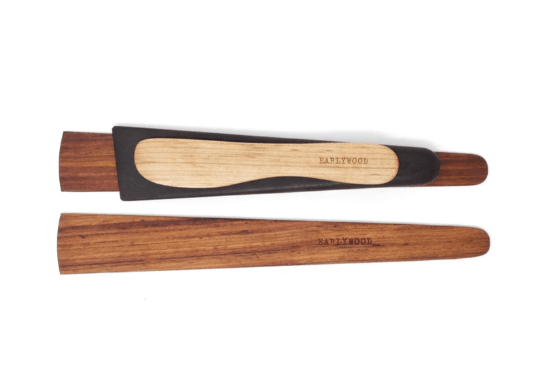
- Two large flat sautes, one Tera Scraper (cast iron’s best friend), one large spreader — covers 90% of what you actually do in a kitchen
- Handcrafted in Montana from single-piece dense hardwoods — no plastic, no adhesives, finished with food-grade mineral oil
- The sautes double as salad tongs; the scraper handles cast iron without breaking a sweat
- Entry point into Earlywood
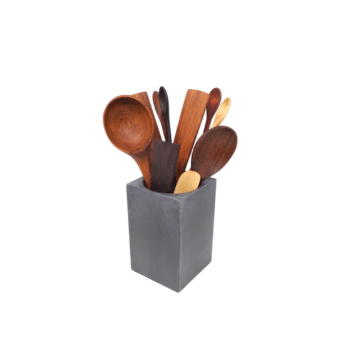
- Handcrafted in Montana from single-piece sustainable dense hardwoods — finished with food-grade mineral oil, will never melt, shed, or react with food
- 11-piece kit: flat sautés, scraper, spreader, ladle, long server, and 4-piece tasting set
- Genuinely toxic-free: no silicone, no plastic, no industrial adhesives anywhere in the product
- The kind of utensils your grandkids inherit — and still use
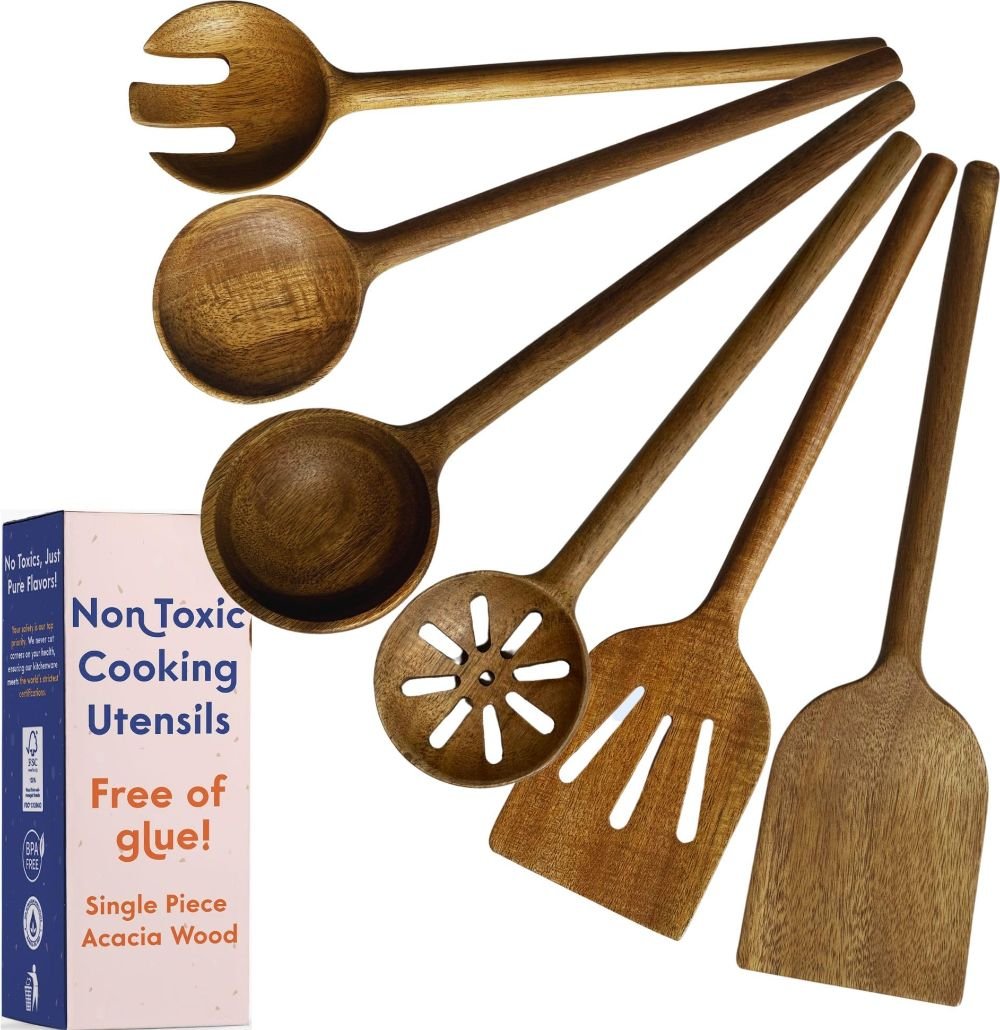
- Carved from one solid piece of acacia — no glue joints, no laminated layers, nothing bonded together that can loosen in heat
- FSC-certified acacia — responsibly sourced from managed forests, not mystery timber
- Finished with beeswax, flaxseed, and lemon oil instead of mineral oil — no petroleum anywhere in the process
- Acacia’s tight, dense grain barely absorbs water, so these don’t go soft and fuzzy after a few months by the sink
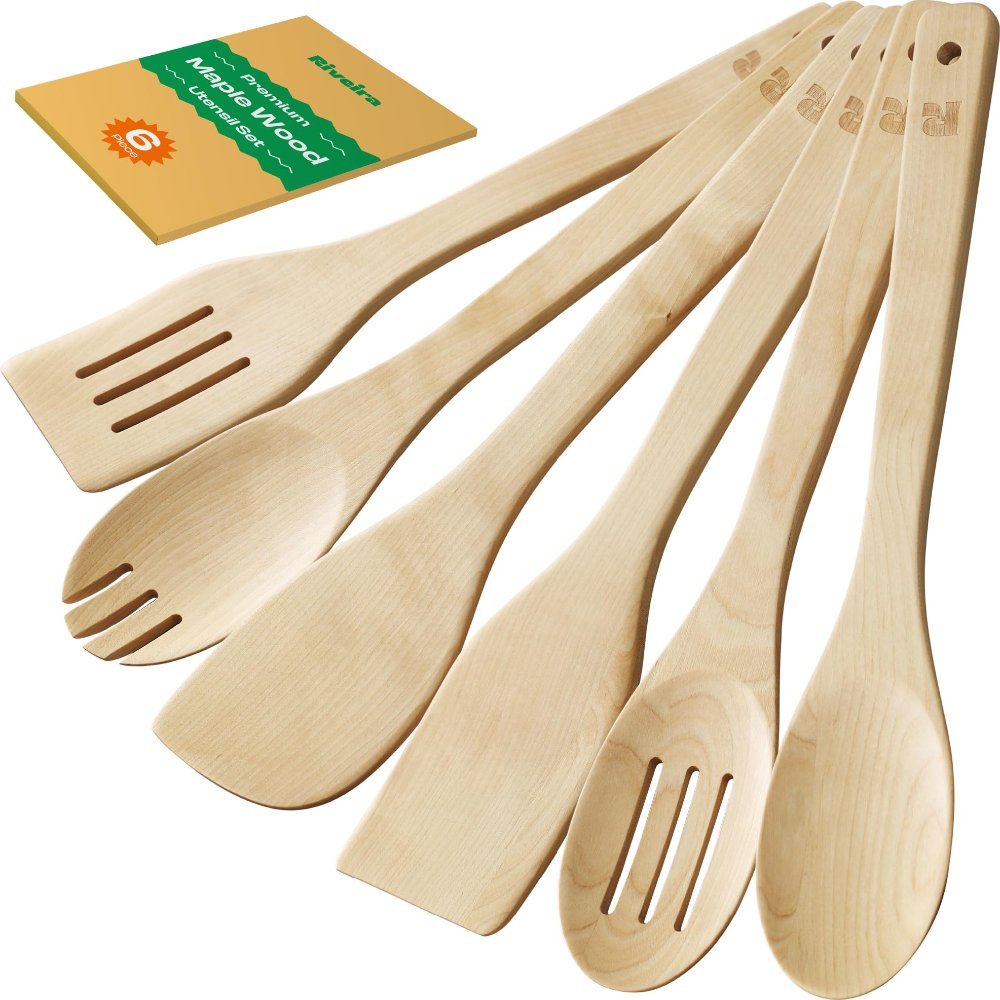
- Hard maple — one of the densest, tightest-grained hardwoods you can put in a kitchen
- Plant-based finish with no forever chemicals — nothing synthetic sitting between the wood and your food
- That tight grain is the whole point: less water soaking in is what keeps a wooden spoon from going soft and splintery
- Properly weighted and sanded smooth — these feel like tools you’ll actually reach for, not a decorative set
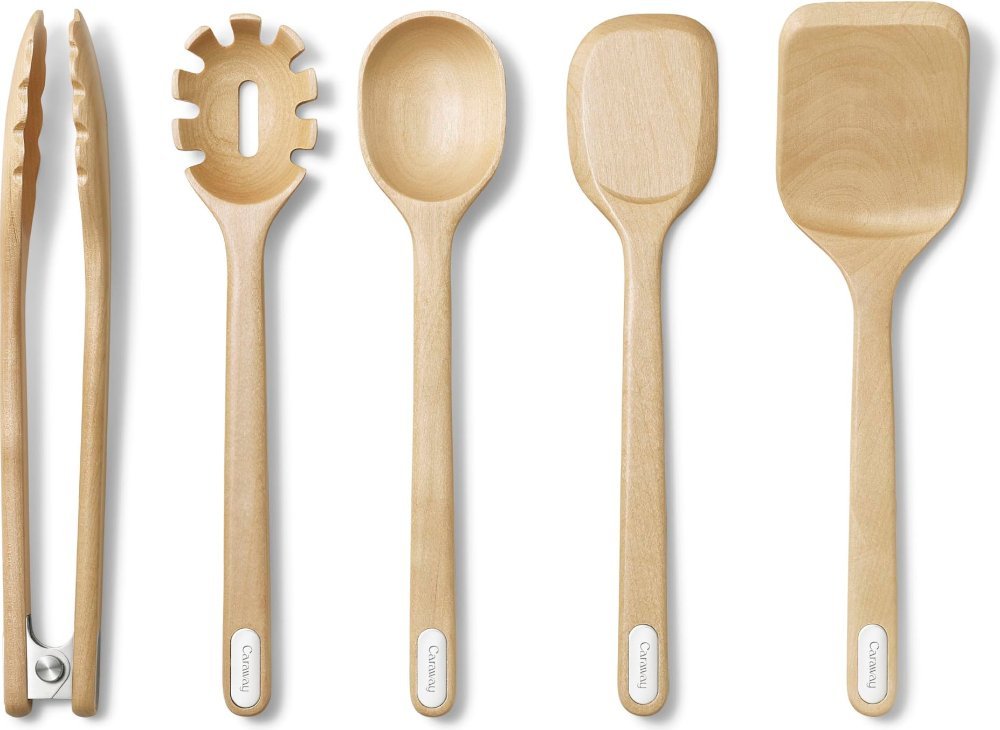
- Solid birch — no plastic, no BPA, no phthalates, and nothing shedding microplastics into dinner
- Rounded, smooth-edged shapes made to sit against ceramic and nonstick without marking them
- Five pieces that cover the everyday rotation: spoon, server, scraper, spatula, and tongs
- From the brand that dragged non-toxic cookware into the mainstream — the utensils hold the same line
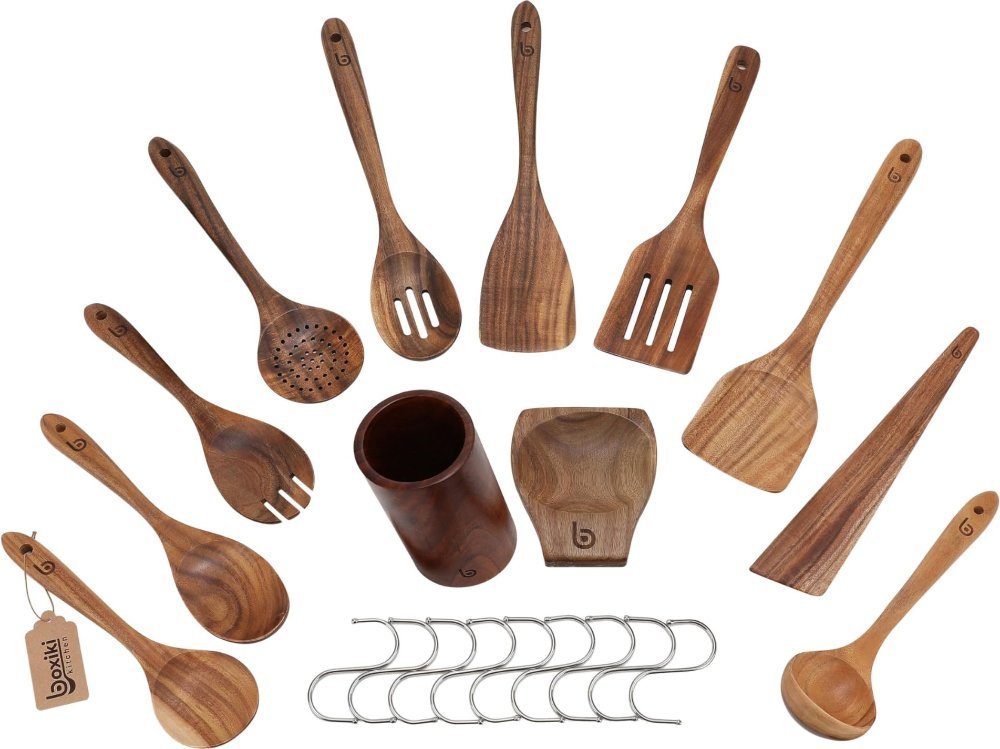
- Natural teak, handmade with no coating and no lacquer — just sanded wood, nothing sealed over the top of it
- Teak is naturally dense and full of its own oils, which is what lets it handle water without a finish sealed over it
- Won’t warp, crack, or hang onto odors the way bamboo and plastic reliably do
- Safe on nonstick, ceramic, cast iron, and stainless — one set covers every pan in the cabinet
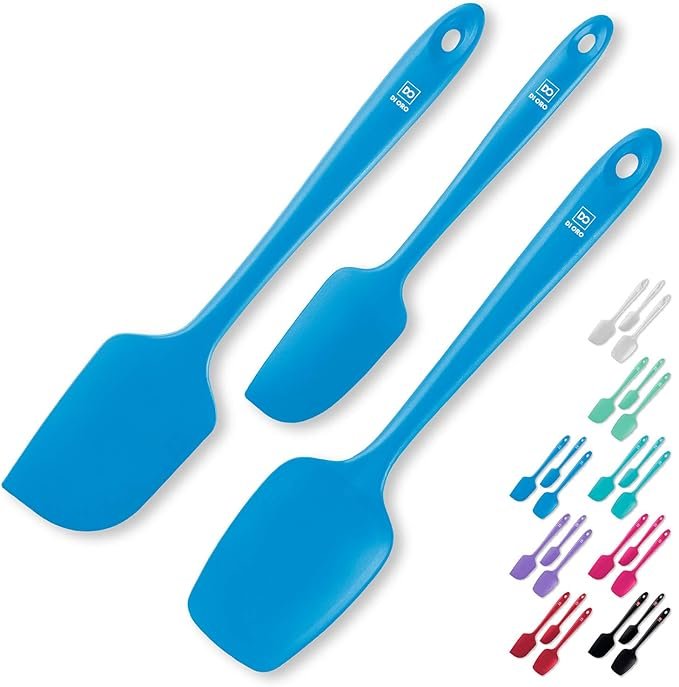
- LFGB-certified food-grade silicone rated up to 600°F — one of the strictest silicone safety standards in the world
- Seamless one-piece design with stainless steel core for strength and long-term durability
- Flexible heads that glide easily along bowls and pans for efficient mixing and scraping
- Gentle on non-stick and ceramic cookware surfaces to help prevent scratches
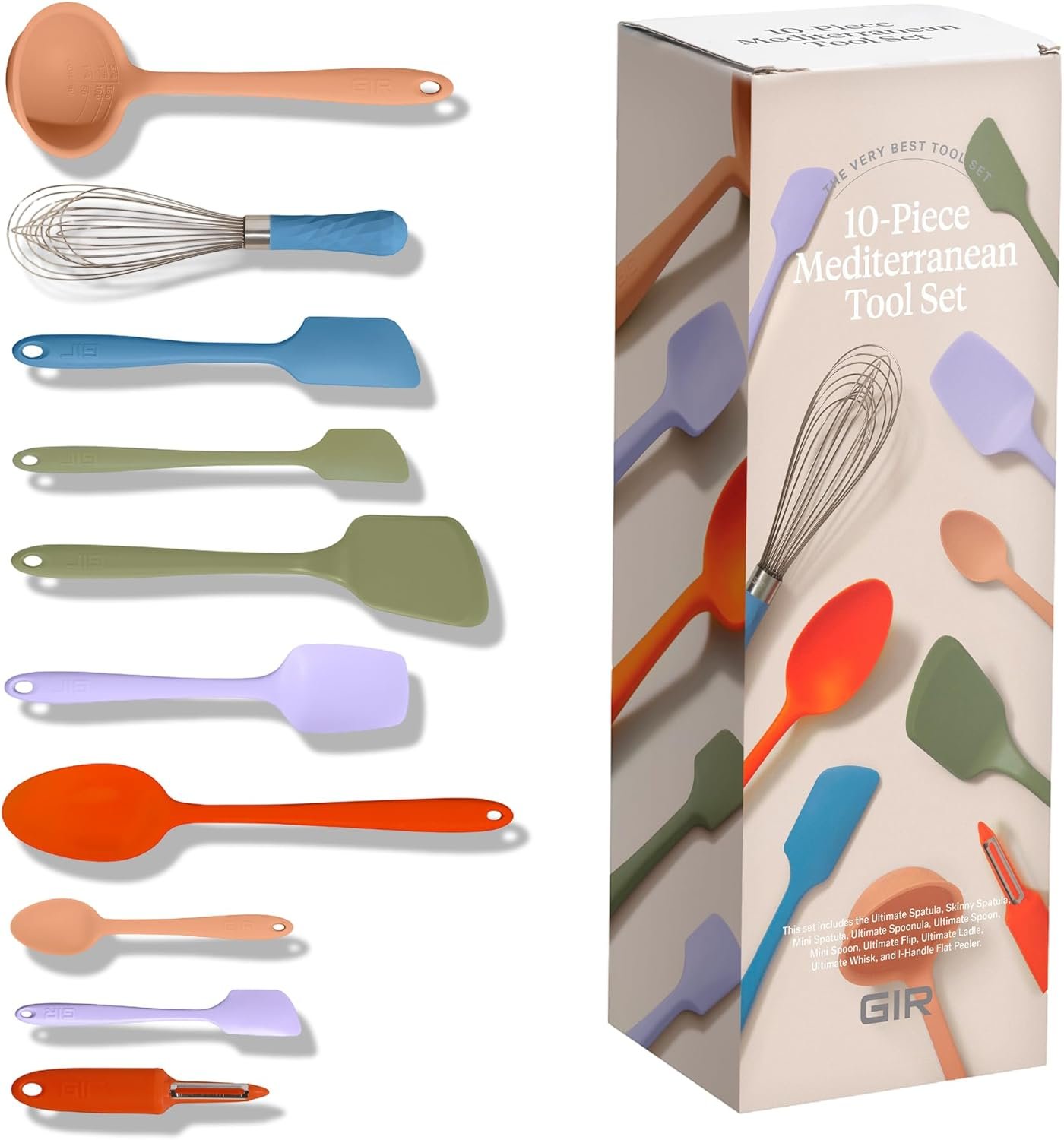
- Platinum-grade silicone — LFGB-certified, one of the strictest food-safety standards in the world
- Seamless one-piece construction — no seams, crevices, or glue to harbor bacteria
- Heat-resistant to 550°F and safe on all nonstick cookware
- Made in the USA; 10-piece set covers every essential kitchen task
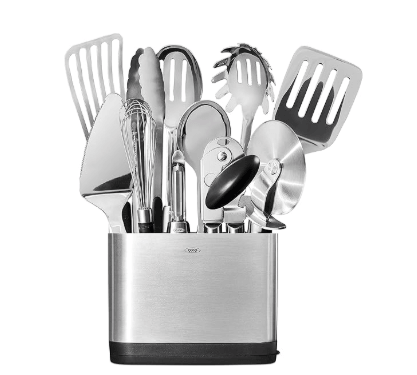
- Stainless steel — no coatings, no plastic food-contact surfaces, no nonsense
- Complete kitchen overhaul in one box: covers every stirring, serving, and flipping situation
- Hand-wash only; built to handle a decade of daily cooking without losing its shape
- One purchase retires your entire melting-plastic-spoon collection
Mixing Bowls
Most stainless mixing bowls have a plastic exterior “for insulation.” The food-contact surface is still metal, but plastic in a kitchen tool is plastic in a kitchen tool. Food-grade 18/8 or 18/10 stainless all the way through — no coatings, no bonded plastic, nothing to question. Borosilicate glass is another solid option: non-porous, completely inert, and microwave-safe.
What to avoid: Bowls with plastic exteriors or plastic lids you’re heating food in, melamine bowls (contain formaldehyde-based resins), and any mixing bowl with a “non-stick” interior coating — that’s just a Teflon pan that holds salad.
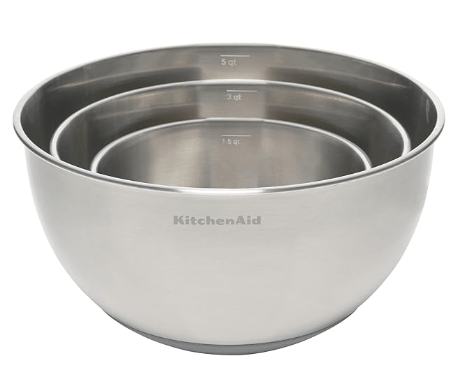
- Food-grade stainless steel — non-reactive, won’t leach, odor- and stain-resistant
- Set of three: 1.5qt, 3qt, and 5qt — covers everything from whisking eggs to tossing a salad
- Nonslip bases keep bowls planted; nesting design saves cabinet space
- Dishwasher safe, KitchenAid quality without the KitchenAid price of the stand mixer
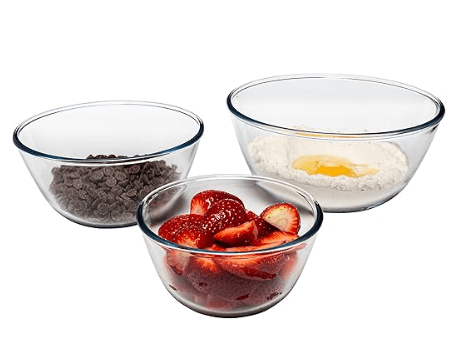
- Made in the Czech Republic from 100% borosilicate glass — lead-free, cadmium-free, completely non-porous
- Goes freezer to oven without cracking; microwave and dishwasher safe
- Glass doesn’t leach, doesn’t retain odors or stains, and you can actually see what’s in it
- Good option if you prefer glass over stainless or use your mixing bowls for serving and storage too
Paper Towel Alternatives
Conventional paper towels are chlorine-bleached, wrapped in plastic, and generate absurd amounts of household waste. Swedish dishcloths dry fast — which is what actually prevents bacterial growth — and a single pack replaces up to 17 rolls of paper towels. This is one of the easiest swaps in the kitchen.
What to avoid: Synthetic microfiber cloths — they shed plastic fibers into your wastewater every single wash. Also skip “antibacterial” sponges treated with triclosan or other chemical sanitizers.
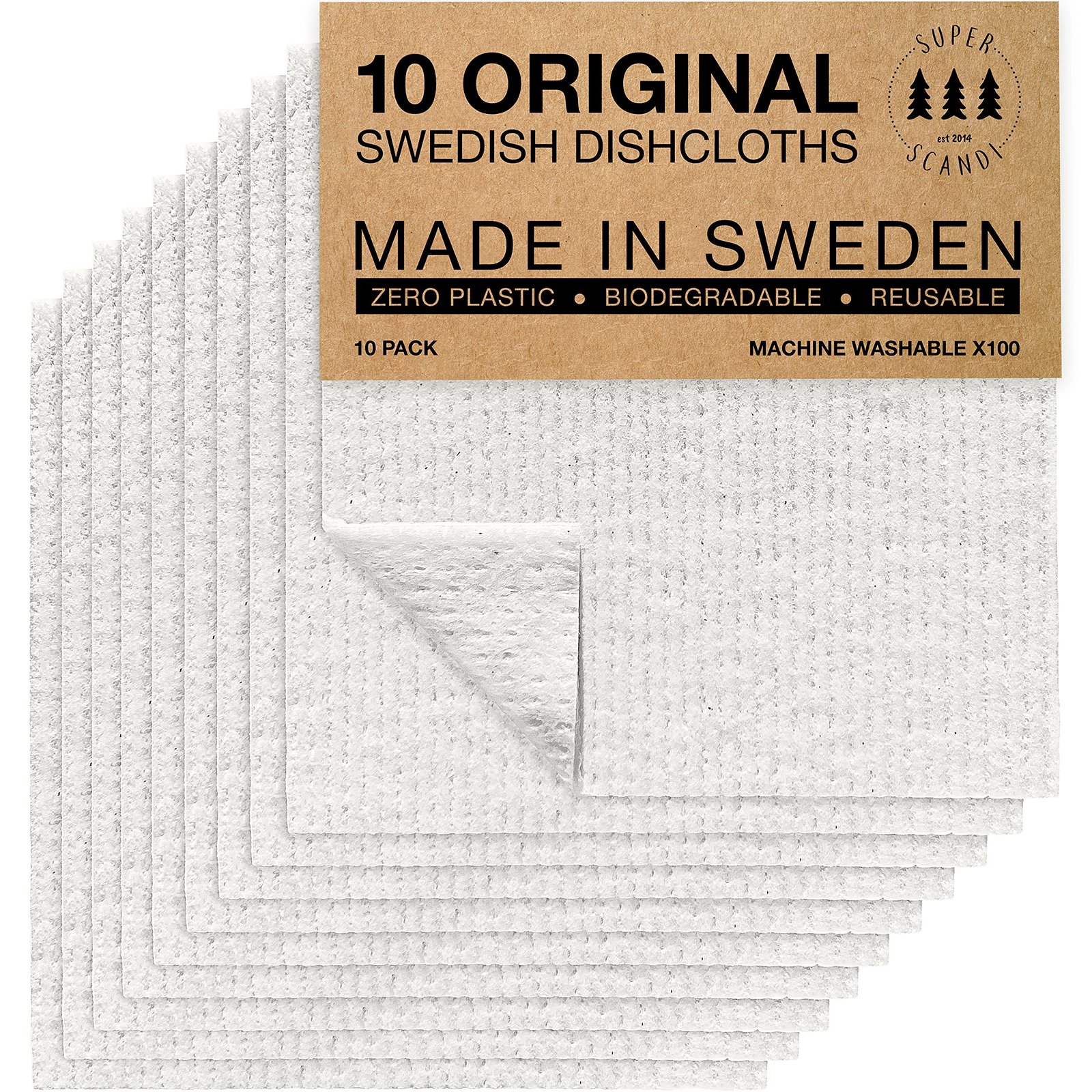
- Natural cellulose and cotton — compostable when worn out, never shedding synthetic fibers into wastewater
- Dries fast between uses, which actually prevents bacterial growth unlike a sponge
- Machine washable or microwave damp for 30 seconds to sanitize; one pack typically replaces a year of paper towels
- The no-frills workhorse: doesn’t look fancy, just does its job without plastic
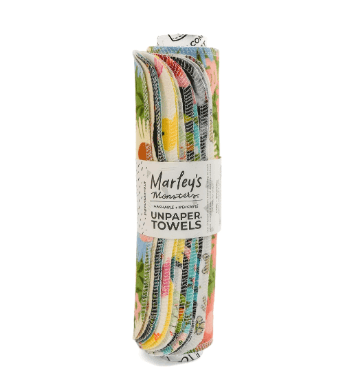
- 100% cotton flannel — no synthetic fibers, no mystery chemical treatments
- Naturally cling together so you can roll them onto your existing paper towel holder
- Get more absorbent with every wash, which is the opposite of every sponge you’ve ever owned
- Zero waste, zero plastic, zero reason to keep buying rolls
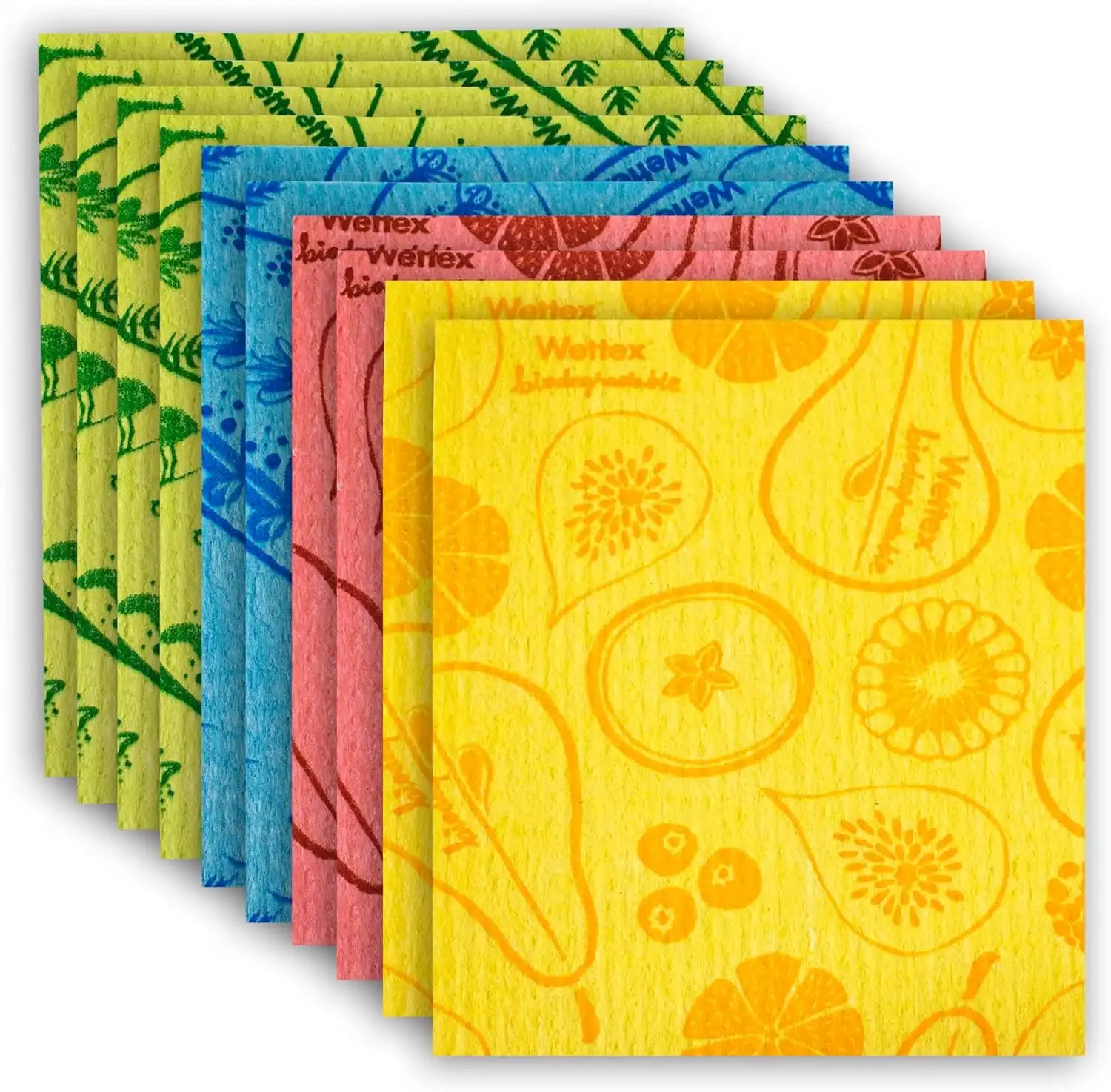
- Made from natural cellulose and cotton — no synthetic fibers, no microplastic shedding
- Each cloth replaces up to 15 rolls of paper towels; fully compostable at end of life
- Superabsorbent — holds 15x its weight in liquid
- The OG Swedish dishcloth, made in Sweden since 1949
Sourdough Bread Prep
If you’re baking sourdough at home, the tools matter — and most bread tools are either plastic or unvetted mystery materials touching your dough for hours at a time. Everything here is stainless steel, natural wood, or unbleached natural fiber. The Dutch oven is the only thing missing — that lives on the bakeware page.
What to avoid: Plastic bench scrapers, banneton baskets with chemical treatments or bleached synthetic liners, bread lames with plastic handles (some contain recycled material of unknown composition), and nonstick-coated loaf pans.
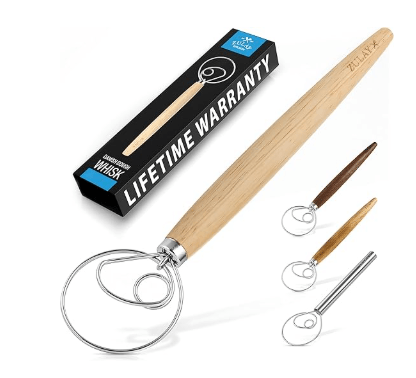
- Rust-resistant stainless steel loop — no coatings, won’t shed anything into your starter or dough
- Ergonomic wood handle; three-loop design blends high-hydration sourdough without fighting it
- Moves through sticky dough in seconds, cleans just as fast — the open loop design means nothing gets trapped
- Florida-based company with a real website, real story, and a lifetime guarantee — not a mystery Amazon brand
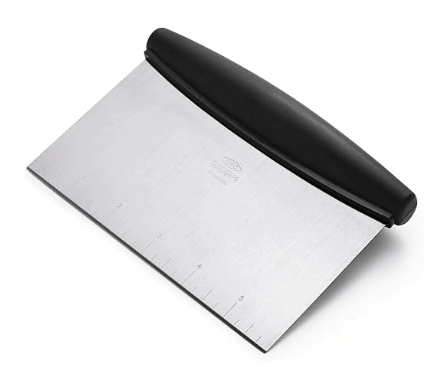
- All stainless steel blade — no coatings, no plastic food-contact surface, nothing to degrade
- Measurement markings along the blade for portioning dough without guessing
- Wide blade scoops chopped ingredients, divides dough, and scrapes your work surface clean in one pass
- Dishwasher safe; the kind of tool that earns permanent counter real estate
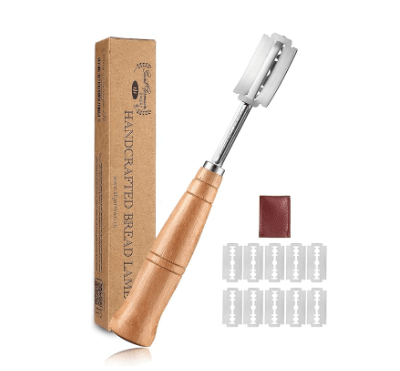
- Handcrafted wood handle and stainless steel rod — no plastic, no mystery handle materials
- 10 replaceable stainless steel blades included; standard razor blades for easy replacement forever
- Leather protective cover keeps the blade safely stored and looks like it belongs in a bakery
- The ear on your sourdough will thank you — this is what that ugly tear on top is about
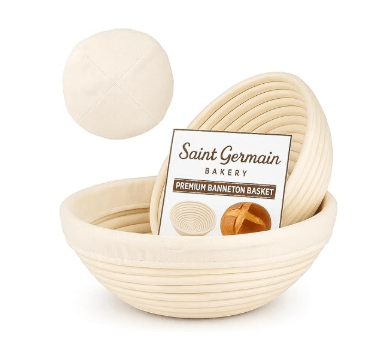
- Handmade by a small family business in Vietnam — natural rattan, explicitly dye-free and chemical-free, the brand states it clearly
- Same brand as the bread lame already on this page — if you trust one, you trust both
- Includes cloth liners; splinter-free smooth surface that releases dough cleanly with proper flouring
- The ringed spiral gives every loaf that pro-bakery look without any extra effort on your part

- Unbleached — no chlorine processing, no dioxin risk; the brown color means it’s actually natural, not a vibe
- FSC certified from sustainably managed forests — this brand is unusually transparent about what goes into their products
- Silicone-coated for non-stick; the silicone is on the paper, not in your food — nothing flakes, nothing sheds
- Works for any baking, but especially useful for lining the bottom of a Dutch oven when you tip your sourdough in
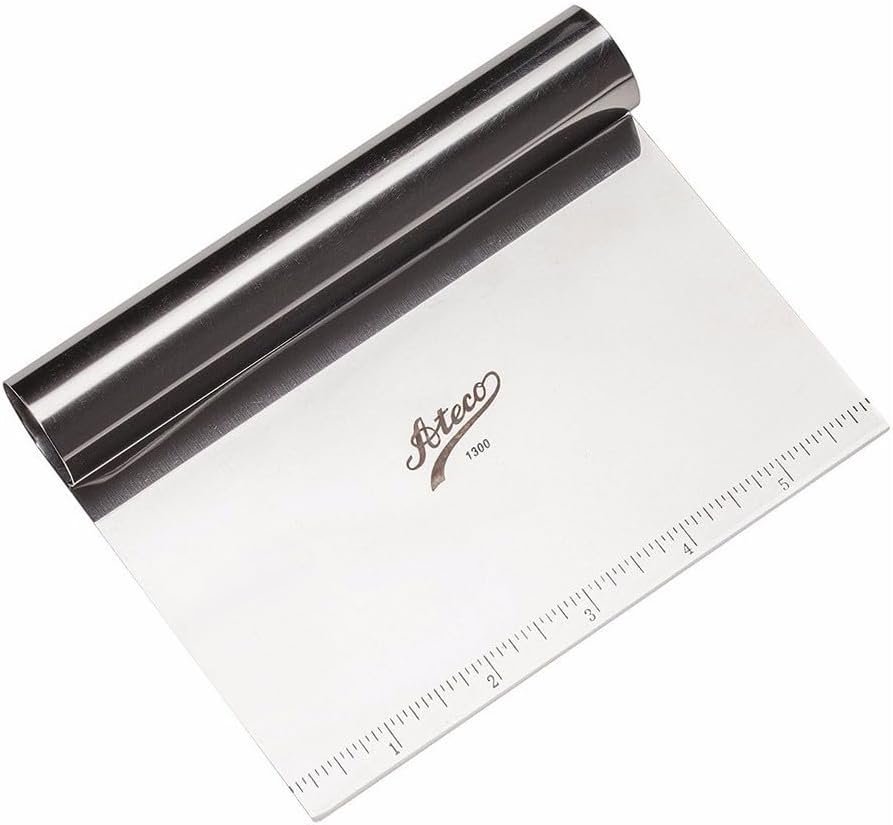
- Solid stainless blade and stainless handle — no plastic, no coating, nothing to degrade or shed
- Thicker, more rigid blade than most bench scrapers — cuts through high-hydration dough cleanly without flexing
- Trusted by professional bakeries; NSF certified for commercial kitchen use
- Simple, lifetime-worthy tool — no frills, just stainless steel that will outlast your sourdough starter
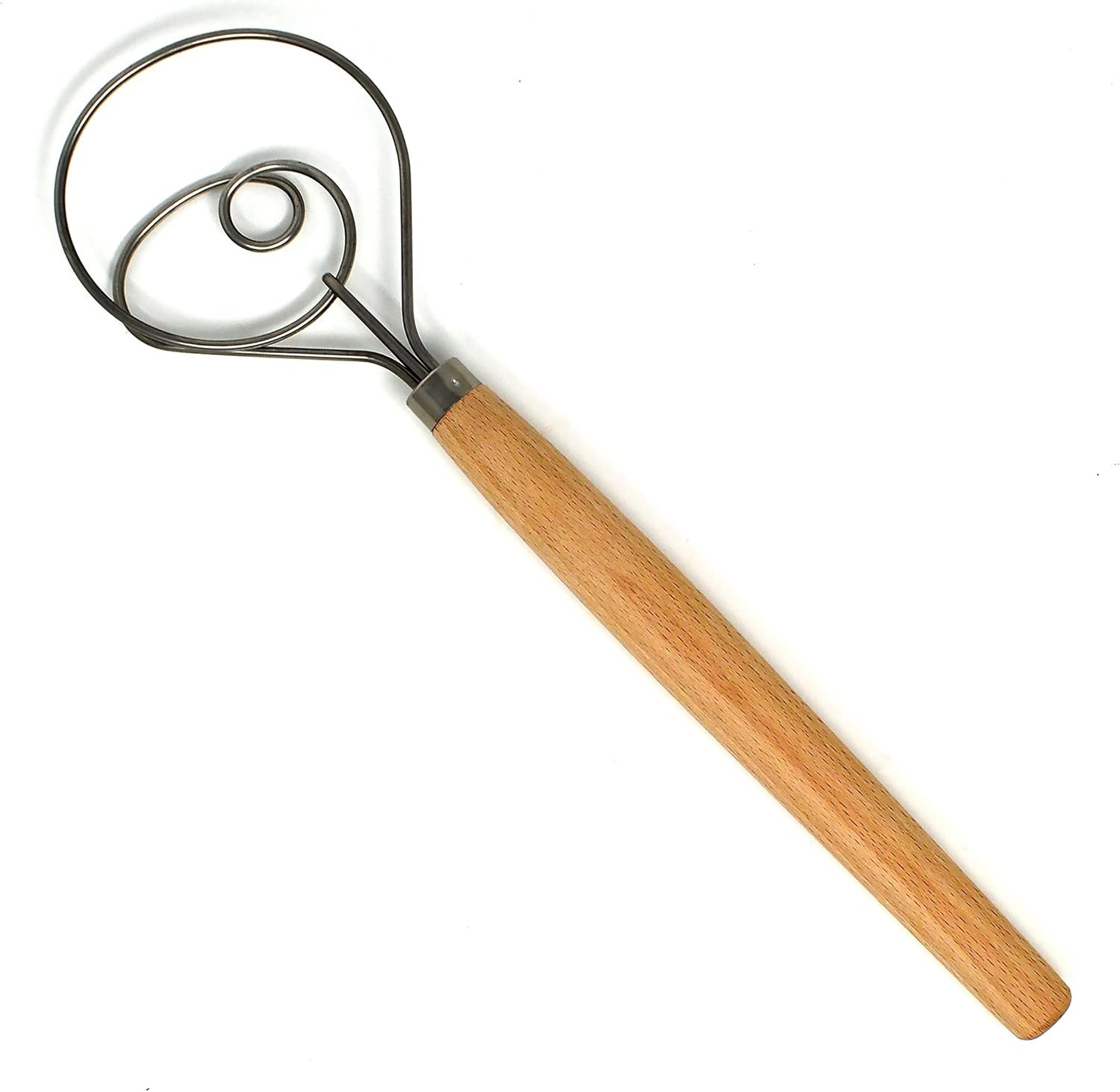
- Stainless steel wire loop and wood handle — no plastic, no coatings anywhere in the product
- Classic Scandinavian design that’s been mixing bread dough for generations — the shape is what makes it work
- 12 inches long; the double-loop design cuts through thick doughs without the effort of a spoon
- Easy to clean — the open loop design rinses out in seconds, even after sticky sourdough
Why Plastic Has to Go
Black plastic spatula? That’s recycled electronics in your stir-fry.
Studies have found that black plastic kitchen utensils contain flame retardants — including chemicals from recycled electronics. Even garden-variety “BPA-free” plastic tools can leach endocrine-disrupting compounds when scratched or exposed to heat, and BPA-free only means the manufacturer swapped one bisphenol for another. The science on plastic alternatives like BPS and BPF is not looking great.
Wood, stainless steel, and food-grade silicone don’t have this problem. They’re non-reactive, don’t melt at cooking temperatures, and don’t require a PhD to vet. The swap costs about the same and the upside is your food tastes like food, not like a recycling plant. That’s the whole argument.